Blackhaw Viburnum
Viburnum prunifolium
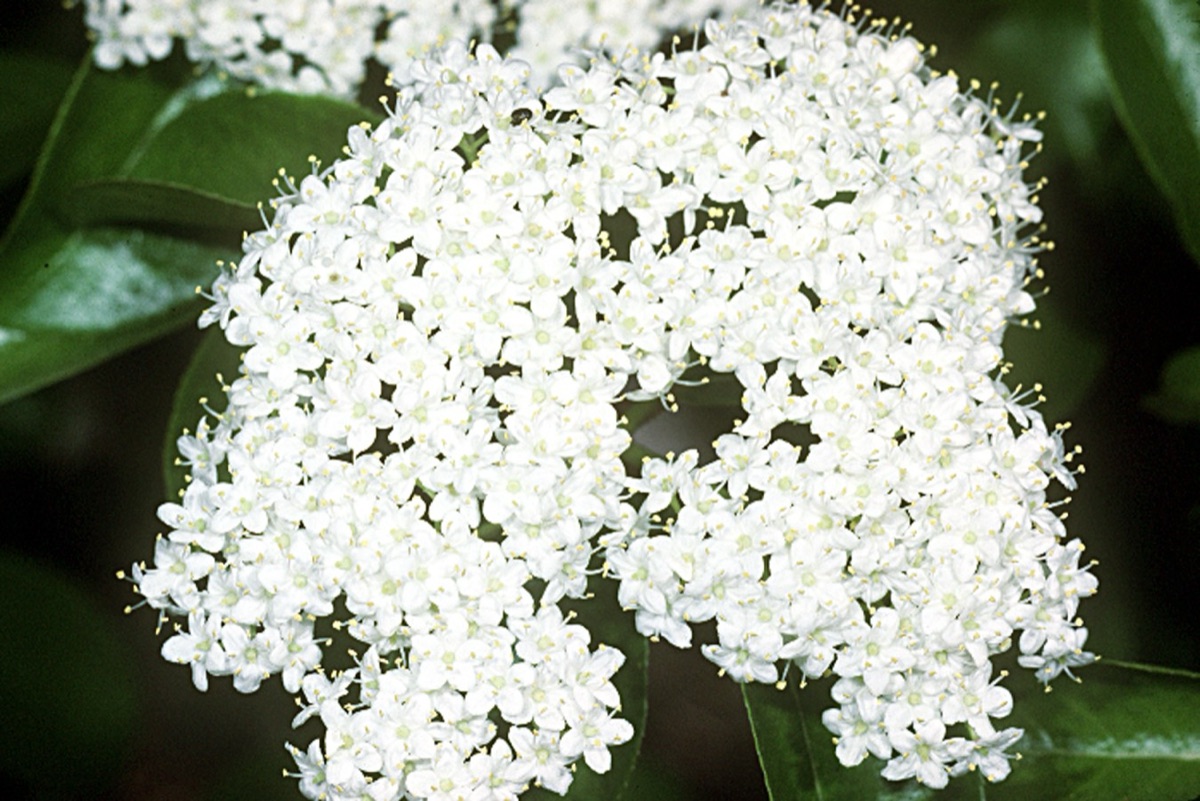
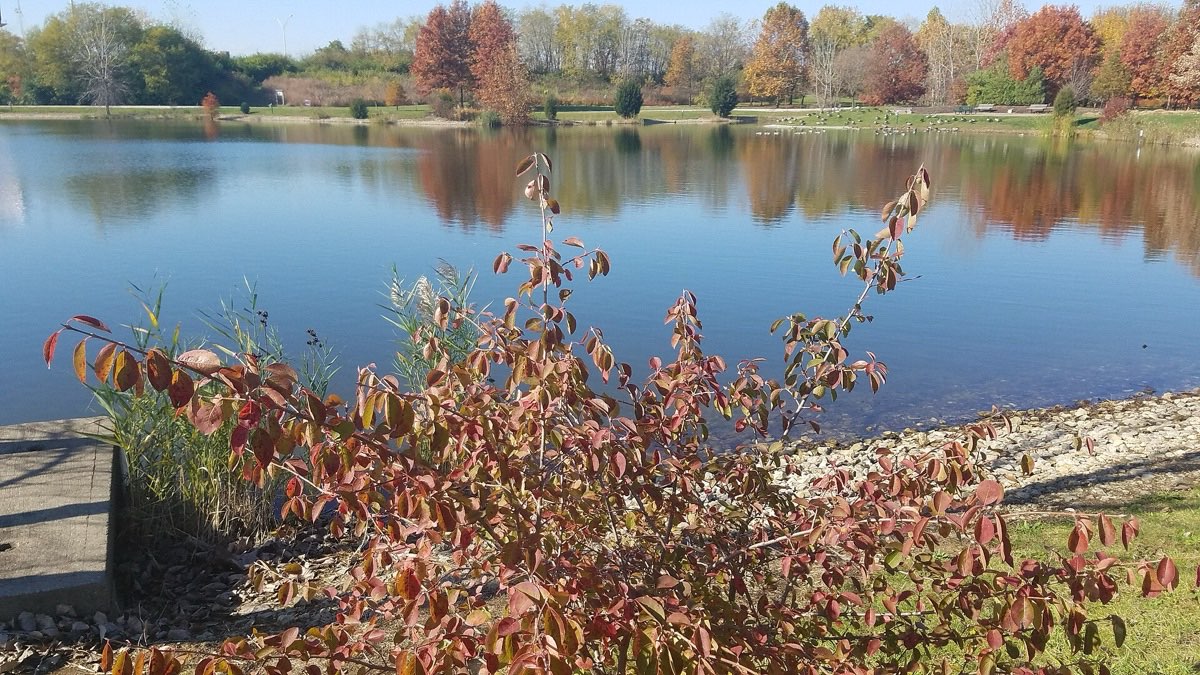
Blackhaw is a native shrub or small tree with flat clusters of white flowers in spring, sweet blue-black fruit in fall, and red to purple fall color. It grows in every county in Missouri and handles heat, drought, and most soils.
At a Glance
| Plant type | Large deciduous shrub or small tree |
|---|---|
| Family | Viburnum family (Viburnaceae). Some sources list it under Adoxaceae. |
| Other names | Black haw, plum-leaf viburnum, stagberry |
| Native range | Eastern and central North America. Found in every county in Missouri, in rocky woods, along stream banks, on dry rocky hillsides, and along roadsides and fence rows. |
| Mature height | 12 to 15 feet as a shrub. Can grow as a small tree to 30 feet. |
| Mature spread | 6 to 15 feet, sometimes to 20 feet |
| Growth rate | Slow |
| Flowers | Small white, fragrant flowers in flat, round-topped clusters 2 to 5 inches across. April to May. |
| Fruit or seed | Oval blue-black berries about 1/3 inch long with a whitish coating, on red stalks. Ripen September to October. Edible and sweet, though thin-fleshed around the stone. |
| Foliage | Glossy, finely toothed leaves 1 1/2 to 6 inches long. Fall color is red to purple. |
Growing Conditions
| USDA hardiness zones | 3 to 9 |
|---|---|
| Sun | Full sun to part shade. It grows in deep shade but rarely blooms there. |
| Soil | Clay, loam, sand, or shallow rocky soil, with good drainage |
| Soil pH | Not particular. Grows in acidic, neutral, or alkaline soil. |
| Water | Low to medium. Drought tolerant once established. |
| Tolerates | Heat, drought, cold, clay, compacted soil, black walnut, city conditions |
| Does poorly with | Deep shade (few flowers) |
Will It Grow Here?
Yes, anywhere in our area. Blackhaw Viburnum is hardy in zones 3 to 9, which covers every zone in our area (6b through 8a).
| Zone | Grows here? | Towns in this zone |
|---|---|---|
| 6b (our farm) | Yes | Lebanon, MO; Bolivar, MO; Iola, KS; Garnett, KS |
| 7a | Yes | Springfield, MO; Joplin, MO; Fayetteville, AR; Bentonville, AR |
| 7b | Yes | Harrison, AR; Tulsa, OK; Broken Arrow, OK; Tahlequah, OK |
| 8a | Yes | Van Buren, AR; Alma, AR |
Not sure which zone you're in? Look up your ZIP code on the USDA Plant Hardiness Zone Map (opens in a new tab).
-
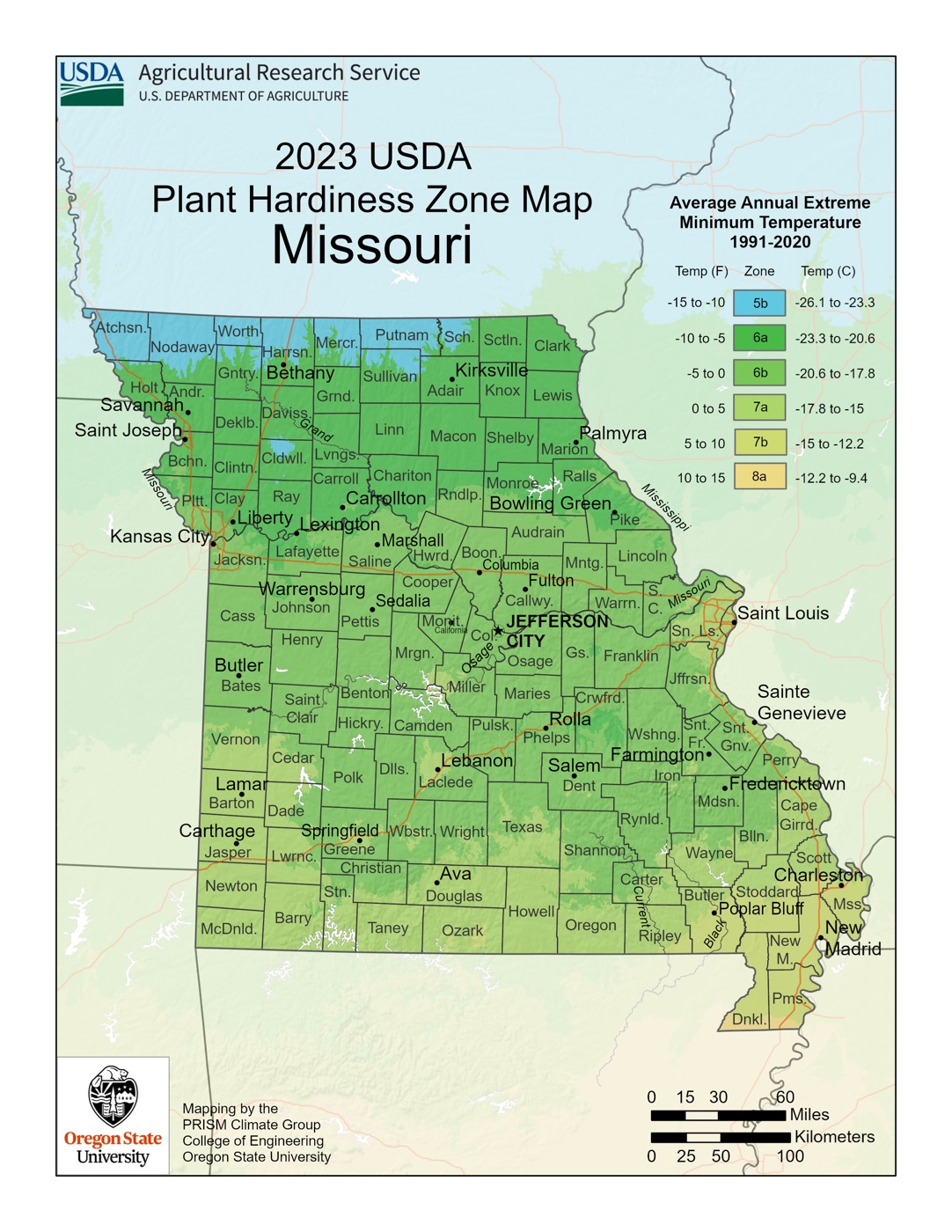 Missouri zone map (full size, opens in a new tab)
-
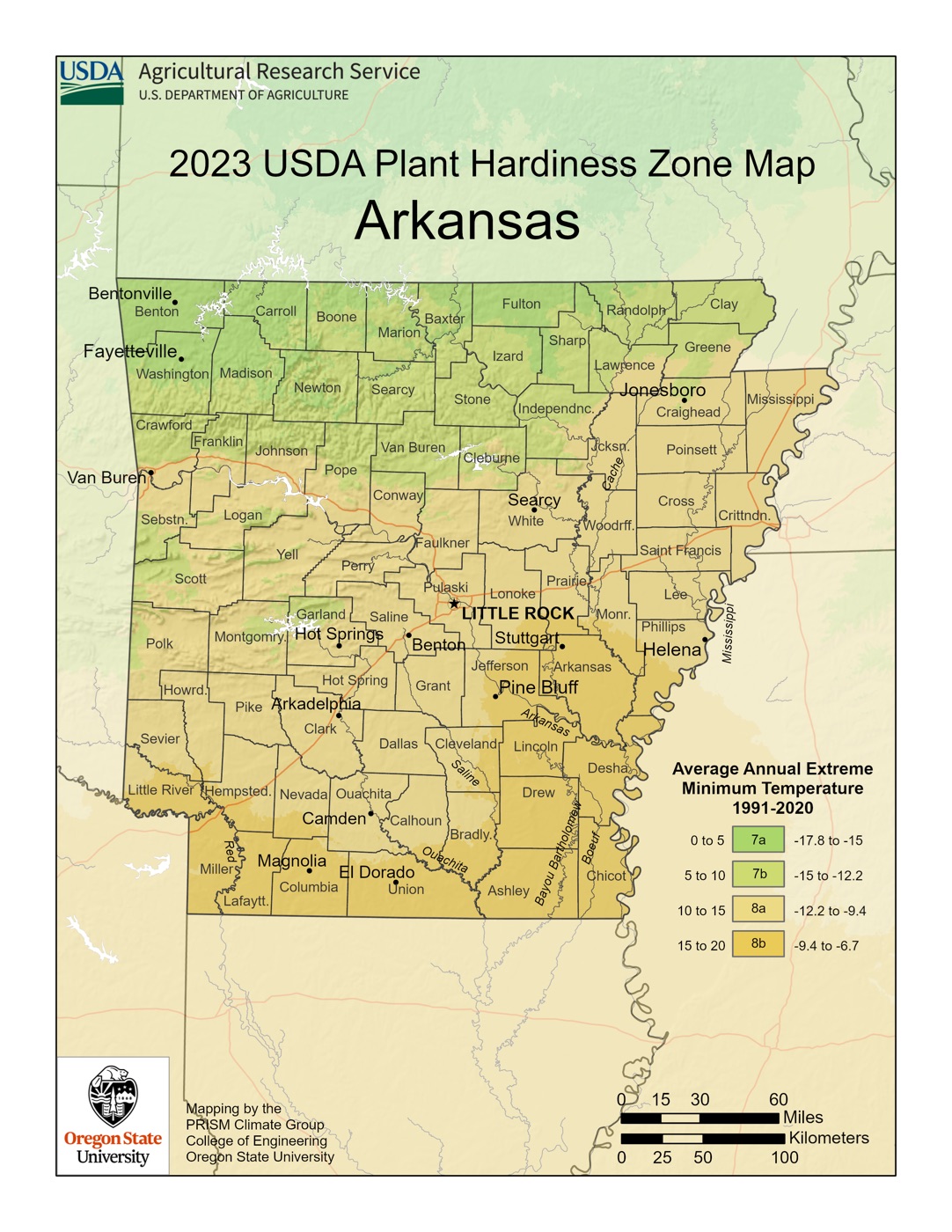 Arkansas zone map (full size, opens in a new tab)
-
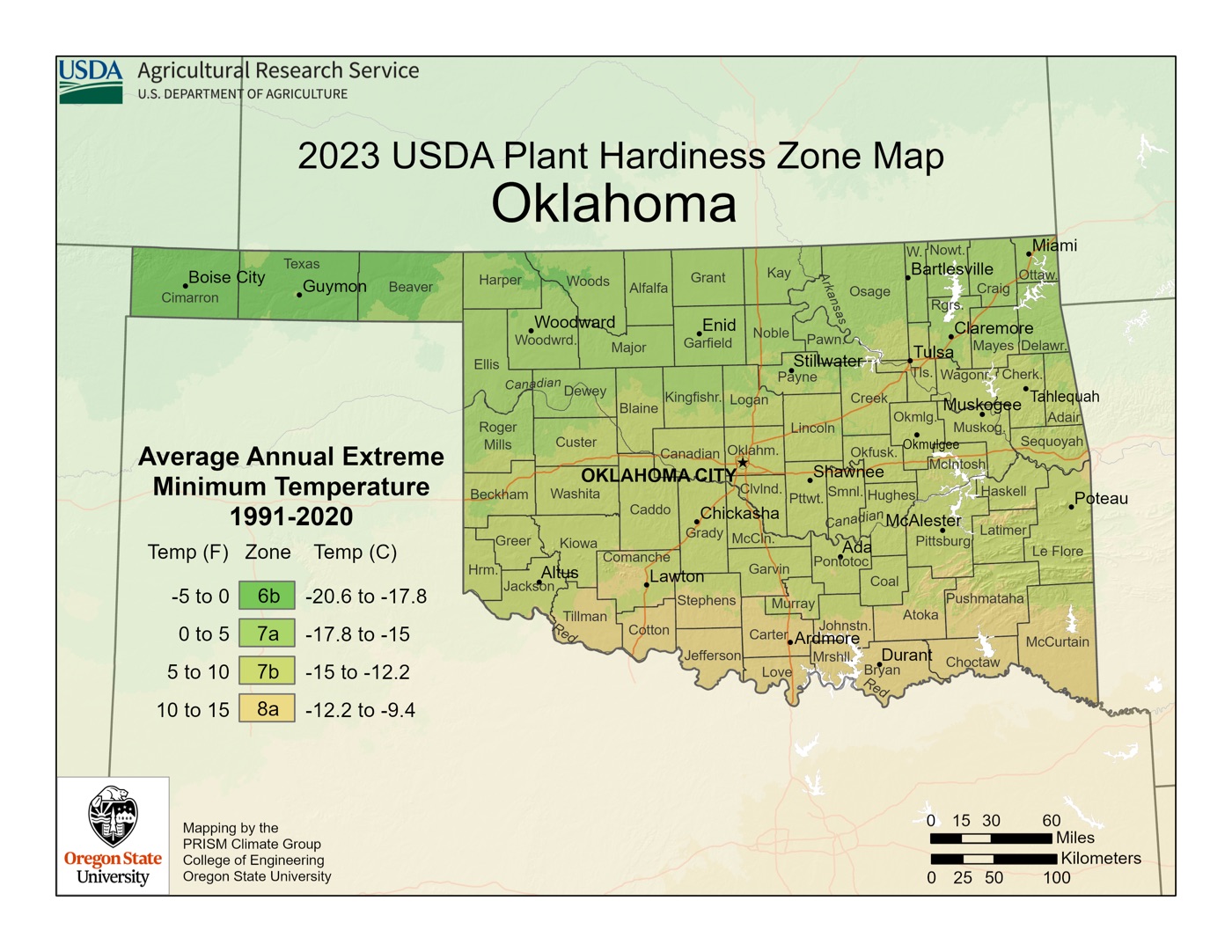 Oklahoma zone map (full size, opens in a new tab)
-
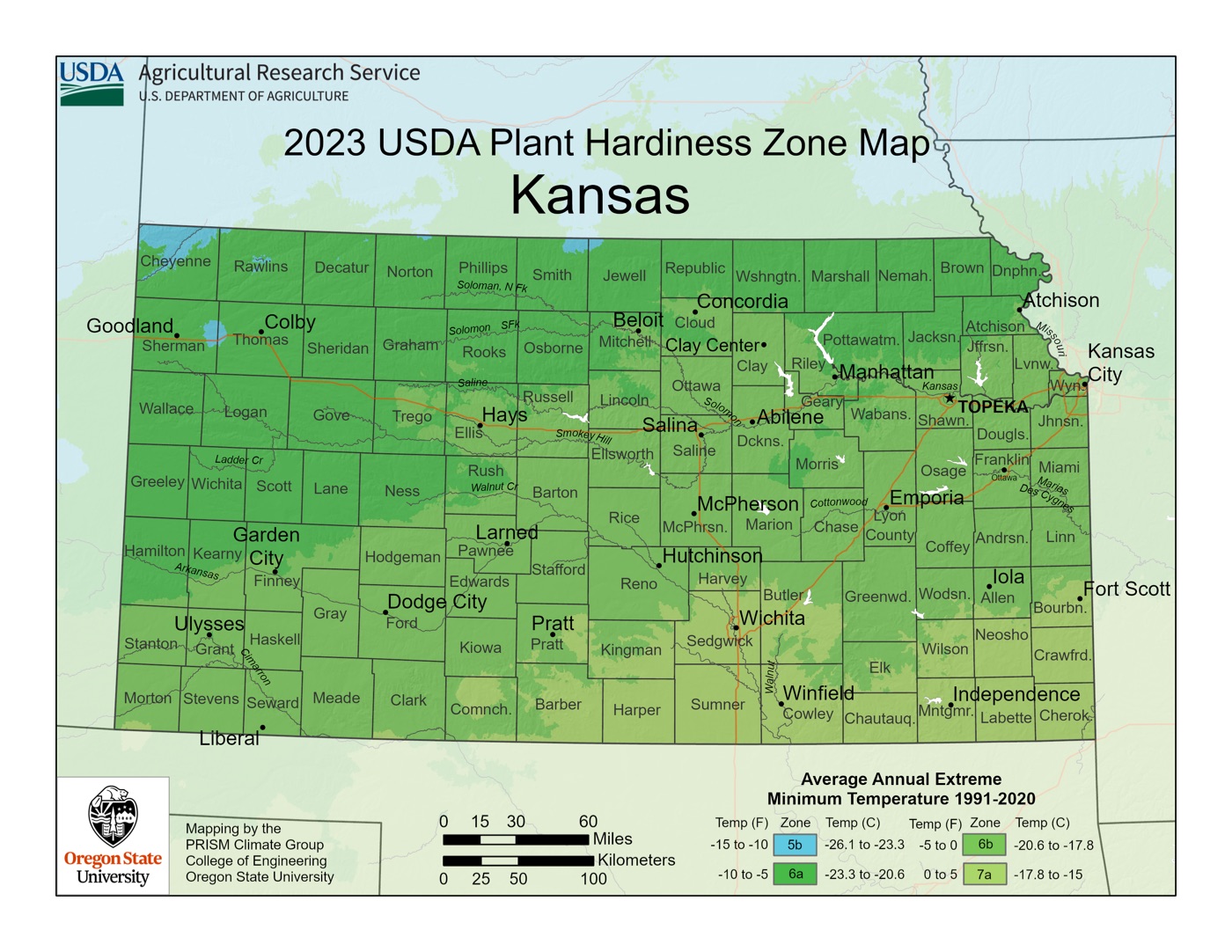 Kansas zone map (full size, opens in a new tab)
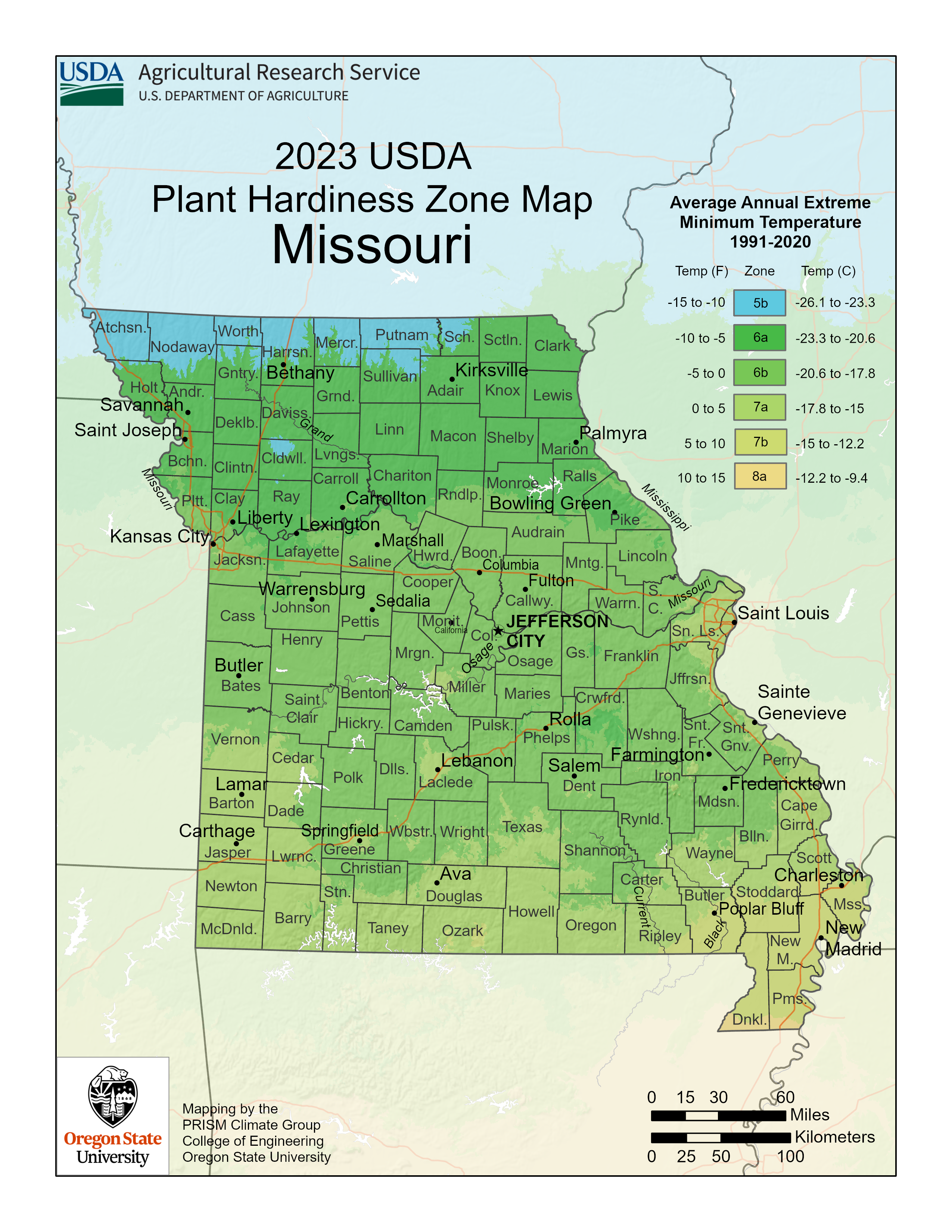
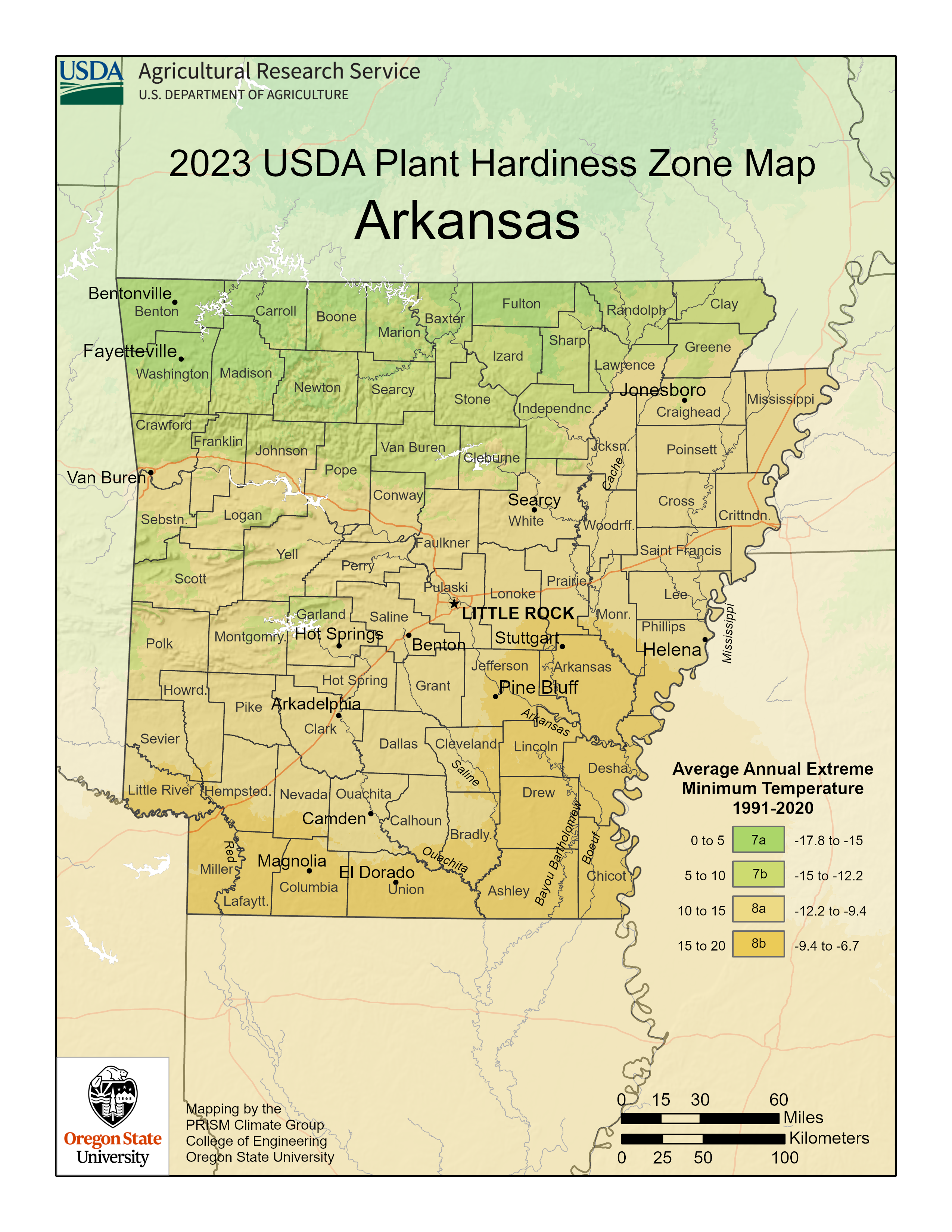
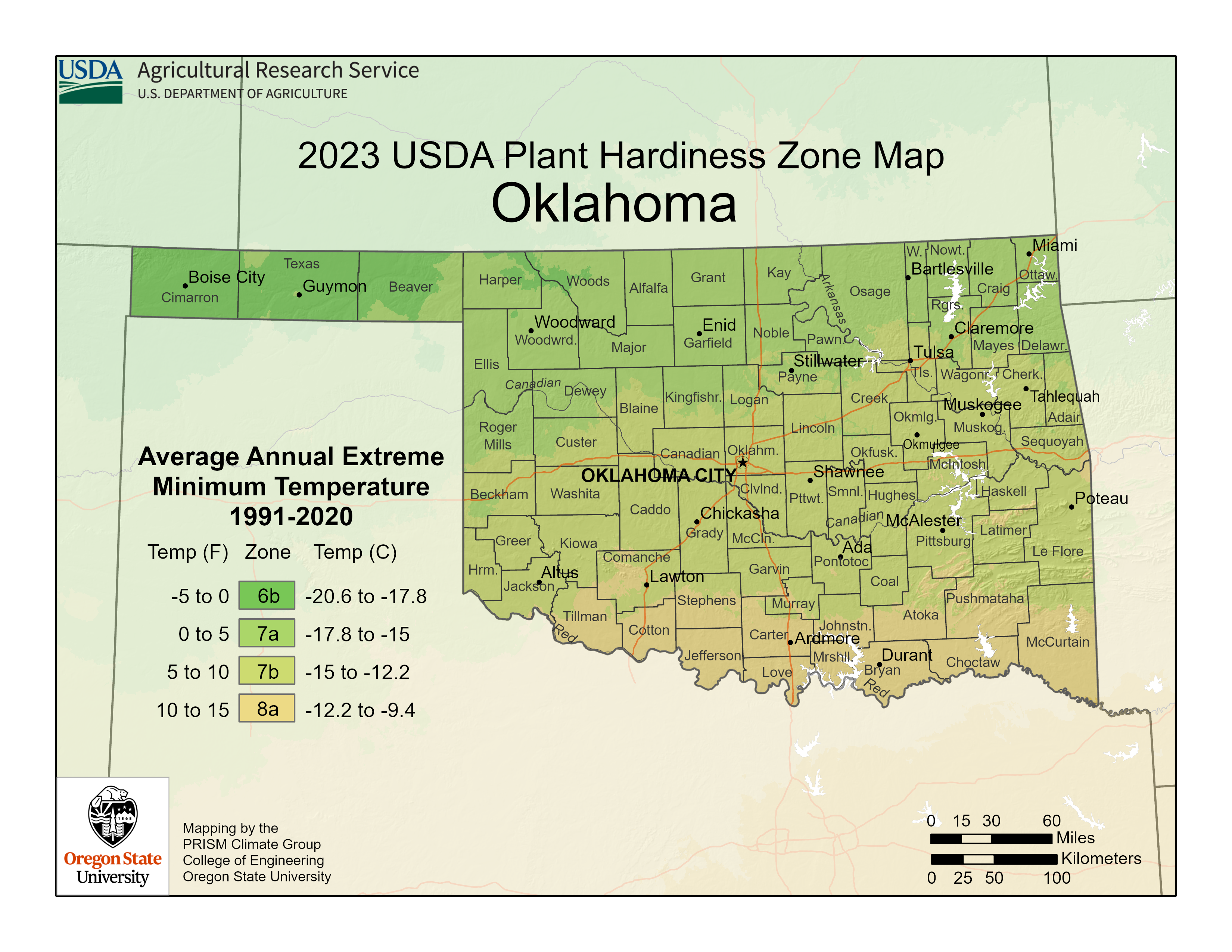
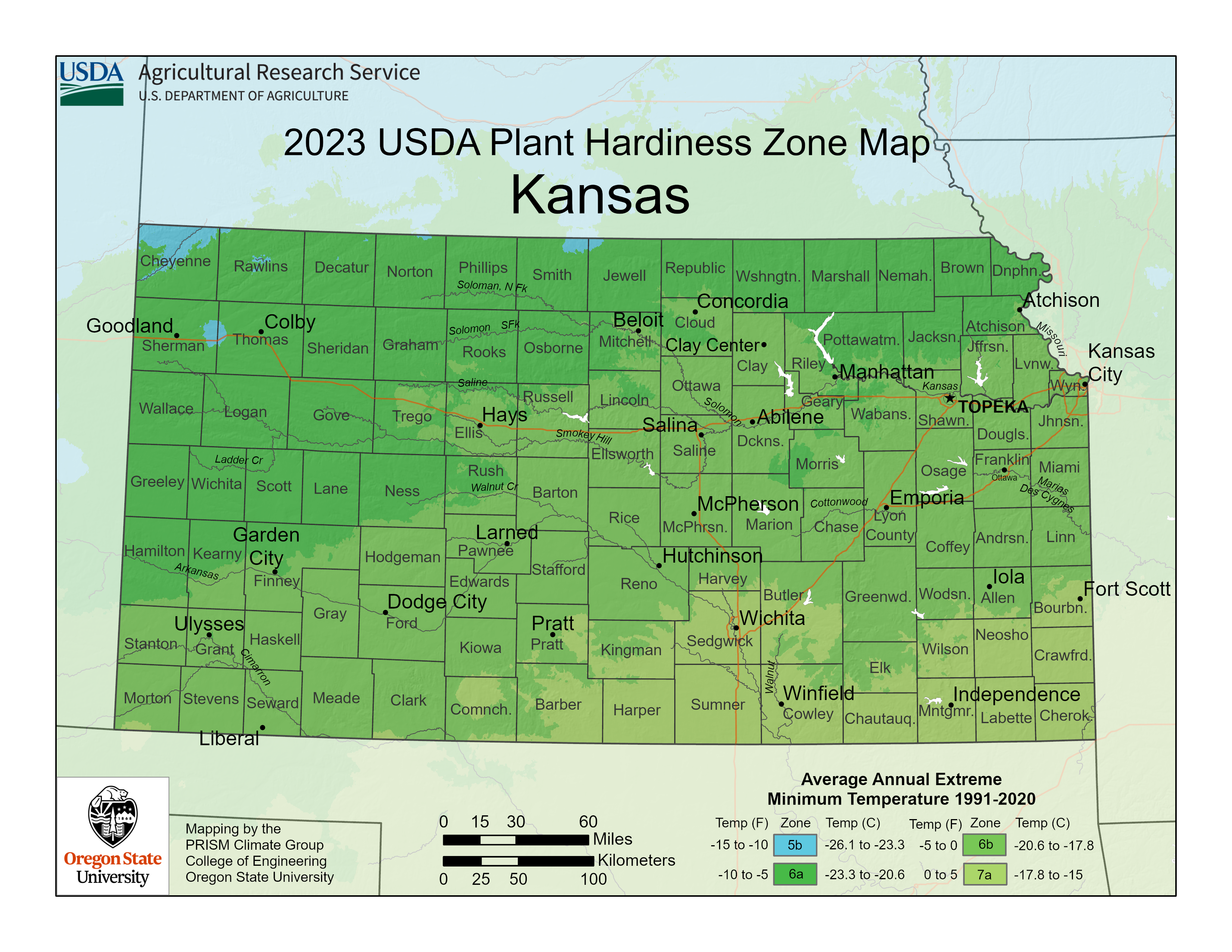
Official 2023 USDA Plant Hardiness Zone Maps. Tap a map to open it full size.
Maps: USDA Agricultural Research Service, with mapping by the PRISM Climate Group, Oregon State University.
Plant Patent
Not patented. This is the straight species, not a named variety, so there are no restrictions on growing it from seed or cuttings.
About the Blackhaw Viburnum
Blackhaw is a native shrub that grows wild in every county in Missouri. In spring it’s covered in flat clusters of small white flowers. The blue-black fruit ripens in fall on red stalks, and the leaves turn red to purple. The fruit is sweet and edible, though the flesh is thin around the stone, and people have eaten it for a long time.
It can be grown as a large shrub or pruned into a small tree.
Choosing a Spot
- Sun for flowers. Full sun to part shade. It grows in deep shade but rarely blooms there.
- Almost any soil. Clay, loam, sand, or rocky soil, acidic or alkaline, as long as it drains.
- Room to grow. It reaches 12 to 15 feet tall and nearly as wide, and it suckers.
- Plant more than one. Fruit set is better with more than one shrub for pollination.
Planting
- Dig wide, not deep. Make the hole at least 1 1/2 to 2 times as wide as the root ball and only as deep. In poorly drained or compacted soil, make it 3 to 4 times as wide and not quite as deep.
- Set the top of the root ball even with the surrounding soil or slightly above. Planting even 3 inches too deep lets water collect around the roots.
- Slice circling roots. If roots circle the outside of the root ball, make three or four cuts an inch or two deep from top to bottom.
- Backfill with the soil you dug out. Amendments usually aren’t needed.
- Skip fertilizer at planting, and water right away.
Watering
New plants establish fastest with light, frequent watering. In summer a new shrub may need water several times a week. Overwatering kills as easily as drought, so feel the soil before you water. Once established, blackhaw is drought tolerant.
Mulch and Fertilizer
Spread organic mulch no more than 3 inches deep after it settles, and keep it off the stems. Fertilize only if a soil test calls for it.
Pruning
Prune right after it flowers. Next year’s flower buds form the summer before, so pruning later cuts off next spring’s flowers. It can also be pruned into a small tree.
Common Problems
Blackhaw has no well-known disease or insect problems. Deer and beavers feed on it.
Good for Wildlife
Many birds eat the fruit, including cardinals, cedar waxwings, robins, ruffed grouse, and wild turkeys. Squirrels and chipmunks eat it too. It’s a host plant for spring and summer azure butterflies, and its flowers attract bees and other pollinators. Many animals use it for cover.
Availability
Currently out of stock until Spring 2027.
Our nursery stock changes through the season. Contact us to check what we have on hand, current sizes, and pricing.
Sources
Growing information on this page was checked against these public references:
- Viburnum prunifolium (North Carolina Extension Gardener Plant Toolbox) (opens in a new tab)
- Black Haw Field Guide (Missouri Department of Conservation) (opens in a new tab)
- Planting a Tree or a Shrub, FSA-6128 (University of Arkansas Cooperative Extension) (opens in a new tab)
Disclaimer: The information on this page is based on publicly available knowledge and research. Individual results may vary.