Blue Flag Iris
Iris versicolor
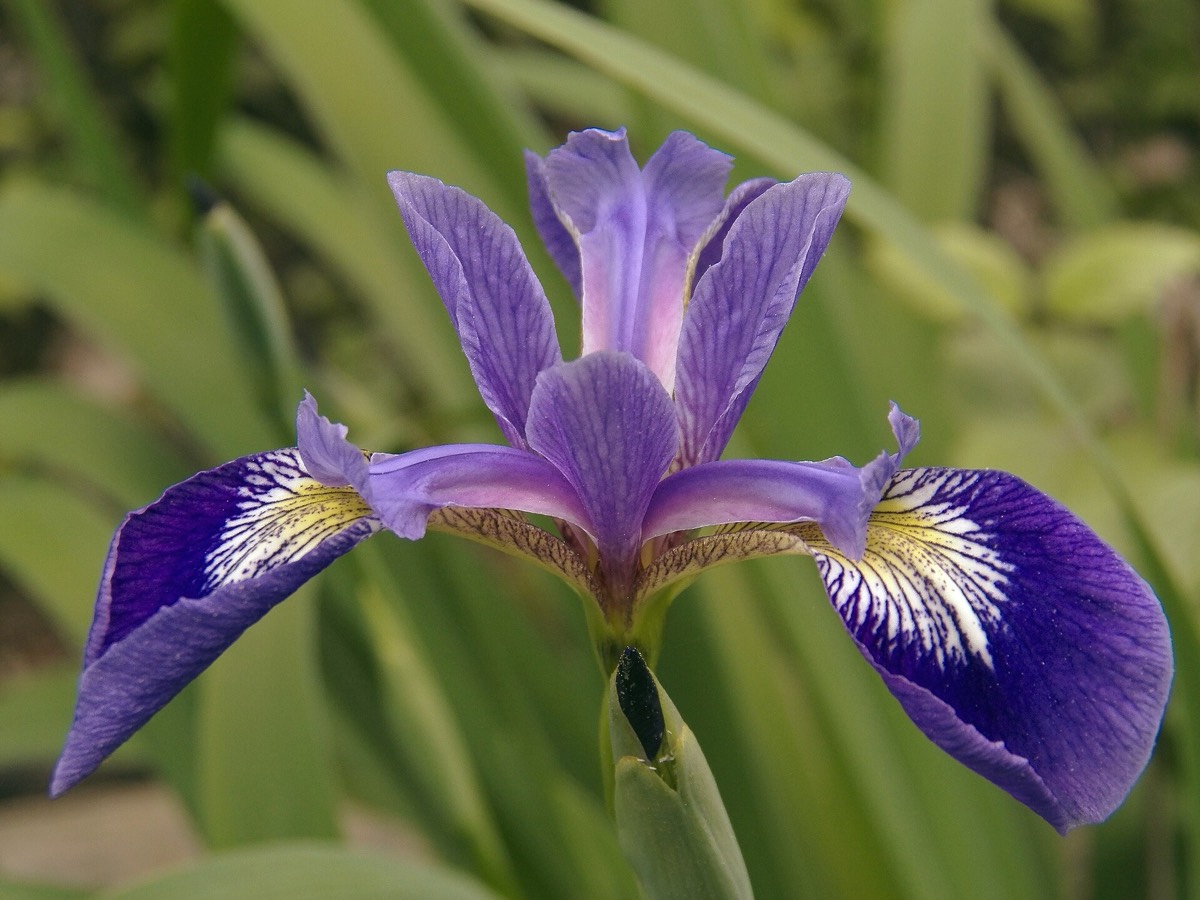
Blue flag iris is a native iris for wet places, with purple-blue flowers in May and June. It grows in rain gardens, pond edges, and even a few inches of standing water. The roots are poisonous if eaten.
At a Glance
| Plant type | Perennial for wet soil |
|---|---|
| Family | Iris family (Iridaceae) |
| Other names | Northern blue flag, harlequin blue flag, larger blue flag |
| Native range | Central and eastern Canada to the north-central and eastern United States. Grows in marshes, stream banks, and wet meadows. |
| Mature height | 2 to 3 feet |
| Mature spread | 2 to 2 1/2 feet |
| Flowers | Purple-blue flowers 3 to 4 inches across, with a yellow blotch at the base of the lower petals. Three to five flowers per stalk. May to June. |
| Foliage | Upright leaves 2 to 2 1/2 feet long |
| Toxicity | The rhizomes (roots), sap, and seeds are poisonous, with the most toxin in the rhizomes. Eating them can cause nausea, drooling, vomiting, stomach pain, diarrhea, lethargy, and fever. Toxic to dogs, cats, and horses. The sap and seeds can also cause minor skin irritation. |
Growing Conditions
| USDA hardiness zones | 3 to 9 |
|---|---|
| Sun | Full sun for the best flowers. Tolerates part shade. |
| Soil | Rich, moist to wet soil. Tolerates clay. |
| Soil pH | Acidic (below 6.8) |
| Water | High. Grows in moist to wet soil and can stand in a few inches of water. Needs extra water in dry spells. |
| Tolerates | Wet soil, flooding, standing water, clay, deer, moderate salt |
| Does poorly with | Dry soil |
Will It Grow Here?
Yes, anywhere in our area. Blue Flag Iris is hardy in zones 3 to 9, which covers every zone in our area (6b through 8a).
| Zone | Grows here? | Towns in this zone |
|---|---|---|
| 6b (our farm) | Yes | Lebanon, MO; Bolivar, MO; Iola, KS; Garnett, KS |
| 7a | Yes | Springfield, MO; Joplin, MO; Fayetteville, AR; Bentonville, AR |
| 7b | Yes | Harrison, AR; Tulsa, OK; Broken Arrow, OK; Tahlequah, OK |
| 8a | Yes | Van Buren, AR; Alma, AR |
Not sure which zone you're in? Look up your ZIP code on the USDA Plant Hardiness Zone Map (opens in a new tab).
-
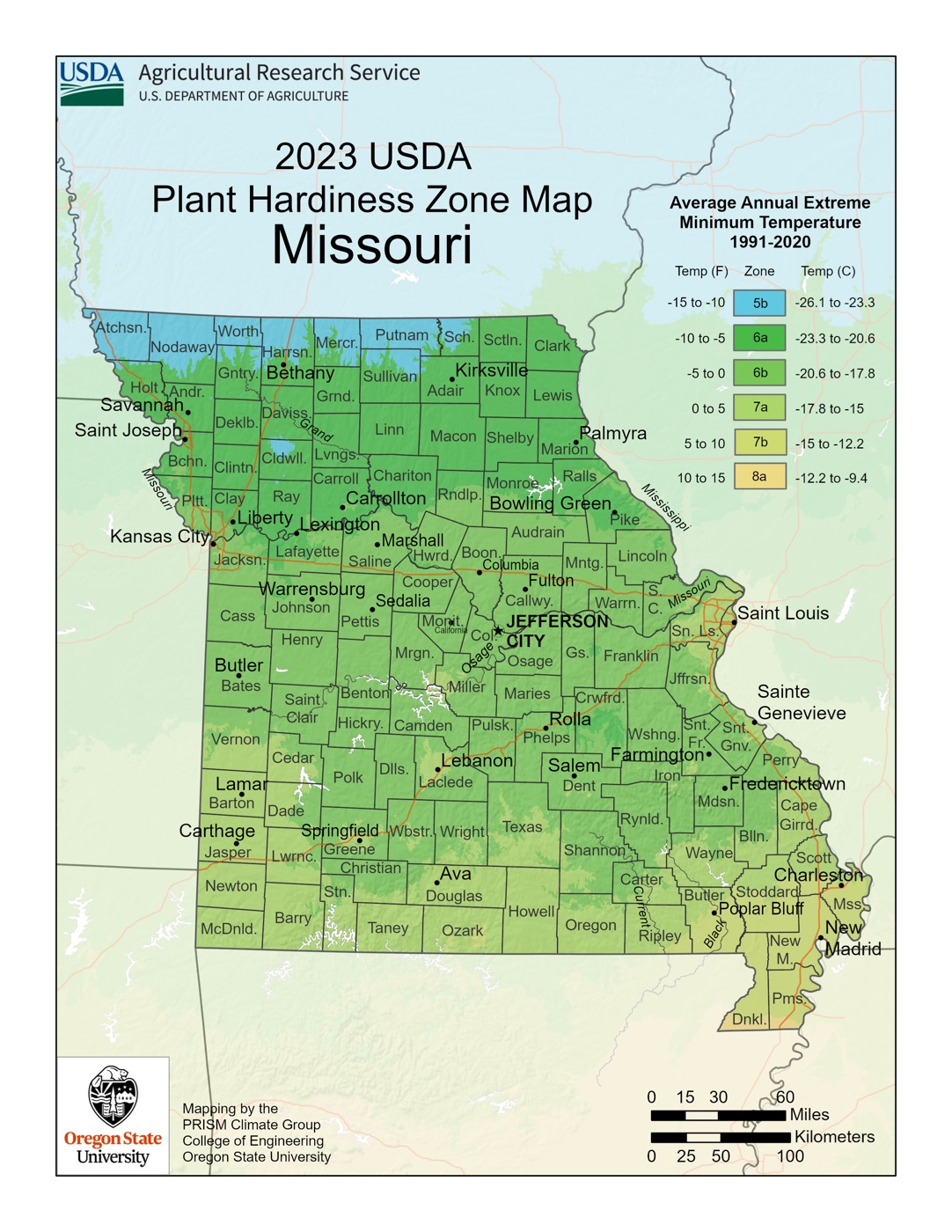 Missouri zone map (full size, opens in a new tab)
-
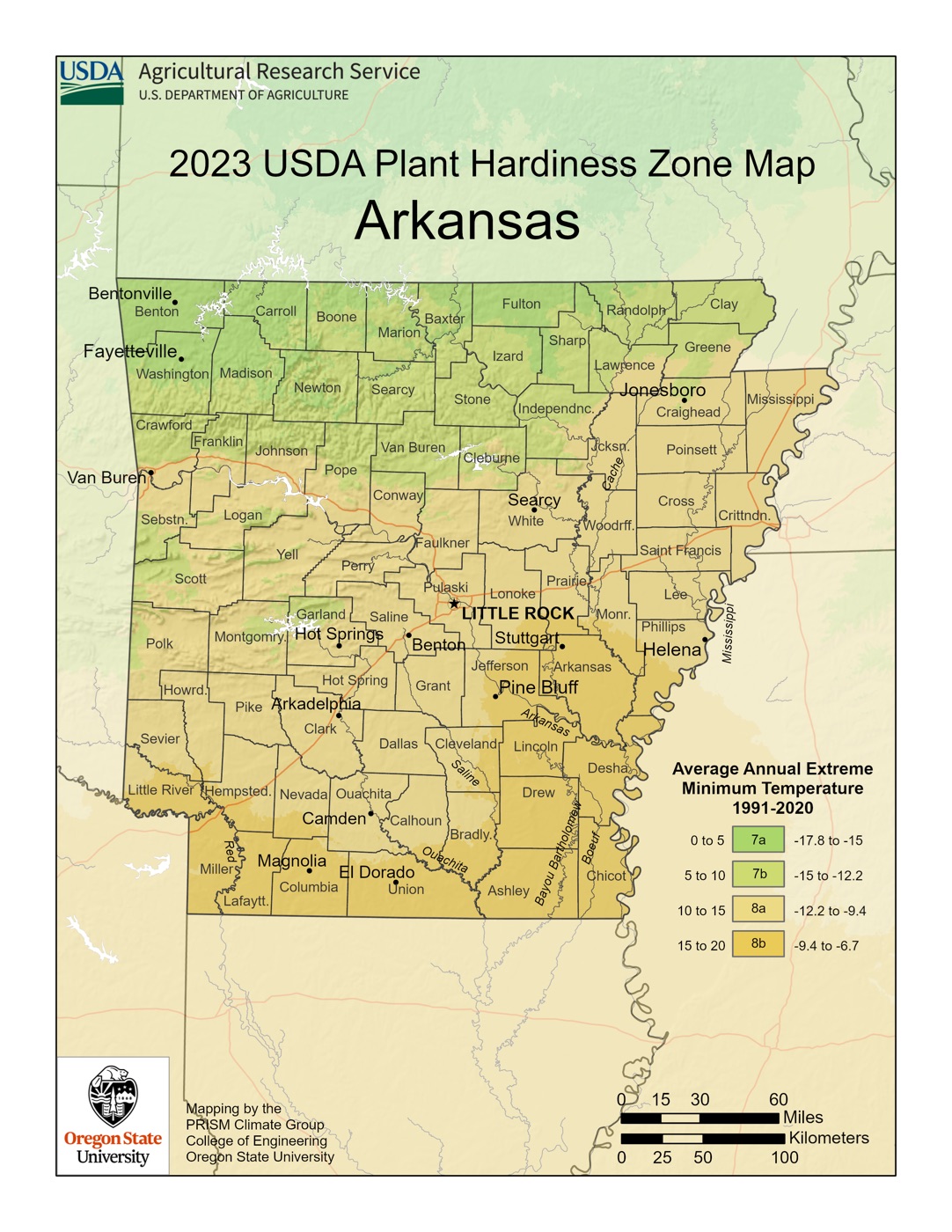 Arkansas zone map (full size, opens in a new tab)
-
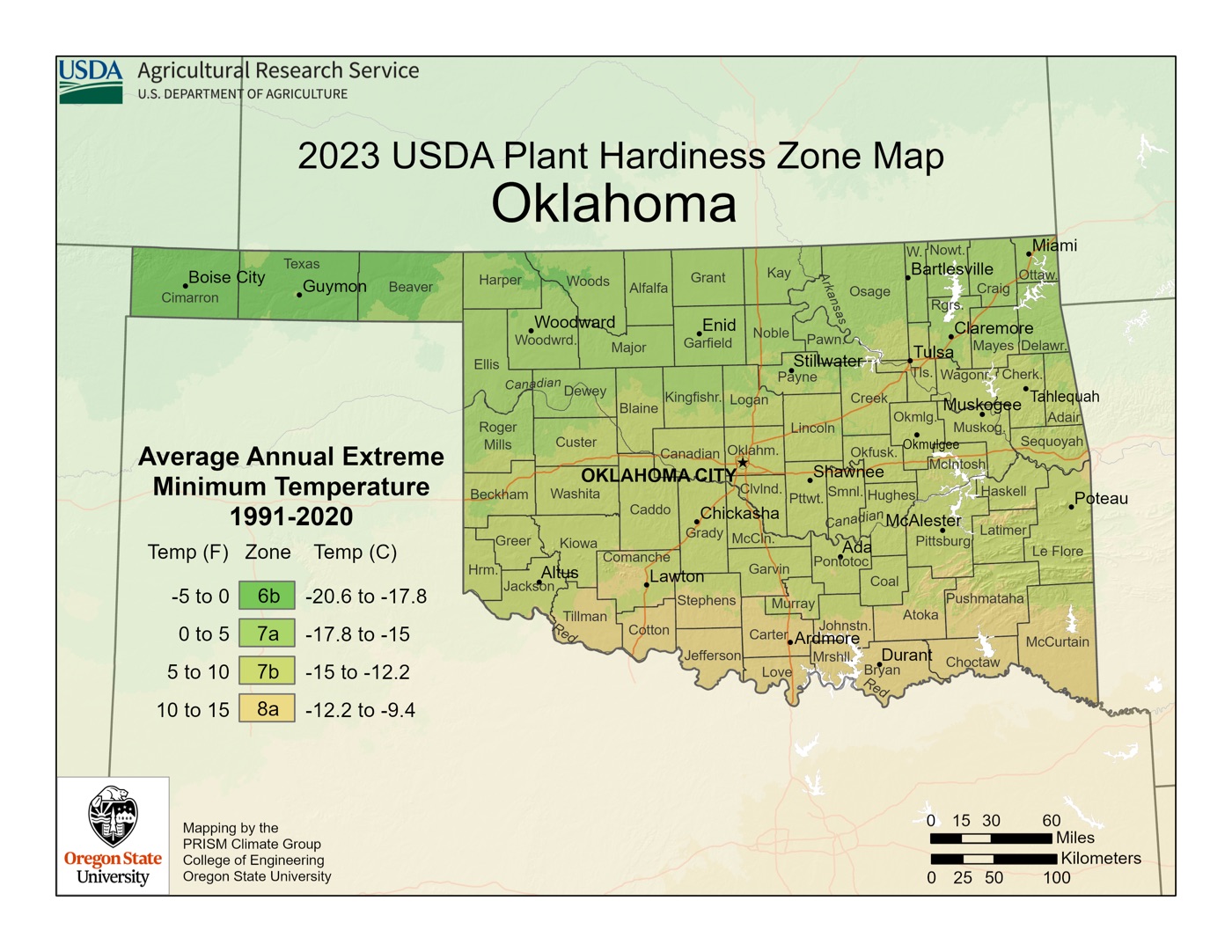 Oklahoma zone map (full size, opens in a new tab)
-
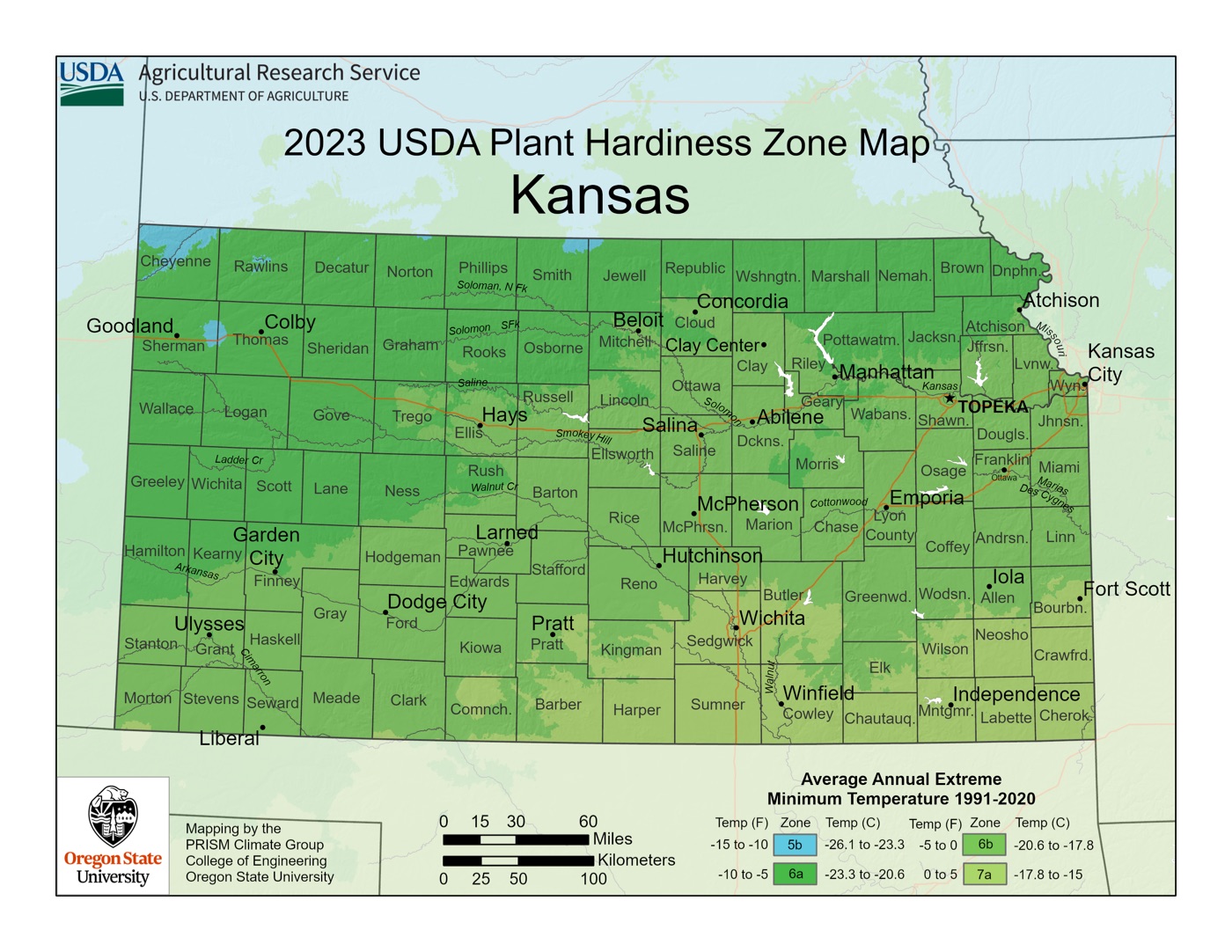 Kansas zone map (full size, opens in a new tab)
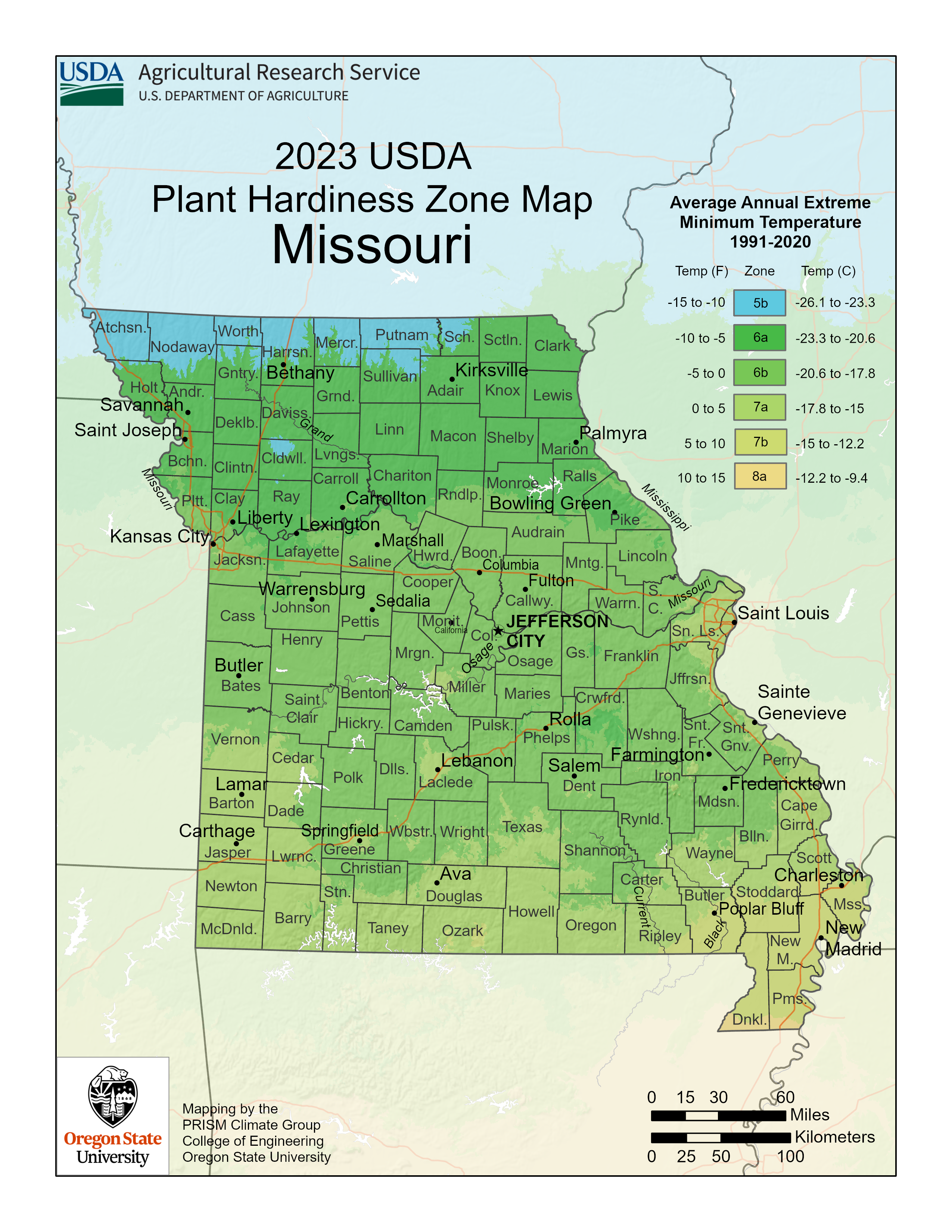
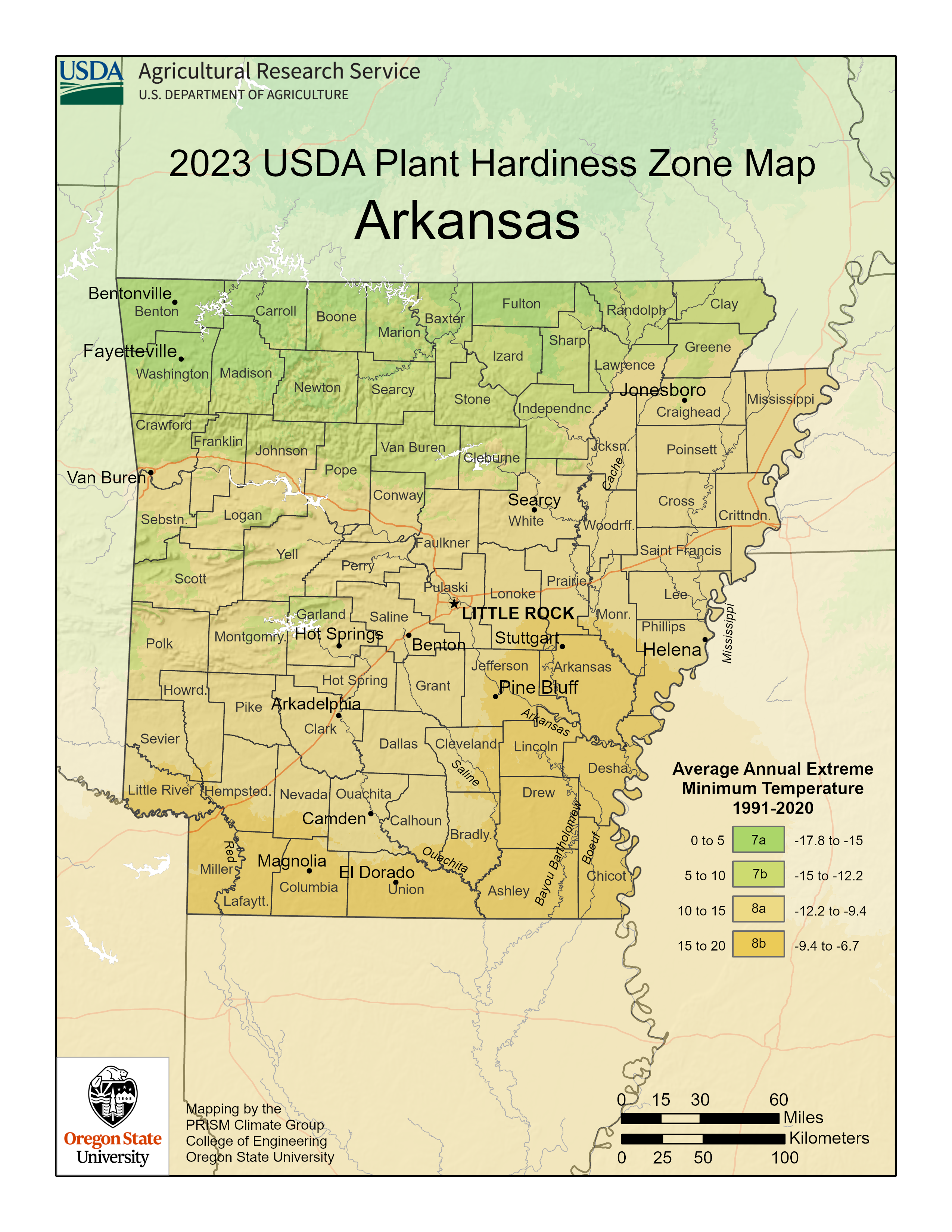
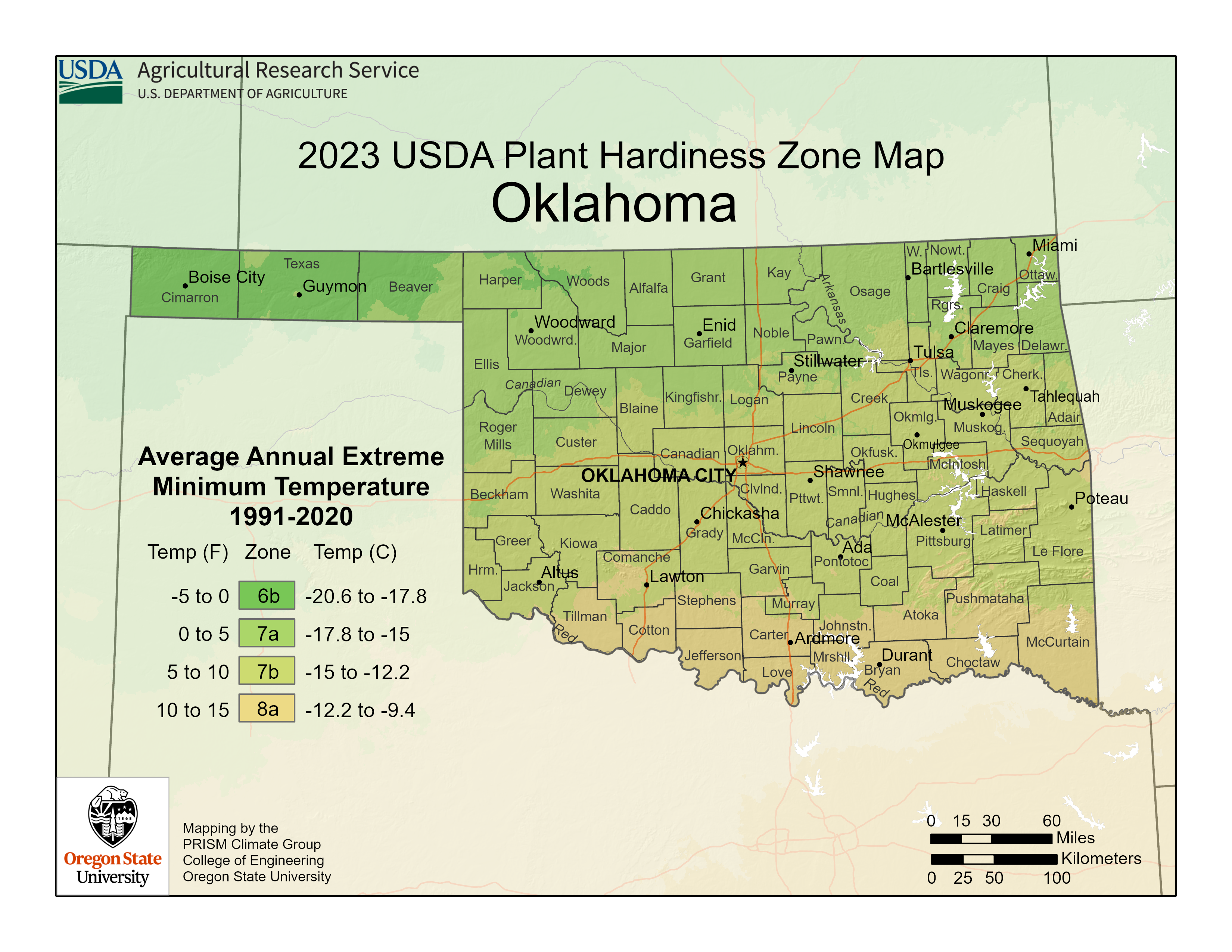
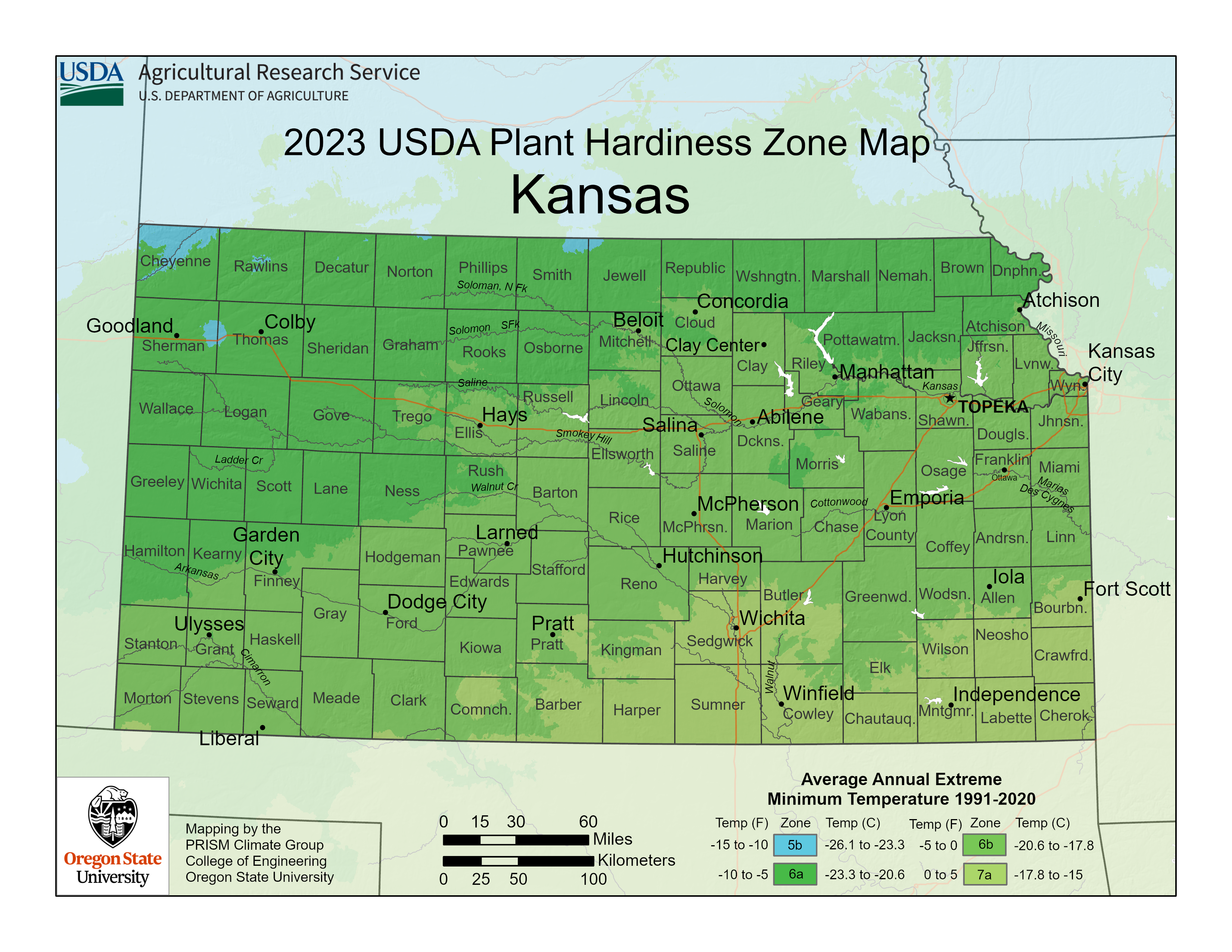
Official 2023 USDA Plant Hardiness Zone Maps. Tap a map to open it full size.
Maps: USDA Agricultural Research Service, with mapping by the PRISM Climate Group, Oregon State University.
Plant Patent
Not patented. This is the straight species, not a named variety, so there are no restrictions on growing it from seed or division.
About the Blue Flag Iris
Blue flag iris is a native iris of marshes, stream banks, and wet meadows. In May and June it sends up stalks of purple-blue flowers with yellow markings near the center. It spreads by rhizomes and by seed. It’s a good choice for rain gardens, pond edges, and other low, wet spots.
Choosing a Spot
- Full sun gives the best flowers. It tolerates part shade.
- Wet is fine. It grows in moist to wet soil, tolerates flooding, and can grow in standing water a few inches deep (up to about 4 inches, by one source; another says it tolerates complete submergence in up to 6 inches).
- Not for dry spots. In dry conditions it needs extra water.
Planting
Set the plant so its crown, where the stems meet the roots, is even with the soil line. Container-grown plants can be planted at any time of year. Water them in well.
Watering
Keep the soil moist to wet. In a dry spot or a dry spell, water it regularly.
Mulch and Fertilizer
Mulch 2 to 4 inches deep. If the plant needs feeding, a light application of a balanced fertilizer when growth starts in spring is enough for most perennials.
Pruning
Cut the leaves back to just above the crown after the first frost.
Common Problems
- Insects: Aphids, iris borer, and iris thrips. Aphids can spread mosaic virus.
- Diseases: Blossom and leaf blight, leaf spot, bacterial soft rot, and crown or rhizome rot.
Good for Wildlife
Hummingbirds visit the flowers. Deer and other plant-eaters find the leaves unpalatable.
Propagation
Divide the rhizomes after the flowers fade. Wear gloves, since the sap can irritate skin.
Availability
Currently out of stock until Spring 2027.
Our nursery stock changes through the season. Contact us to check what we have on hand, current sizes, and pricing.
Sources
Growing information on this page was checked against these public references:
- Iris versicolor (North Carolina Extension Gardener Plant Toolbox) (opens in a new tab)
- Rain Garden Plants: Blue Flag Iris (Penn State Extension) (opens in a new tab)
- Blue flag iris (The Morton Arboretum) (opens in a new tab)
- Iris (ASPCA Toxic and Non-Toxic Plants) (opens in a new tab)
- Herbaceous Ornamentals, MG9 (University of Missouri Extension) (opens in a new tab)
Disclaimer: The information on this page is based on publicly available knowledge and research. Individual results may vary.