Dutchman's Breeches
Dicentra cucullaria
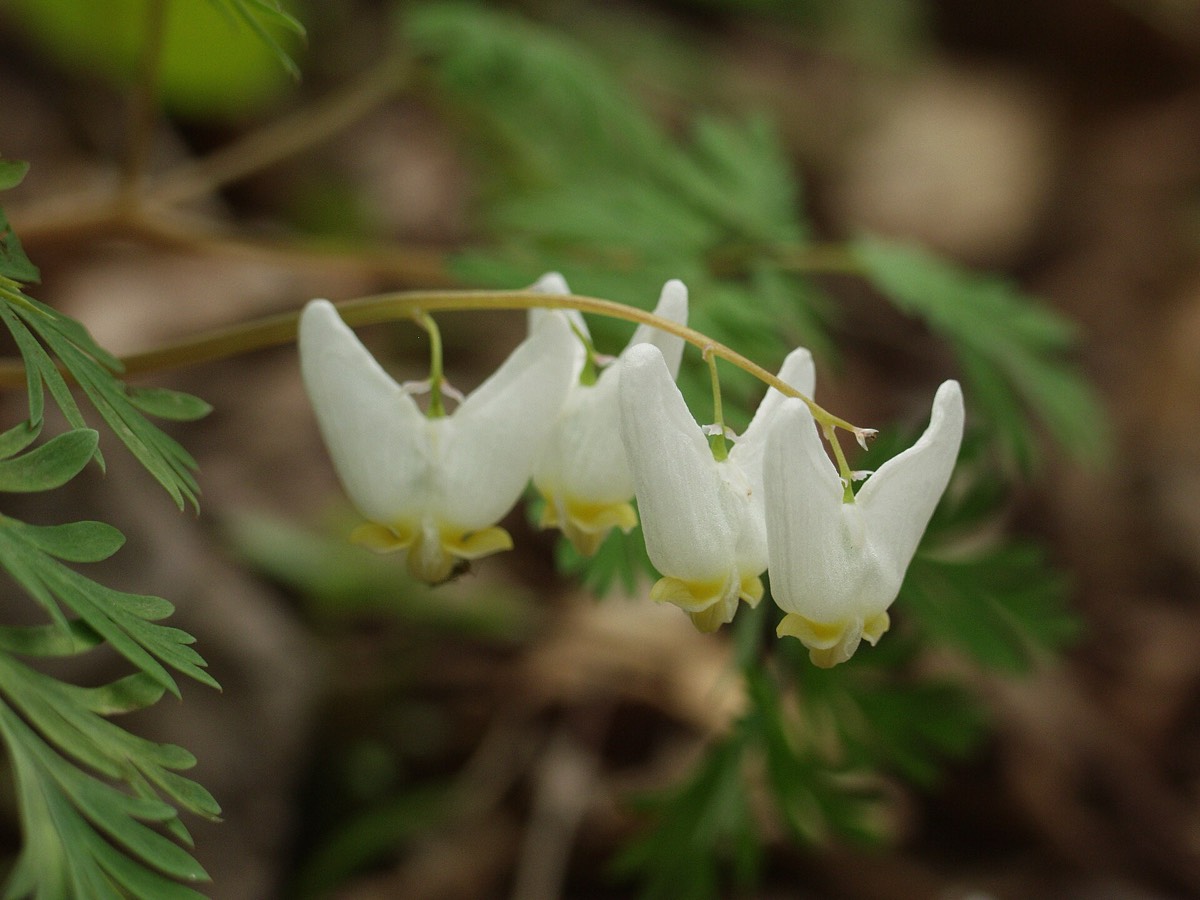
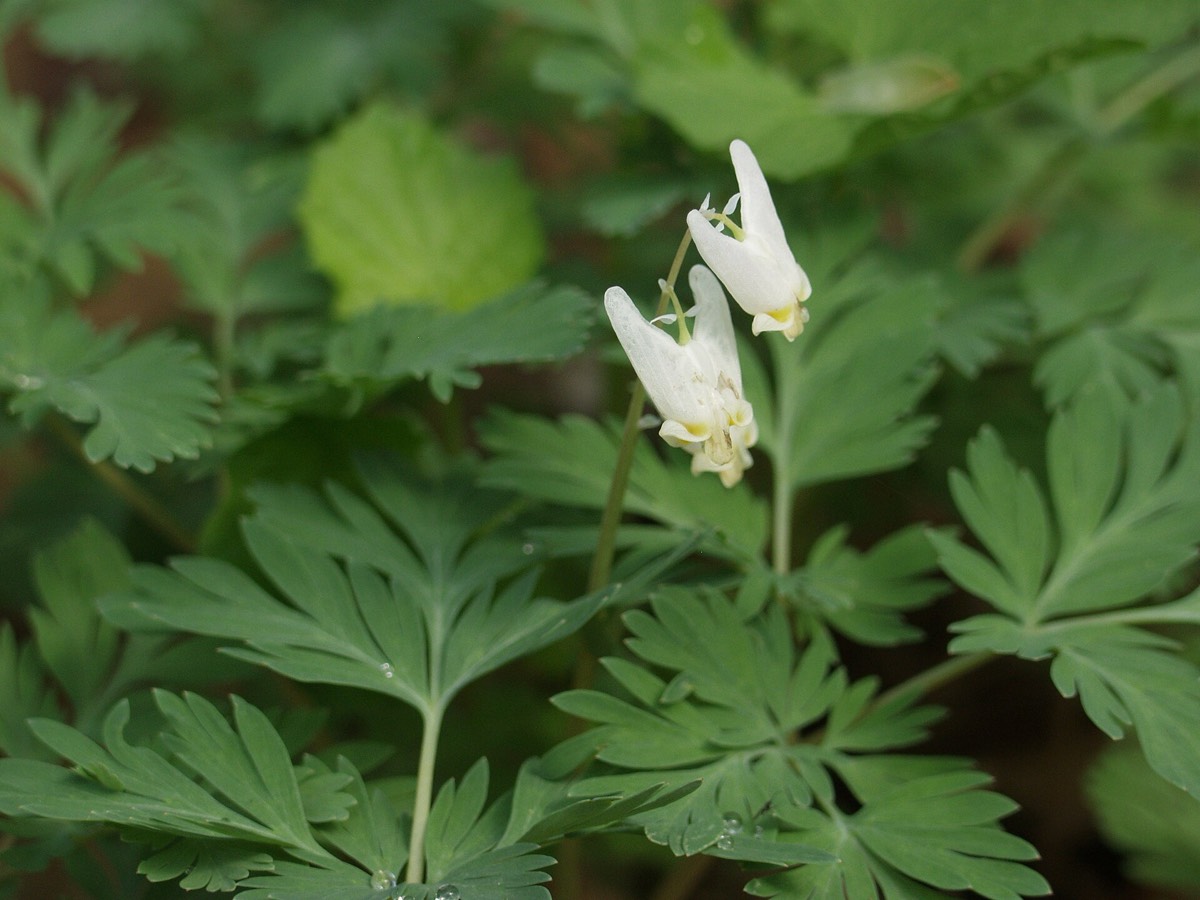
Dutchman's breeches is a small native spring wildflower with white flowers shaped like upside-down pants and lacy blue-green leaves. It blooms in March to May, then goes dormant by summer. It's poisonous if eaten.
At a Glance
| Plant type | Spring woodland wildflower that goes dormant in summer |
|---|---|
| Family | Poppy family (Papaveraceae) |
| Other names | Dutchman's britches |
| Native range | Eastern Canada to the northern and eastern United States. Found throughout Missouri except the Southeast Lowlands, on rich wooded slopes, bottomlands, and stream banks. |
| Mature height | 3 to 12 inches |
| Mature spread | 6 to 8 inches |
| Flowers | Four to ten white or faintly pink flowers about 3/4 inch long, shaped like upside-down pants, on a leaning, leafless stalk. Fragrant. March to May. |
| Foliage | Finely divided, fern-like, blue-green leaves. The plant goes dormant by summer. |
| Toxicity | Poisonous. All parts contain alkaloids. Eating large amounts can cause trembling, staggering, vomiting, diarrhea, convulsions, and labored breathing. It can also cause a skin rash in some people. |
Growing Conditions
| USDA hardiness zones | 3 to 7 |
|---|---|
| Sun | Part shade or dappled light |
| Soil | Rich, humus-heavy soil with excellent drainage. Tolerates clay. |
| Soil pH | Acidic to neutral |
| Water | Medium. Moist but well-drained. |
| Tolerates | Deer, rabbits |
| Does poorly with | Poor drainage |
Will It Grow Here?
In parts of our area. Dutchman's Breeches is hardy in zones 3 to 7. Find your zone in the table below.
| Zone | Grows here? | Towns in this zone |
|---|---|---|
| 6b (our farm) | Yes | Lebanon, MO; Bolivar, MO; Iola, KS; Garnett, KS |
| 7a | Yes | Springfield, MO; Joplin, MO; Fayetteville, AR; Bentonville, AR |
| 7b | Yes | Harrison, AR; Tulsa, OK; Broken Arrow, OK; Tahlequah, OK |
| 8a | No, too warm | Van Buren, AR; Alma, AR |
Not sure which zone you're in? Look up your ZIP code on the USDA Plant Hardiness Zone Map (opens in a new tab).
-
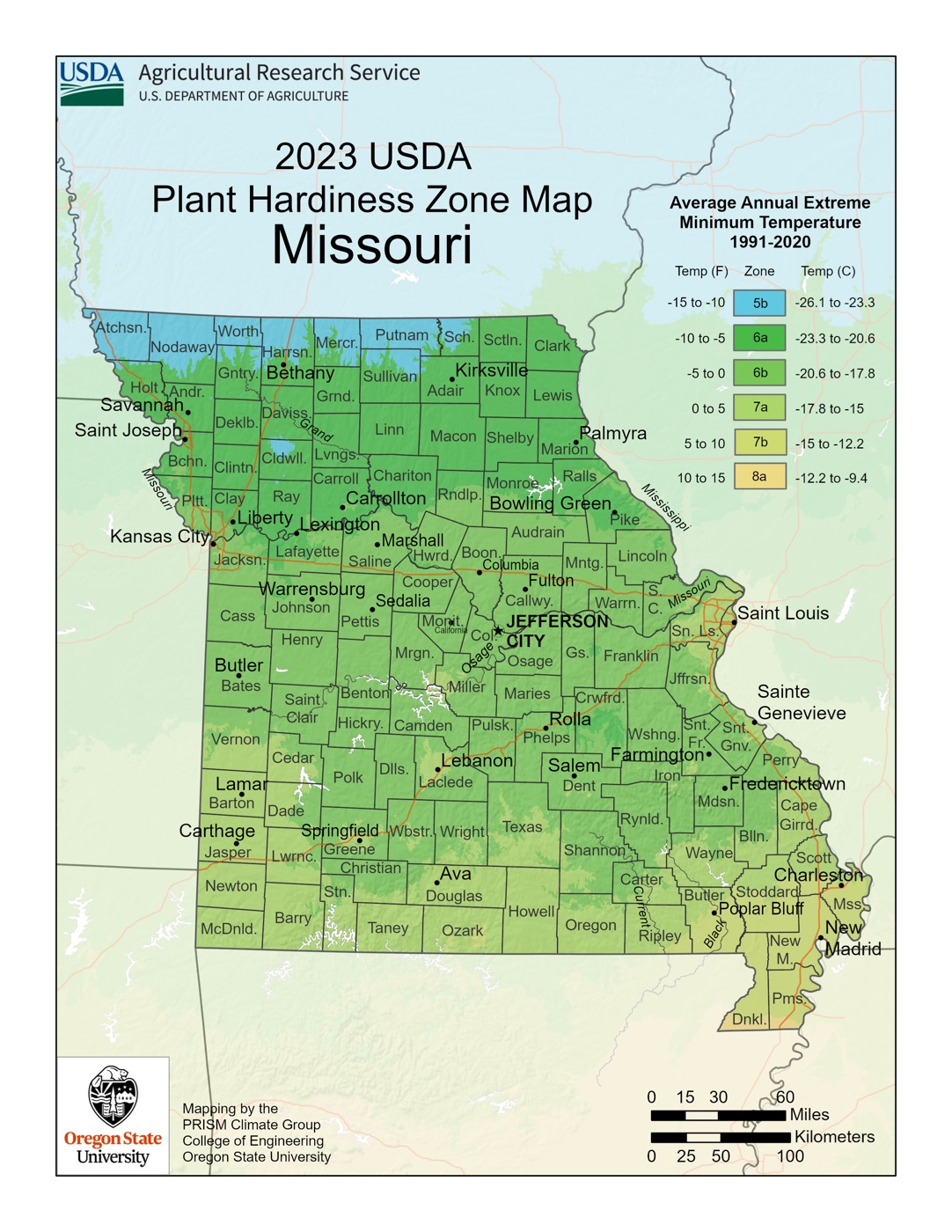 Missouri zone map (full size, opens in a new tab)
-
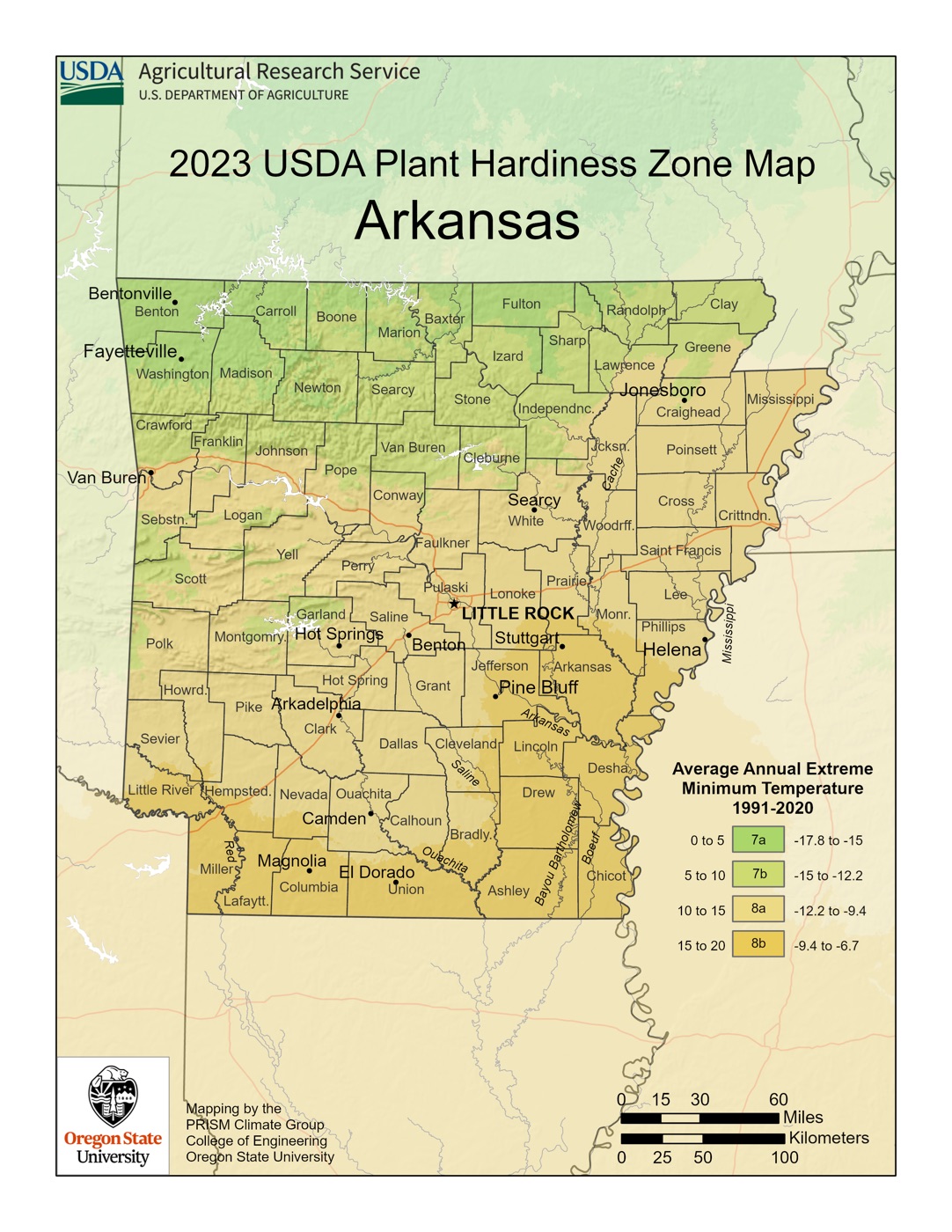 Arkansas zone map (full size, opens in a new tab)
-
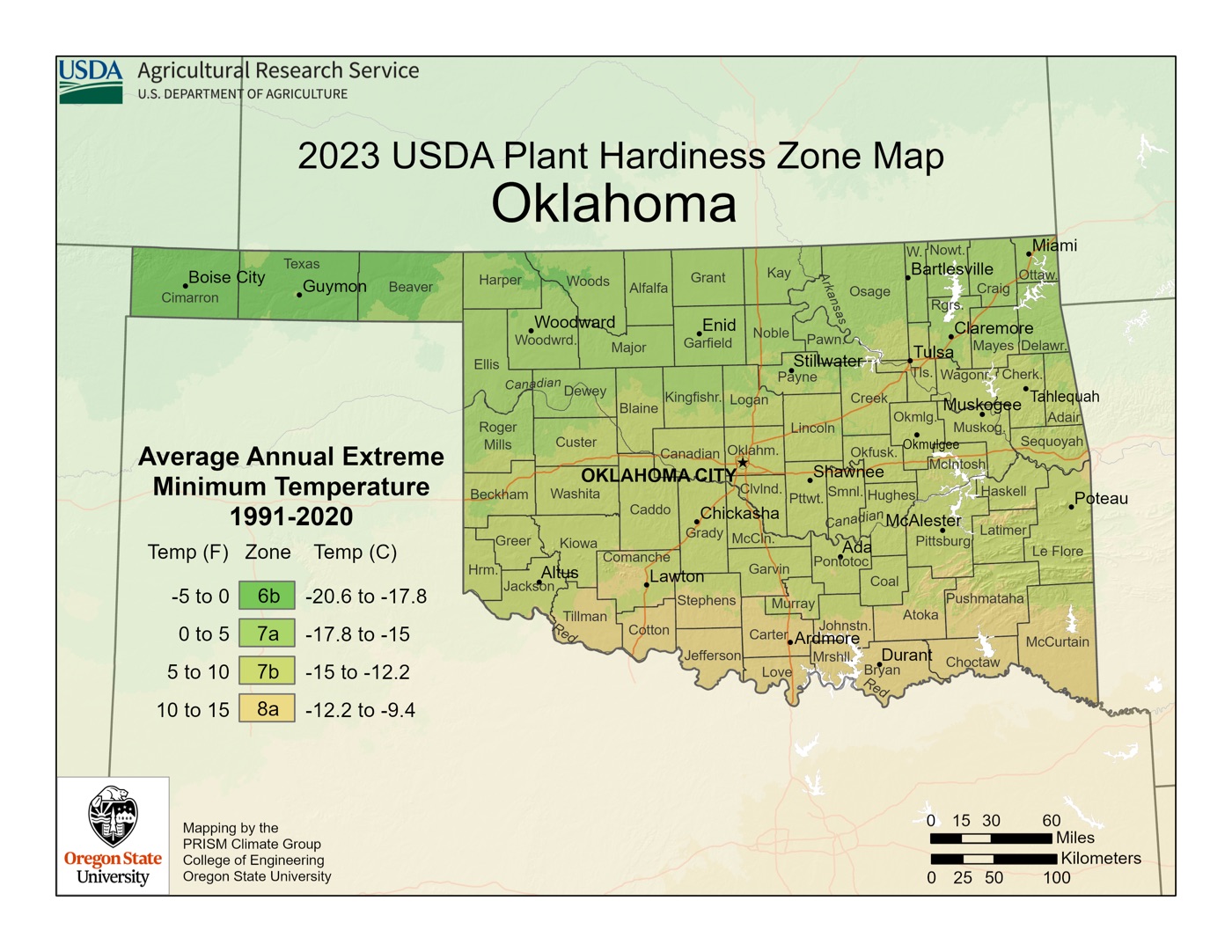 Oklahoma zone map (full size, opens in a new tab)
-
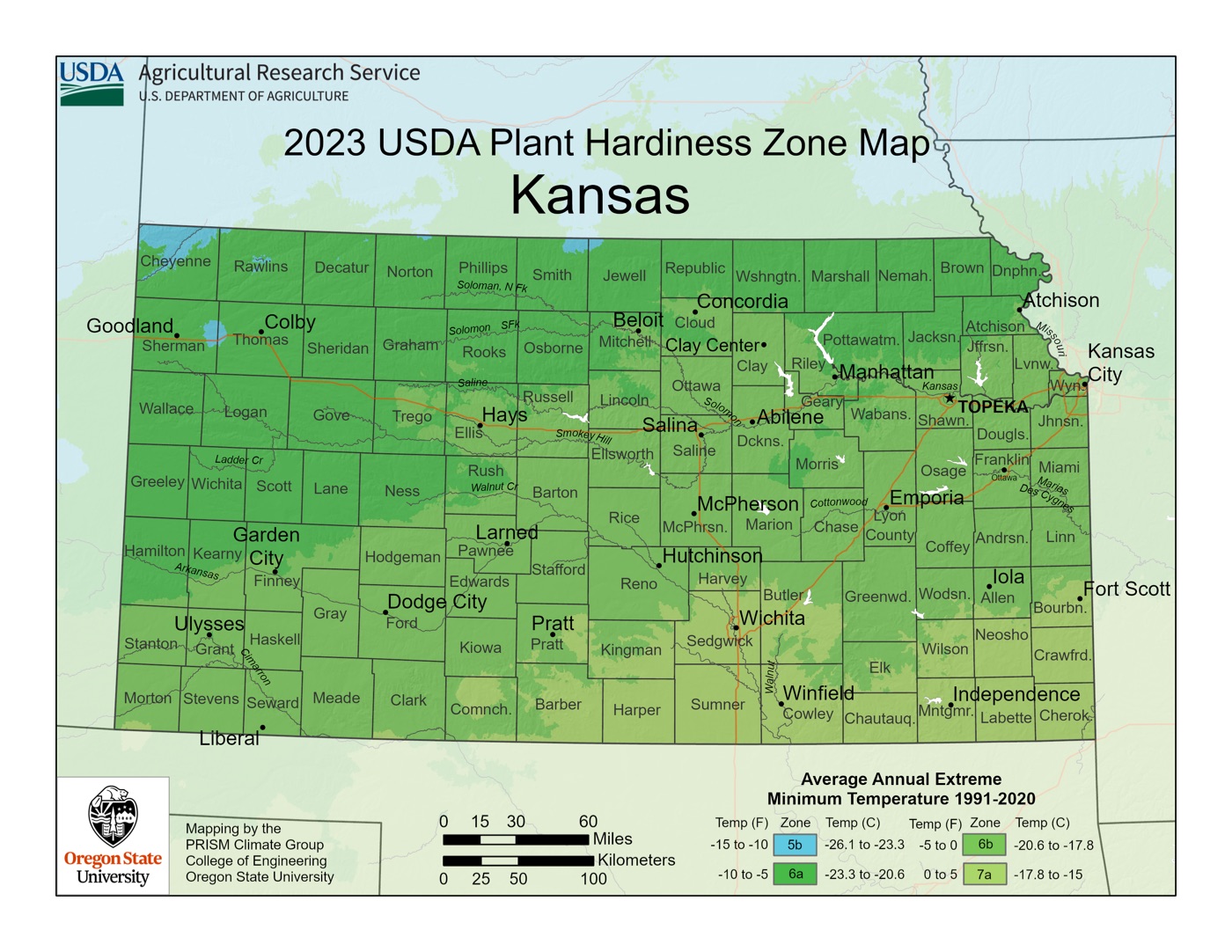 Kansas zone map (full size, opens in a new tab)
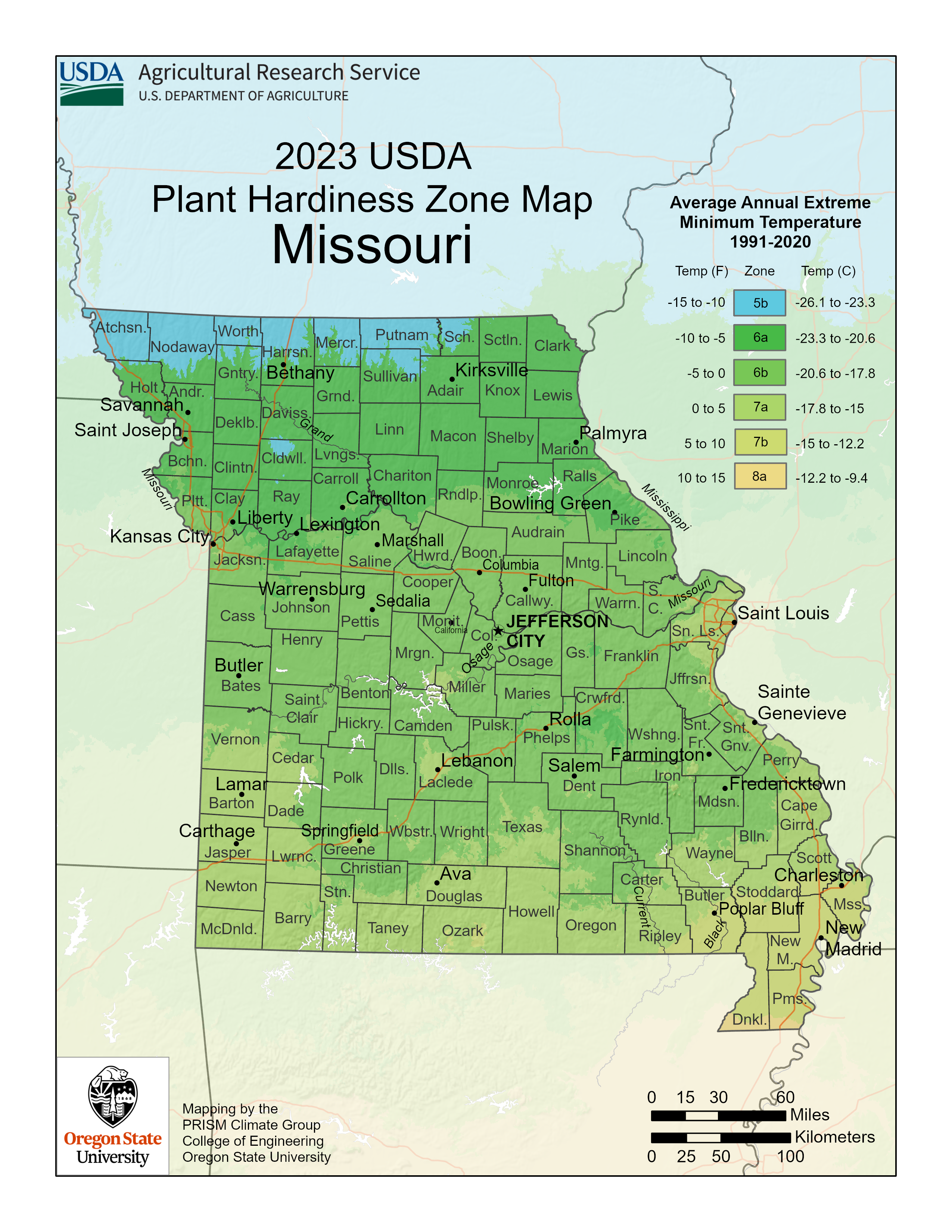
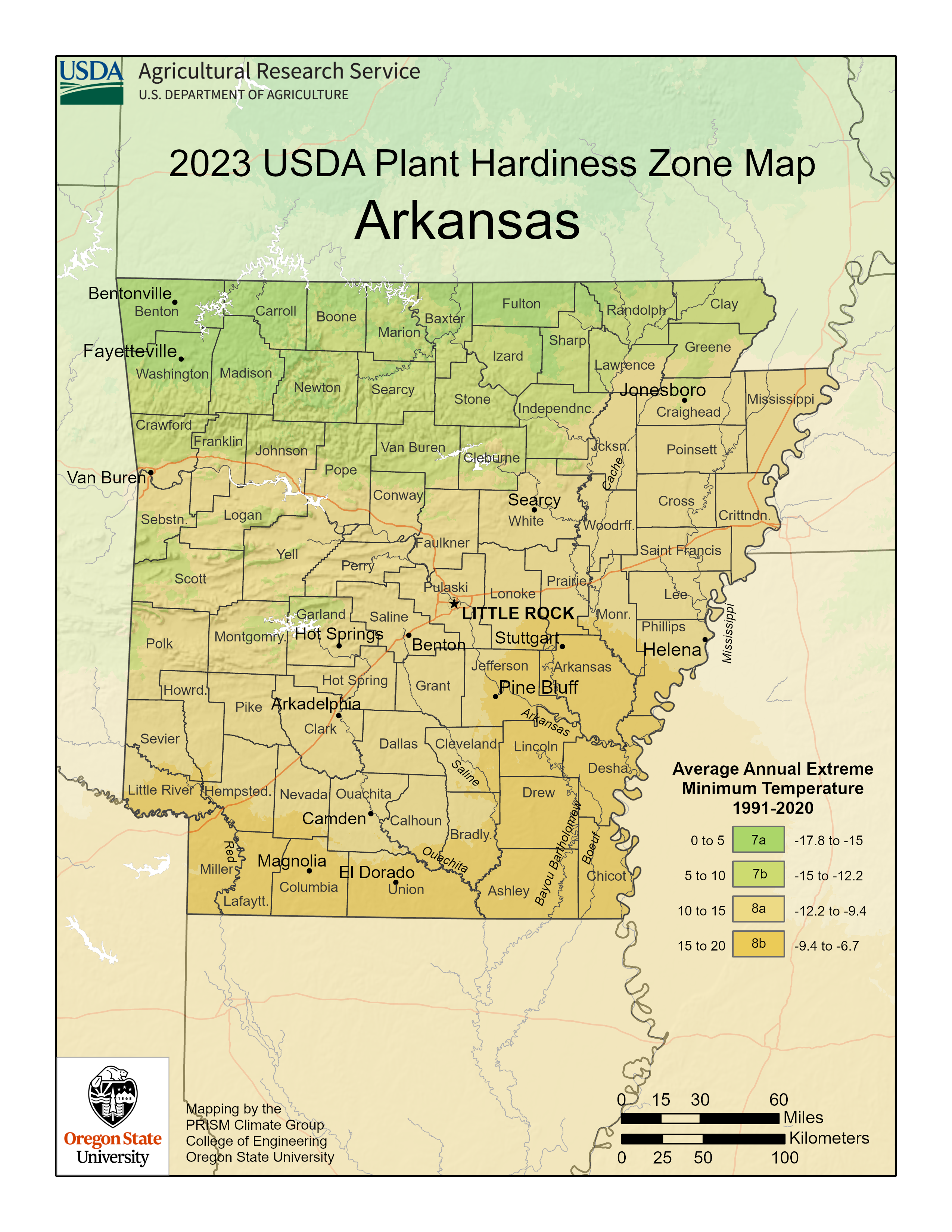
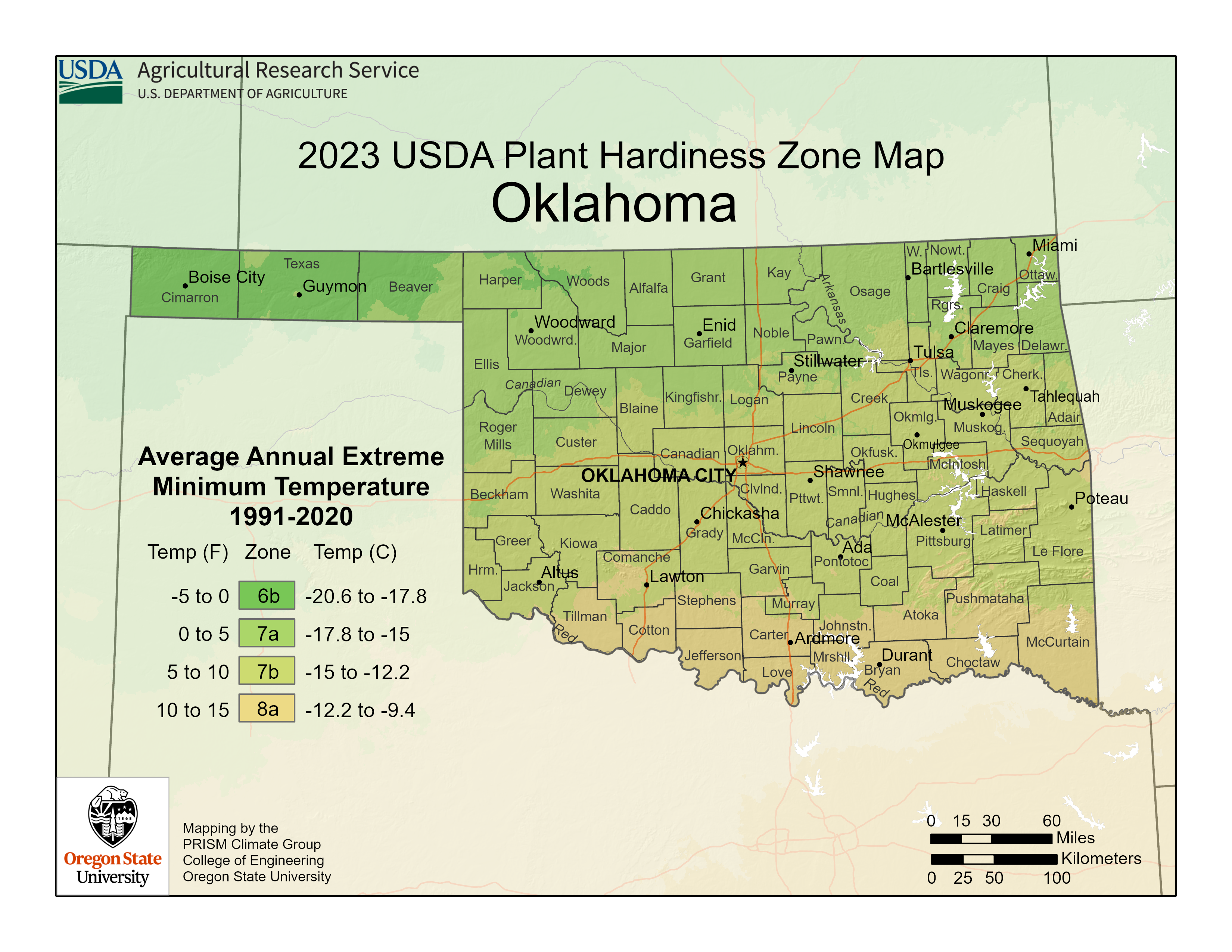
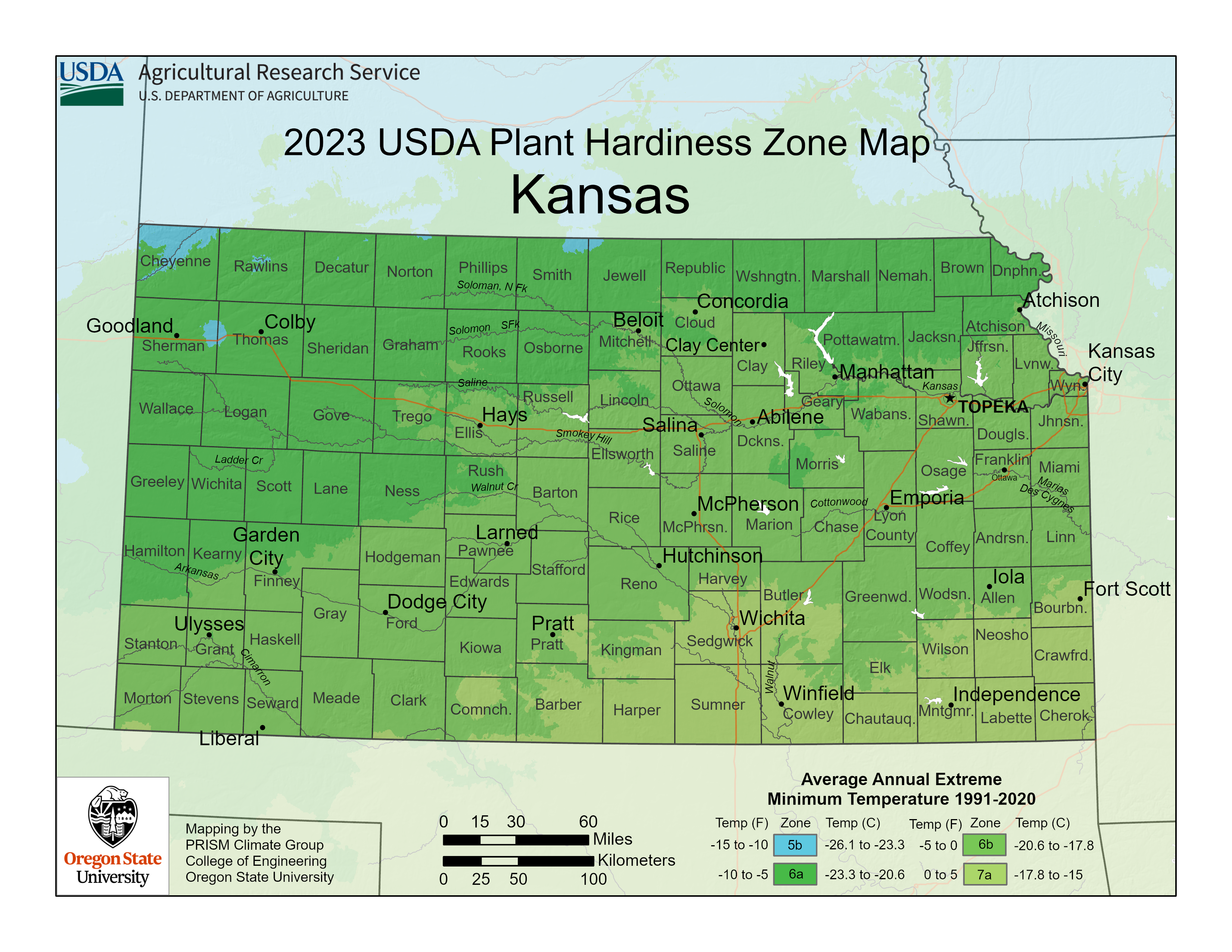
Official 2023 USDA Plant Hardiness Zone Maps. Tap a map to open it full size.
Maps: USDA Agricultural Research Service, with mapping by the PRISM Climate Group, Oregon State University.
Plant Patent
Not patented. This is the straight species, not a named variety, so there are no restrictions on growing it from seed or division.
About the Dutchman’s Breeches
Dutchman’s breeches is a native spring wildflower found across most of Missouri in rich, well-drained woods. In early spring it sends up lacy, blue-green leaves and short stalks of white flowers shaped like pairs of pants hanging upside down. By summer the whole plant dies back and goes dormant until next spring.
The rusty patch bumblebee, a federally endangered species, is a key pollinator, because the oddly shaped flowers are hard for other bees to work. Ants carry off the seeds, which have a fleshy part they eat.
It’s hardy only through zone 7, so the warmest part of our area (zone 8a) is outside its range.
Choosing a Spot
- Part shade or dappled light, as on a wooded slope.
- Excellent drainage and rich, humus-heavy soil. It tolerates clay but needs good drainage.
- Mark the spot. It disappears by summer, so it’s easy to dig into by mistake.
Planting
Set the plant so its crown, where the stems meet the roots, is even with the soil line. Container-grown plants can be planted at any time of year. Water them in well.
Watering
Most garden perennials need 1 to 2 inches of water a week in summer, from rain or watering. Keep the soil moist while it’s growing in spring.
Mulch and Fertilizer
Mulch 2 to 4 inches deep. If the plant needs feeding, a light application of a balanced fertilizer when growth starts in spring is enough for most perennials.
Pruning
No pruning needed. The leaves die back on their own by summer.
Common Problems
No significant pest or disease problems are listed. Deer and rabbits leave it alone. A plant that vanishes in early summer is just going dormant.
Good for Wildlife
Bumblebees, including the endangered rusty patch bumblebee, pollinate the flowers. Ants spread the seeds.
Propagation
Divide the crowns or take root cuttings in spring or fall. Seeds are slow and hard to germinate and need a moist, cold period first.
Availability
Currently out of stock until Spring 2027.
Our nursery stock changes through the season. Contact us to check what we have on hand, current sizes, and pricing.
Sources
Growing information on this page was checked against these public references:
- Dicentra cucullaria (North Carolina Extension Gardener Plant Toolbox) (opens in a new tab)
- Dutchman's Breeches Field Guide (Missouri Department of Conservation) (opens in a new tab)
- Herbaceous Ornamentals, MG9 (University of Missouri Extension) (opens in a new tab)
Disclaimer: The information on this page is based on publicly available knowledge and research. Individual results may vary.