Elderberry
Sambucus canadensis
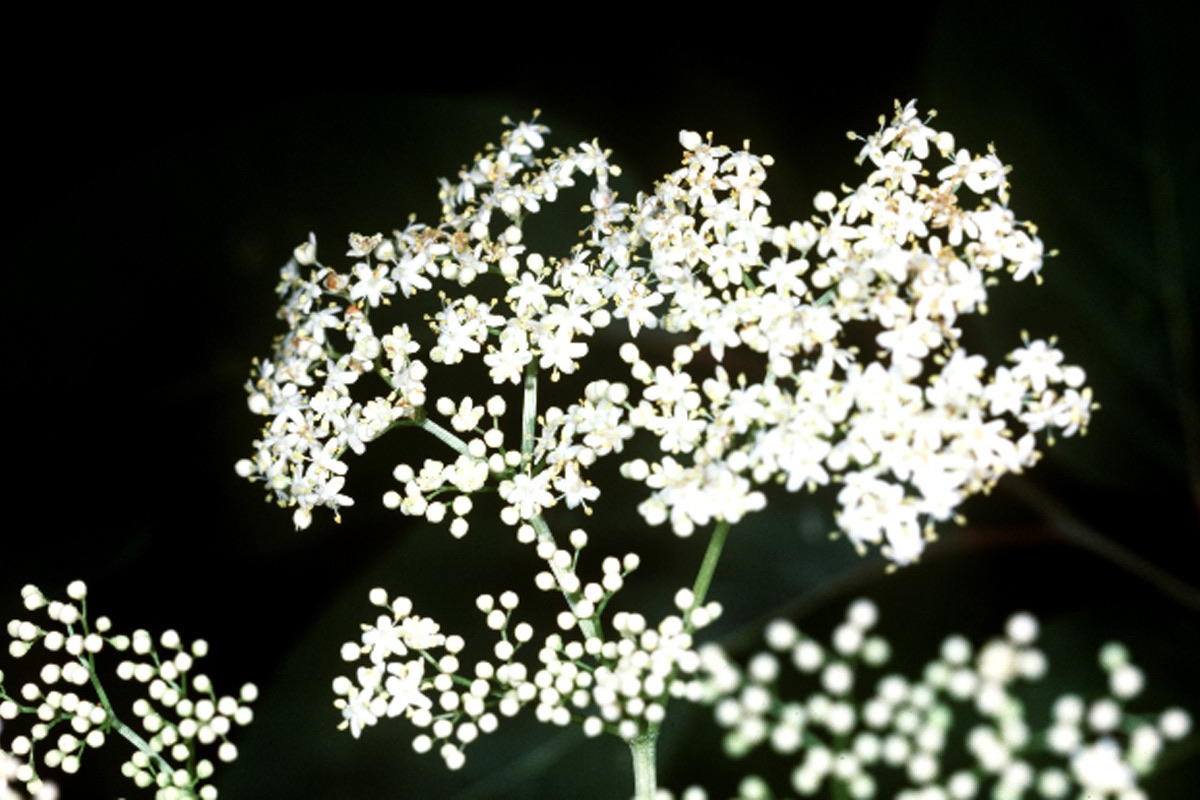
American elderberry is a native shrub with big, flat clusters of white flowers in June and purple-black berries in late summer. The ripe berries are cooked into jelly, pie, and syrup. It likes sun and steady moisture, and it spreads into a thicket.
At a Glance
| Plant type | Deciduous shrub |
|---|---|
| Family | Viburnum family (Viburnaceae). Some sources list it under Adoxaceae. |
| Other names | American elderberry, common elderberry, American black elderberry. Also listed as Sambucus nigra subsp. canadensis. |
| Native range | Eastern and midwestern North America. Common statewide in Missouri, in bottomland woods, along streams and ponds, and in old fields and roadsides. |
| Mature height | 5 to 12 feet |
| Mature spread | 6 to 12 feet, and wider over time as it spreads by root sprouts |
| Growth rate | Medium. It spreads quickly by root sprouts and can fill in a row within two to three years. |
| Flowers | Flat-topped clusters of tiny, fragrant, creamy-white flowers, 4 to 10 inches across. Late May to July, mostly in June. |
| Fruit or seed | Purple-black berries about 1/4 inch across, in drooping clusters. Ripe from late July to September. Edible only when ripe and cooked. |
| Foliage | Opposite compound leaves, 4 to 12 inches long, usually with 5 to 7 toothed leaflets. Yellow fall color. |
| Toxicity | The leaves, stems, bark, and roots contain compounds that can release cyanide, and unripe berries are much more toxic than ripe ones. Poisoning causes nausea, vomiting, abdominal cramps, and weakness. Eat only ripe berries, and always cook them first. Keep leaves and stems out of anything you cook or juice. |
Growing Conditions
| USDA hardiness zones | 4 to 8 |
|---|---|
| Sun | Full sun to part shade. It prefers sunny sites. |
| Soil | Moist, well-drained, moderately fertile soil. Grows in clay, loam, or sand. Where drainage is poor, plant on a raised bed or berm. |
| Soil pH | 5.5 to 6.5 |
| Water | Medium to high. The plant survives dry spells, but good fruit needs 1 to 2 inches of water a week, especially while the berries ripen. |
| Tolerates | Wet soil, clay, heat, compacted soil |
| Does poorly with | Long dry spells while fruiting. Branches can break in high wind or under heavy snow and ice. |
Will It Grow Here?
Yes, anywhere in our area. Elderberry is hardy in zones 4 to 8, which covers every zone in our area (6b through 8a).
| Zone | Grows here? | Towns in this zone |
|---|---|---|
| 6b (our farm) | Yes | Lebanon, MO; Bolivar, MO; Iola, KS; Garnett, KS |
| 7a | Yes | Springfield, MO; Joplin, MO; Fayetteville, AR; Bentonville, AR |
| 7b | Yes | Harrison, AR; Tulsa, OK; Broken Arrow, OK; Tahlequah, OK |
| 8a | Yes | Van Buren, AR; Alma, AR |
Not sure which zone you're in? Look up your ZIP code on the USDA Plant Hardiness Zone Map (opens in a new tab).
-
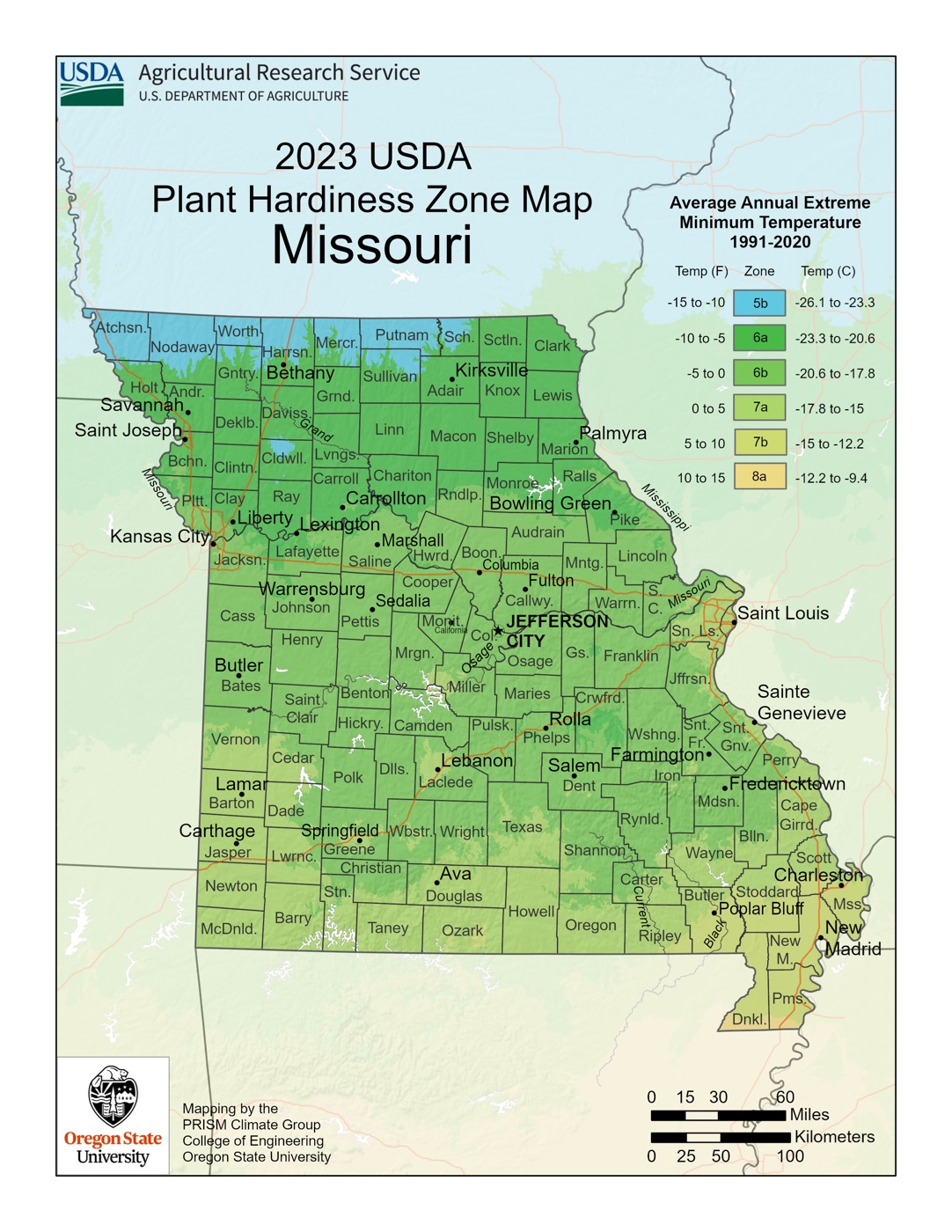 Missouri zone map (full size, opens in a new tab)
-
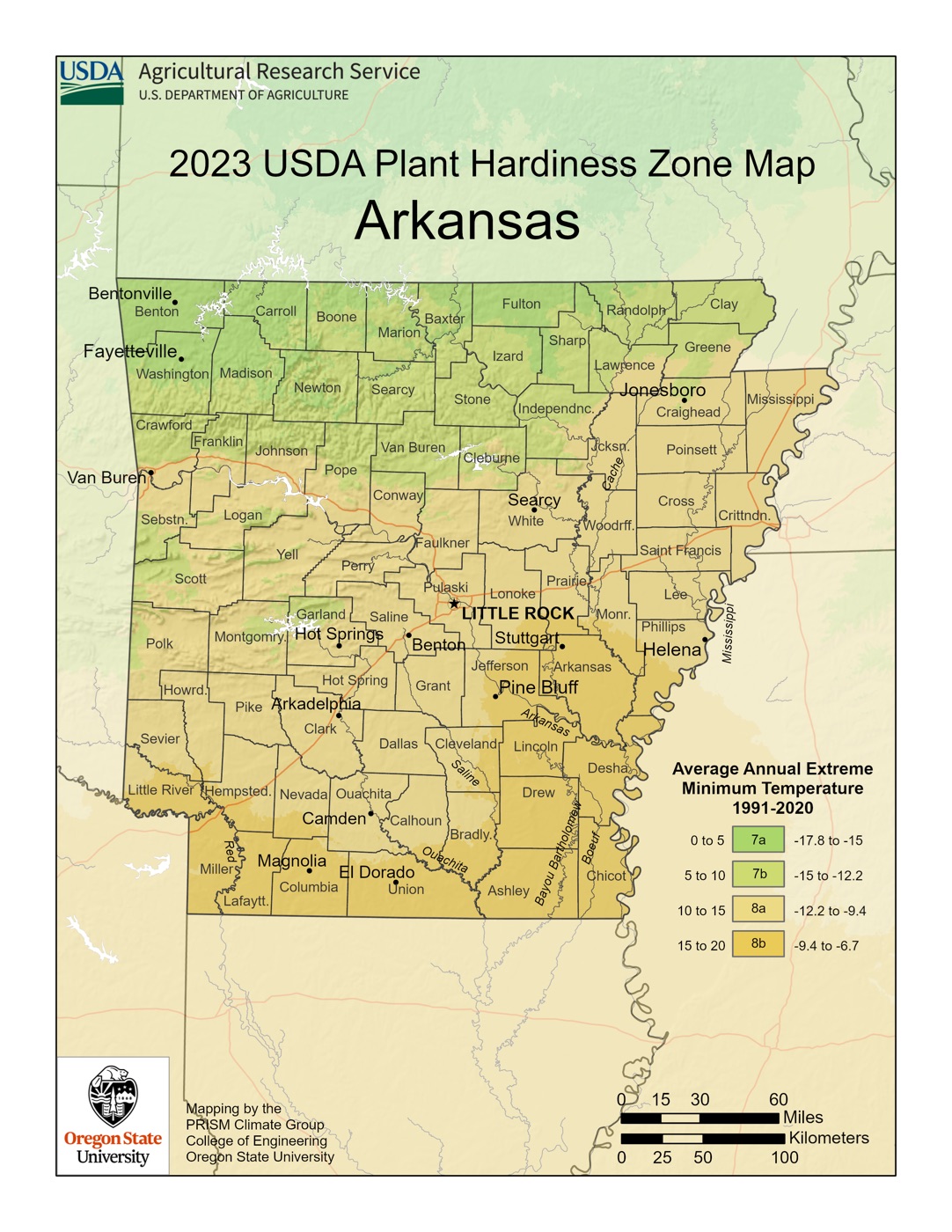 Arkansas zone map (full size, opens in a new tab)
-
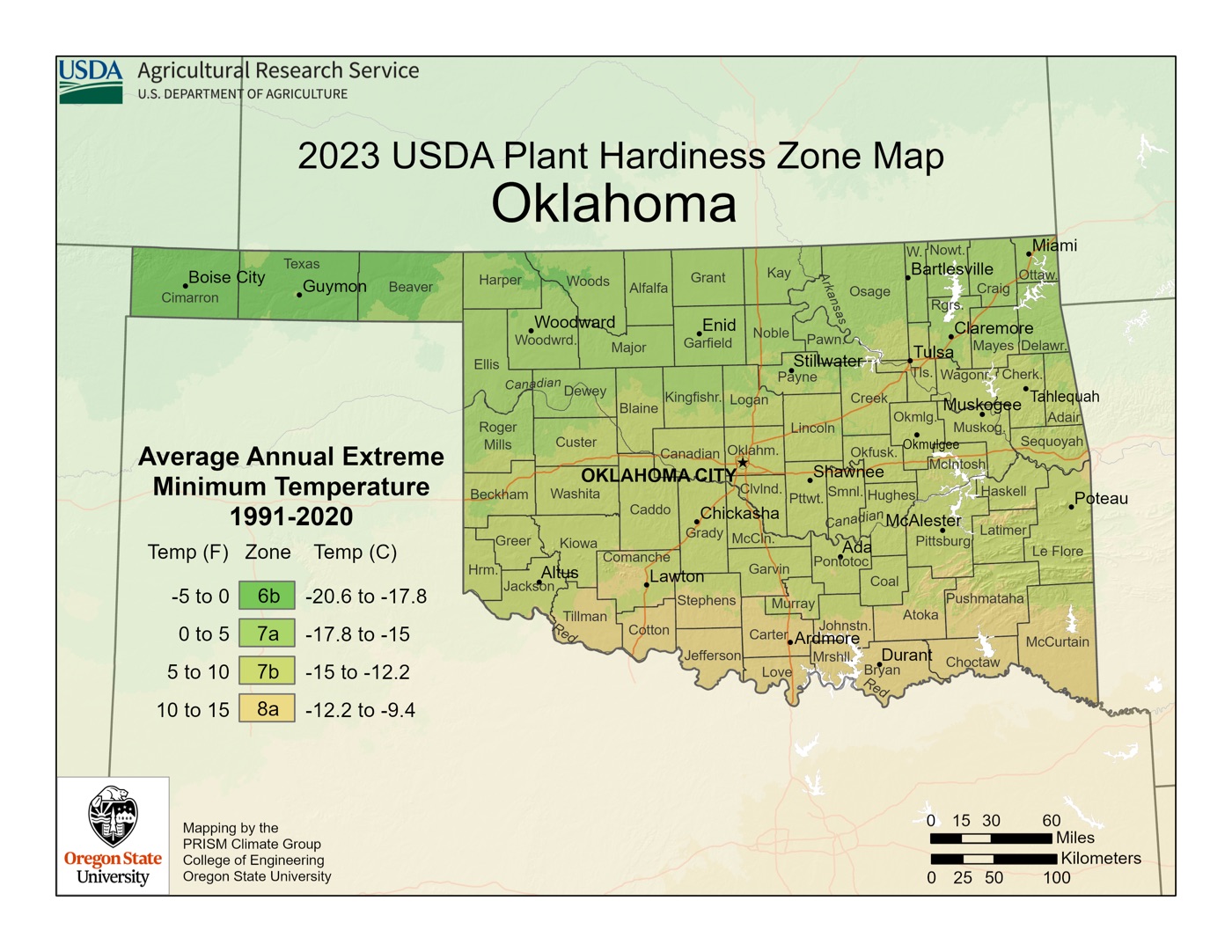 Oklahoma zone map (full size, opens in a new tab)
-
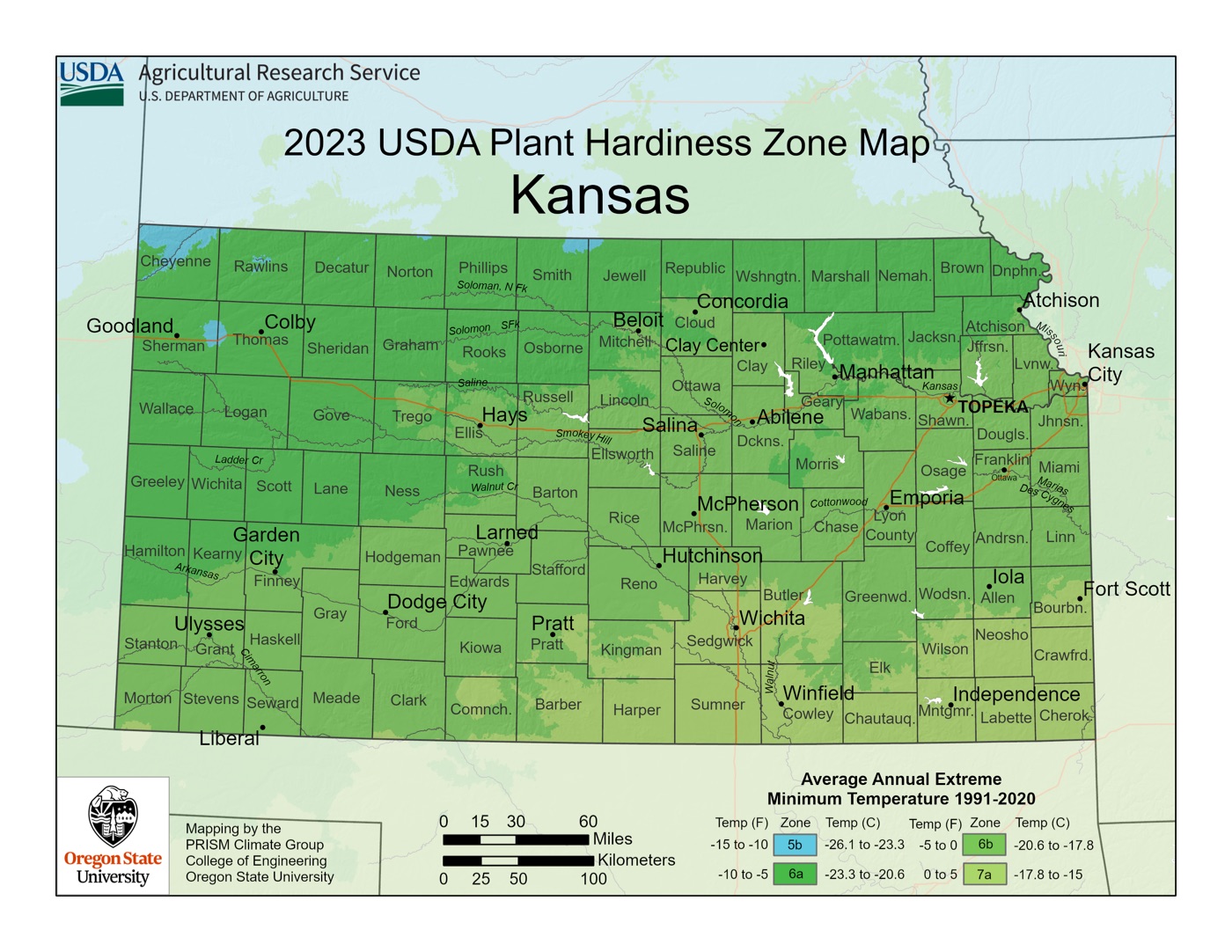 Kansas zone map (full size, opens in a new tab)
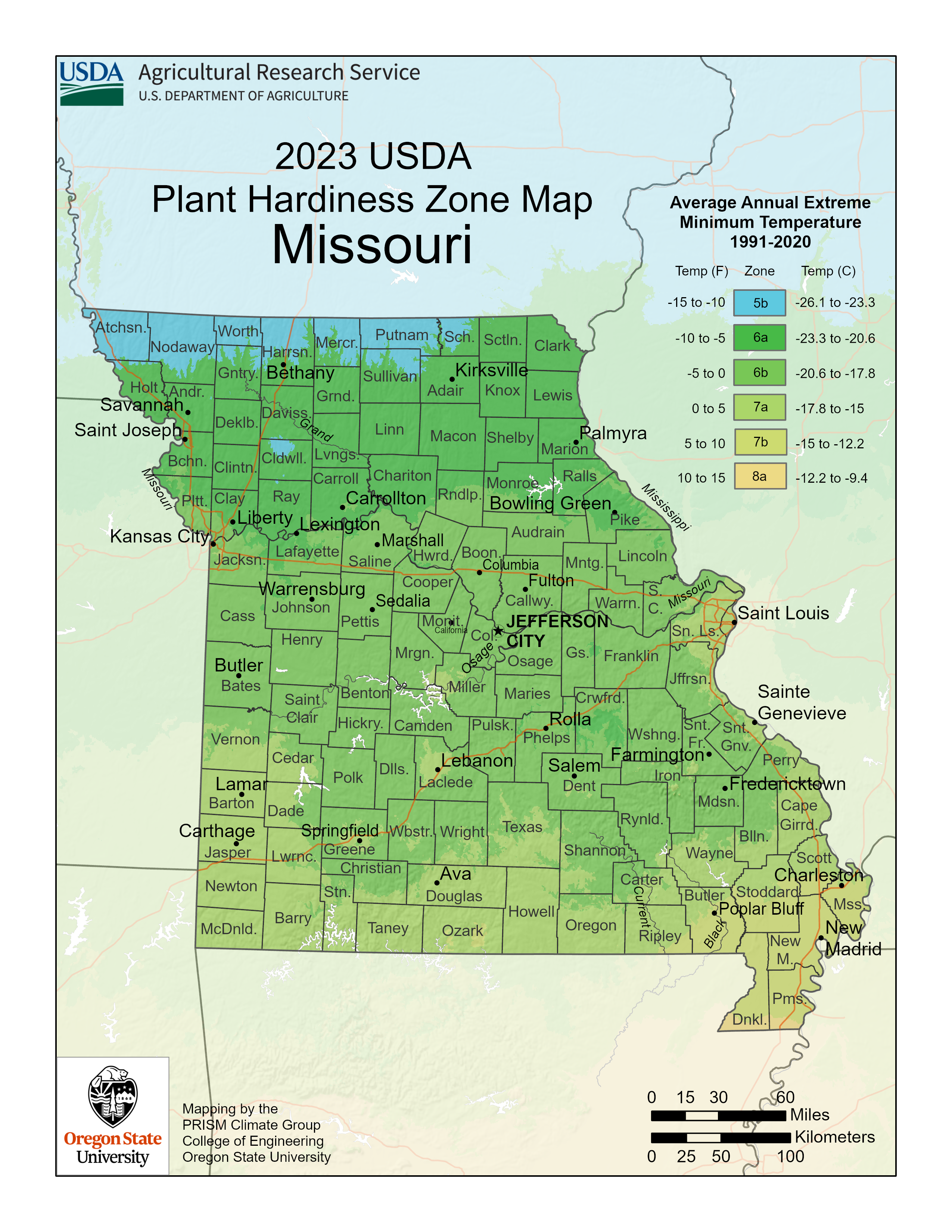
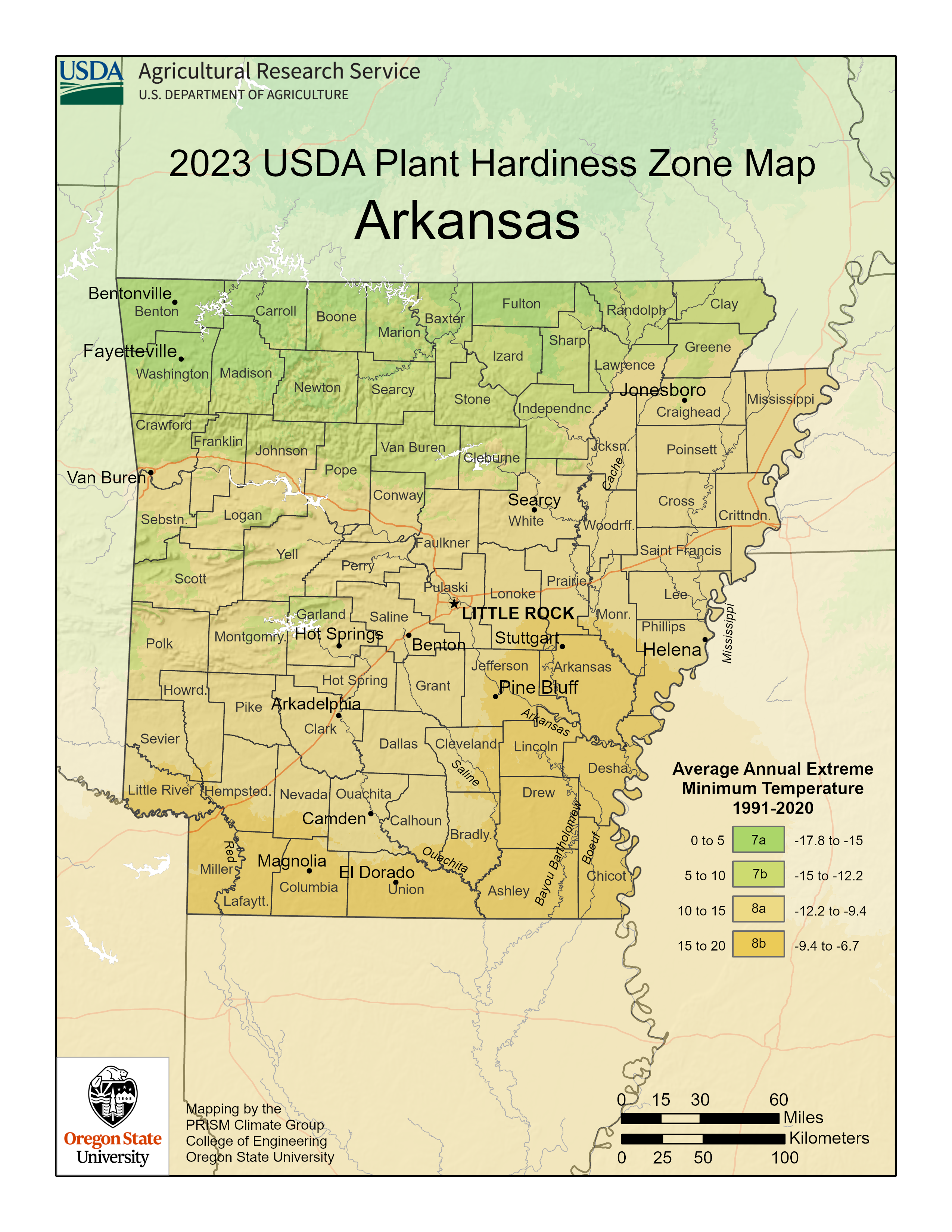
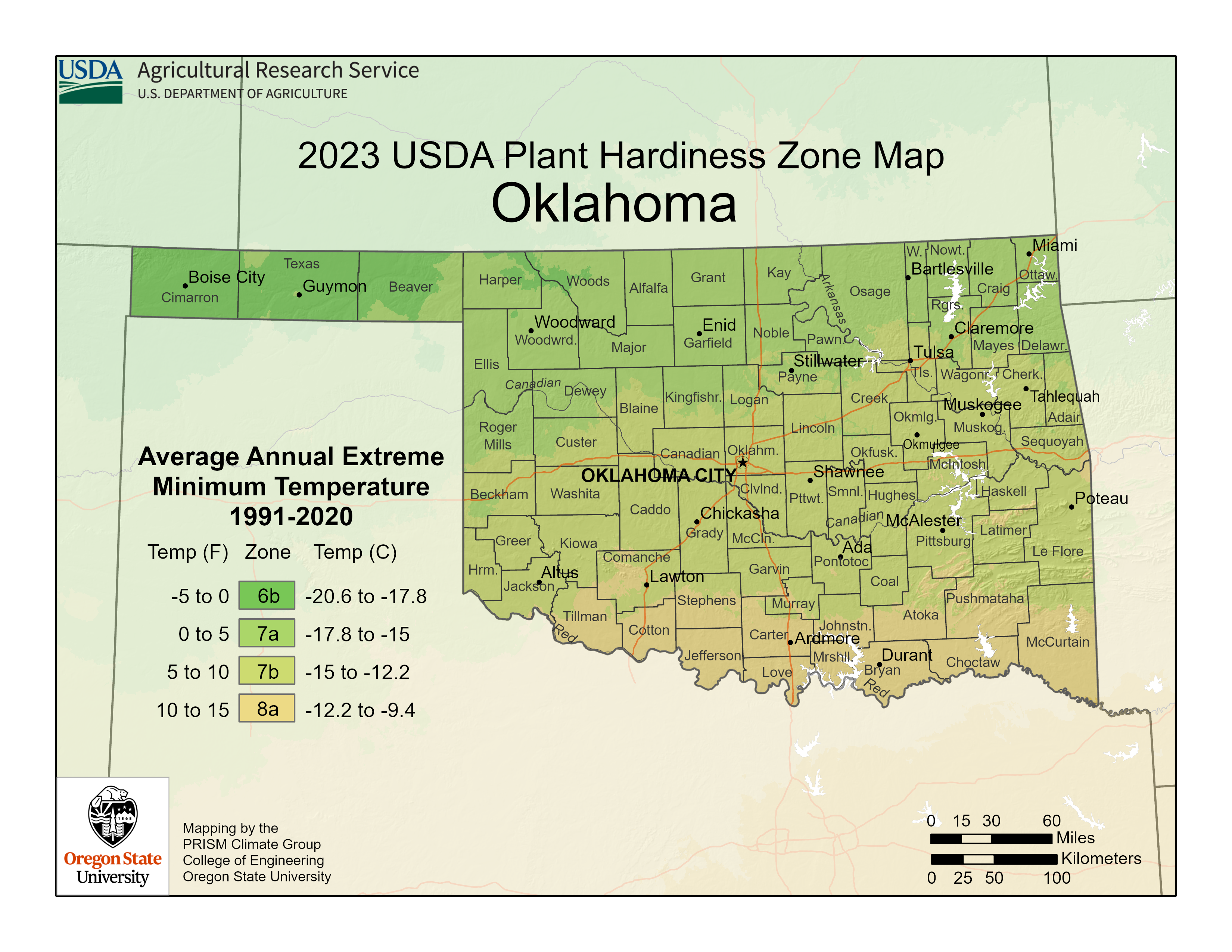
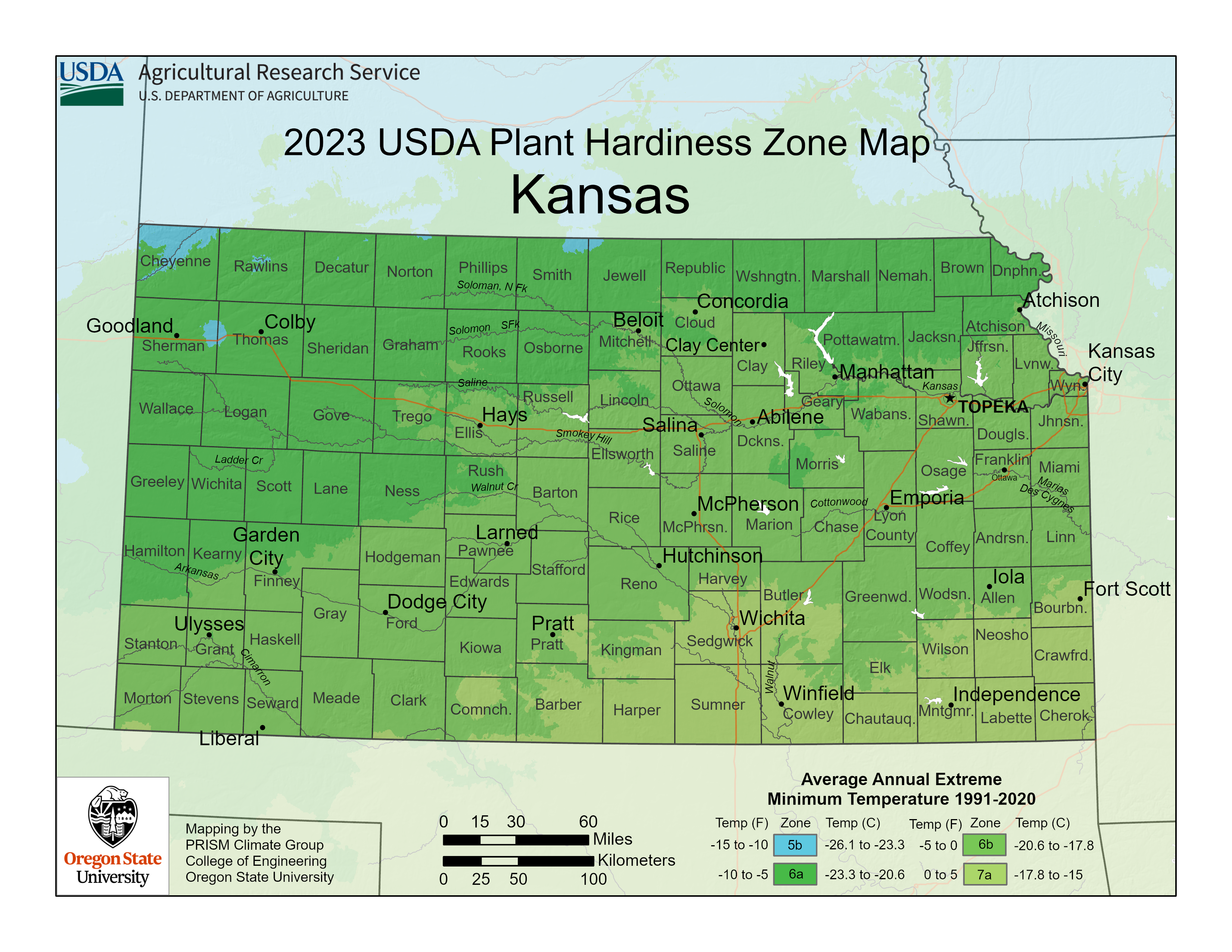
Official 2023 USDA Plant Hardiness Zone Maps. Tap a map to open it full size.
Maps: USDA Agricultural Research Service, with mapping by the PRISM Climate Group, Oregon State University.
Plant Patent
Not patented. This is the straight species, not a named variety, so there are no restrictions on growing it from seed or cuttings.
About the Elderberry
American elderberry grows wild all over Missouri, along streams and ponds and in old fields and roadsides. In June it’s covered in flat clusters of white flowers, followed in late summer by drooping clusters of small purple-black berries.
People cook the ripe berries into pies, jellies, and wine, and use the flowers for syrup, tea, and fritters. Elderberry is also grown commercially in Missouri for juice and other products, and the University of Missouri has studied it as a farm crop.
Choosing a Spot
- Sun and moisture. It does best in a sunny spot with moist, well-drained soil. On poorly drained ground, plant on a raised bed or berm.
- Room to spread. It spreads by root sprouts and forms a thicket unless you pull the sprouts. Plant it where a thicket is welcome, or plan on pulling sprouts.
- Plant more than one. How elderberry is pollinated isn’t fully understood. It’s thought to be partly self-fruitful, but research suggests cross-pollination helps, so two or more plants are likely to bear better.
Planting
Plant dormant bare-root plants in early spring. Container plants that are already growing shouldn’t go out until late April or early May, after the risk of frost has passed.
- Space plants about 4 feet apart for a hedgerow. The row fills in within two to three years as root sprouts come up.
- Water it in well.
- Don’t add nitrogen fertilizer at planting.
- Pick off the flowers the first year. This puts the plant’s energy into roots. Expect a partial crop the second year and a full crop by the third.
Watering
Elderberry grown for fruit isn’t drought tolerant. Plan on 1 to 2 inches of water a week, especially in midsummer while the berries ripen. Drip irrigation is commonly used.
Mulch and Fertilizer
Mulch holds moisture and keeps weeds down, but leave room for new shoots to come up from the roots and crown. Keep weeds pulled while they’re small, because perennial weeds are hard to get out of an elderberry patch.
Get a soil test before planting and adjust the pH to 5.5 to 6.5. Skip nitrogen at planting; a light feeding can follow 4 to 8 weeks later.
Pruning
Prune in winter while the plant is dormant. A backyard elderberry can go unpruned for a year and still bear, but yearly pruning keeps it healthy and productive.
- Standard method: Remove dead, diseased, or damaged stems, take out most stems three years old or older, and cut weak canes back to strong wood.
- Cut to the ground: Many American elderberries also do well cut completely to the ground each winter. You get fewer but larger flower clusters, and the fruit ripens more evenly. Yield may be a little lower.
- Suckers: Pull or cut root sprouts that come up where you don’t want them.
Gathering and disposing of the pruned stems removes overwintering mite eggs and disease.
Common Problems
- Eriophyid mites: Microscopic mites that cup and crinkle the leaves and can destroy flowers and young fruit. They overwinter on the buds, so clearing away pruned stems in winter helps.
- Japanese beetles: Feed on the leaves, flowers, and developing fruit in midsummer.
- Spotted wing drosophila: A small fruit fly that lays eggs in ripening berries, ruining them quickly. Pick promptly and chill or freeze the fruit right away.
- Elder borer: A longhorn beetle whose larvae tunnel into stems and roots, weakening or killing stems.
- Diseases: Canker, powdery mildew, and leaf spots can show up. Spider mites and aphids also feed on it.
- Birds: Birds eat the berries. Netting or scare devices help protect the crop.
Harvest
Berries ripen from late July into early September. Clip whole clusters once every berry in the cluster is fully colored. Strip the berries from the stems and pick out any leaves or bits of stem, which hold more of the toxic compounds. Cook the berries before eating them; don’t eat them raw or unripe. In a 1983 case reported by the CDC, people got sick from juice pressed with the leaves and stems still in it.
Good for Wildlife
As many as 45 kinds of birds eat the berries, along with raccoons, squirrels, and mice. Butterflies and other insects visit the flowers, and stem-nesting bees use the dead stems. Deer browse the leaves and twigs.
Availability
Currently out of stock until Spring 2027.
Our nursery stock changes through the season. Contact us to check what we have on hand, current sizes, and pricing.
Sources
Growing information on this page was checked against these public references:
- Growing and Marketing Elderberries in Missouri, AF1016 (University of Missouri Center for Agroforestry) (opens in a new tab)
- Common Elderberry Field Guide (Missouri Department of Conservation) (opens in a new tab)
- Sambucus canadensis (North Carolina Extension Gardener Plant Toolbox) (opens in a new tab)
- Play It Safe When Preserving Elderberries, EM 9446 (Oregon State University Extension) (opens in a new tab)
- Poisoning from Elderberry Juice -- California (CDC Morbidity and Mortality Weekly Report) (opens in a new tab)
Disclaimer: The information on this page is based on publicly available knowledge and research. Individual results may vary.