Ostrich Fern
Matteuccia struthiopteris
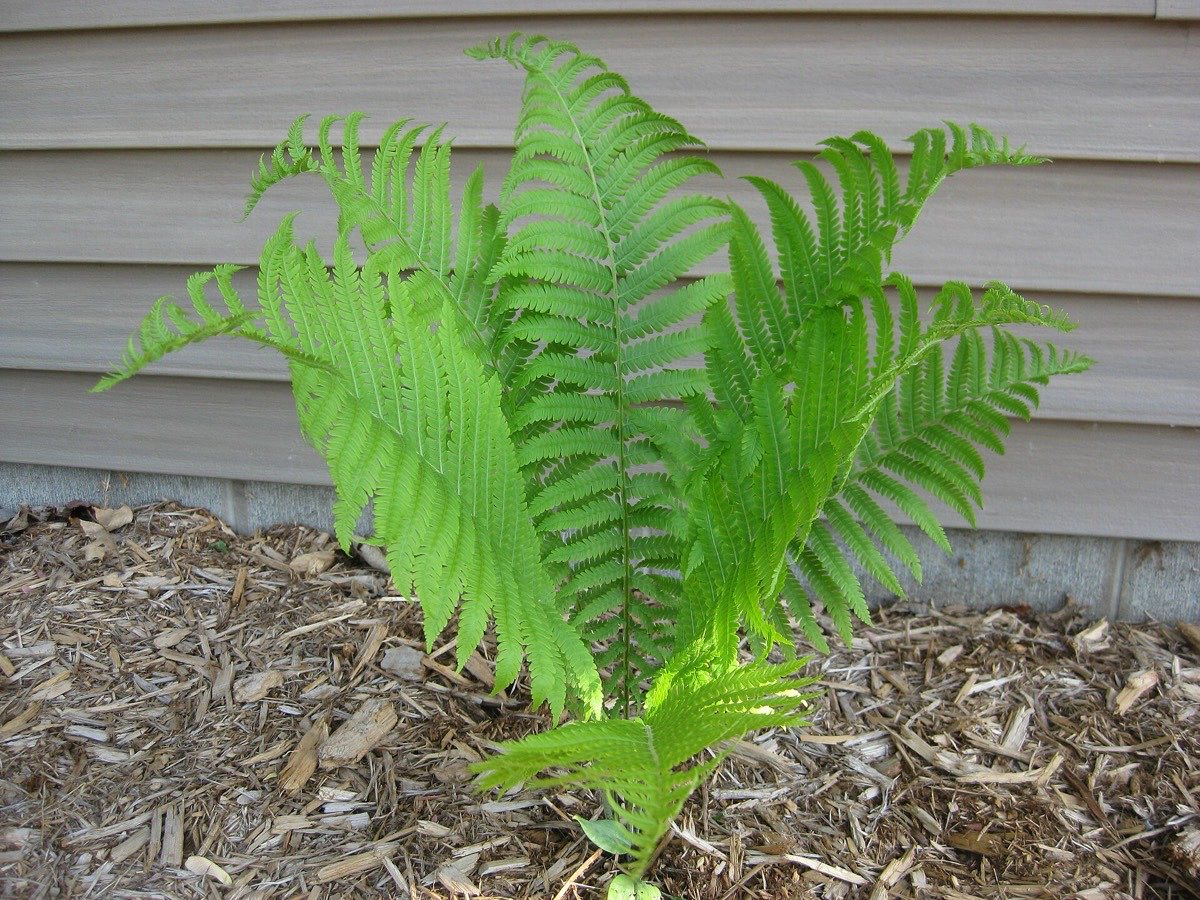
Ostrich fern is a tall fern with plume-like fronds up to 5 feet tall. It needs shade and constant moisture, especially in warm climates, and it spreads into colonies. Its young fiddleheads are edible only when fully cooked.
At a Glance
| Plant type | Deciduous fern |
|---|---|
| Other names | Fiddlehead fern, shuttlecock fern |
| Native range | Eastern North America and temperate Europe and Asia. It grows naturally along cool woodland stream banks. |
| Mature height | 3 to 5 feet |
| Mature spread | 2 to 4 feet per clump, spreading by underground runners into colonies |
| Foliage | Tall, plume-like fronds, widest above the middle. Stiff, dark brown fertile fronds appear in midsummer and stand through winter. |
| Toxicity | The young fiddleheads are toxic raw or undercooked and can cause diarrhea, nausea, vomiting, stomach cramps, and headaches. They're safe to eat only when fully cooked (see Harvest below). |
Growing Conditions
| USDA hardiness zones | 3 to 8 |
|---|---|
| Sun | Part shade to full shade. Tolerates sun only where it stays cool and moist. |
| Soil | Moist soil rich in organic matter |
| Soil pH | 5.5 to 6.5 |
| Water | High. Needs constant moisture; the fronds scorch and dry up if the soil dries out. |
| Tolerates | Wet soil, heavy shade, deer (mostly) |
| Does poorly with | Dry soil, sun and heat in warm climates |
Will It Grow Here?
Yes, anywhere in our area. Ostrich Fern is hardy in zones 3 to 8, which covers every zone in our area (6b through 8a).
| Zone | Grows here? | Towns in this zone |
|---|---|---|
| 6b (our farm) | Yes | Lebanon, MO; Bolivar, MO; Iola, KS; Garnett, KS |
| 7a | Yes | Springfield, MO; Joplin, MO; Fayetteville, AR; Bentonville, AR |
| 7b | Yes | Harrison, AR; Tulsa, OK; Broken Arrow, OK; Tahlequah, OK |
| 8a | Yes | Van Buren, AR; Alma, AR |
Not sure which zone you're in? Look up your ZIP code on the USDA Plant Hardiness Zone Map (opens in a new tab).
-
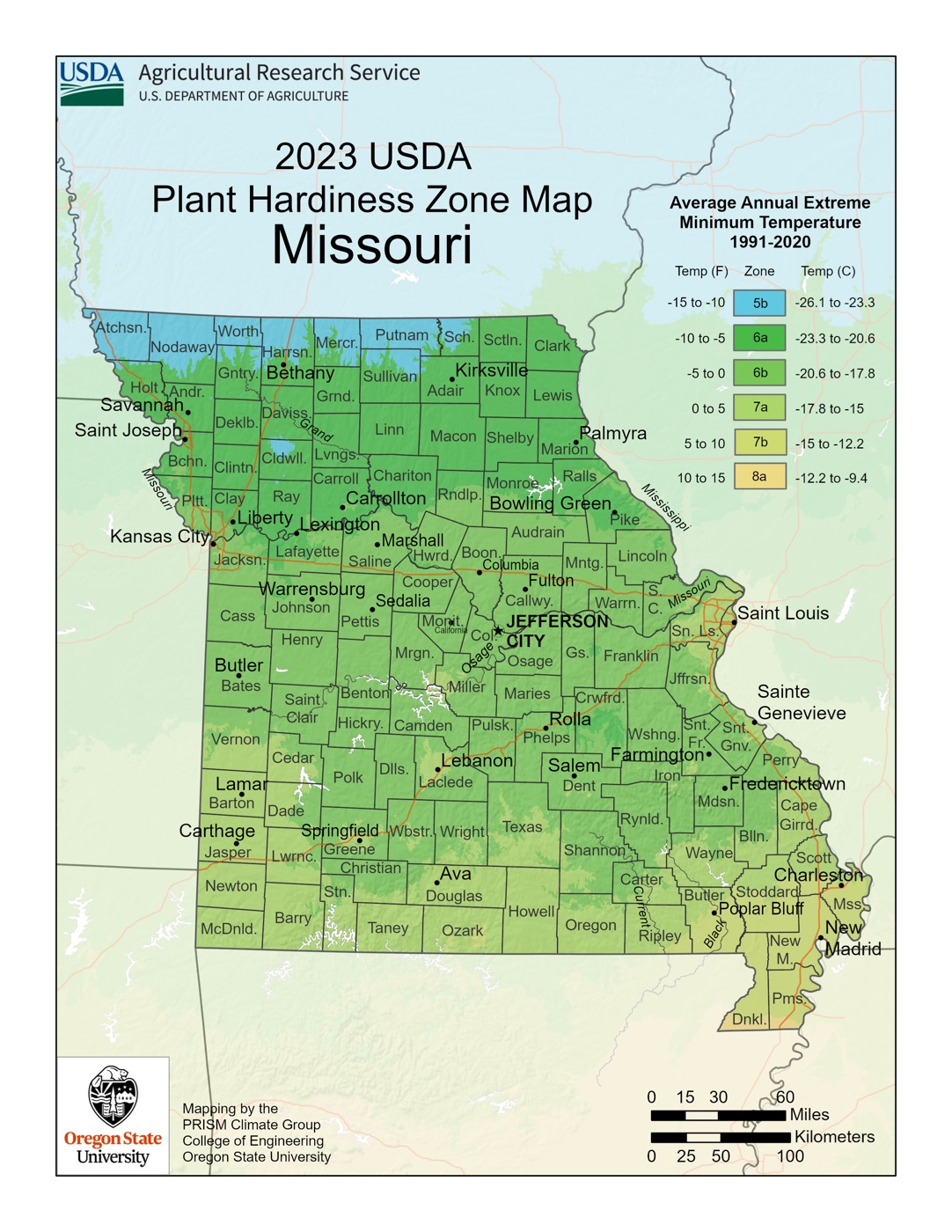 Missouri zone map (full size, opens in a new tab)
-
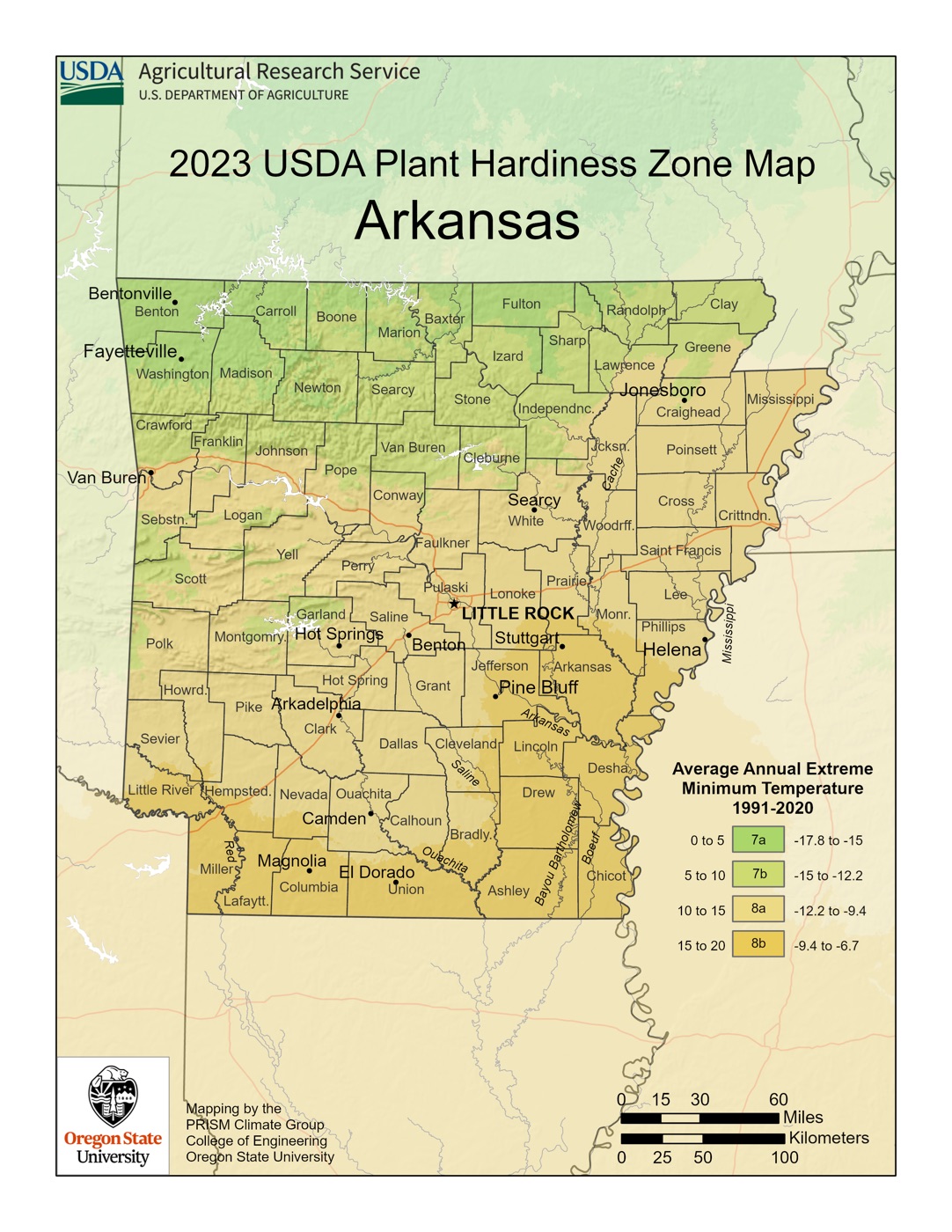 Arkansas zone map (full size, opens in a new tab)
-
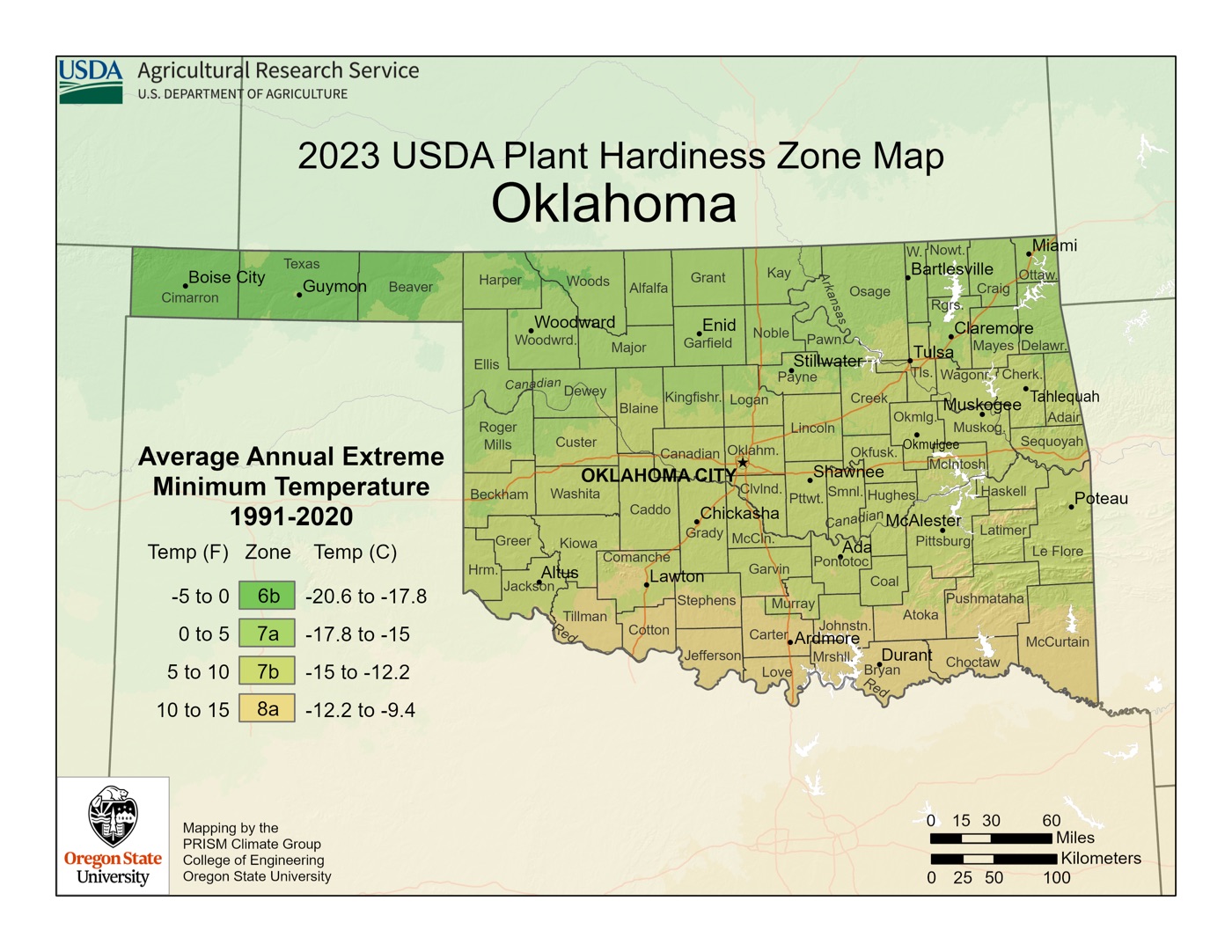 Oklahoma zone map (full size, opens in a new tab)
-
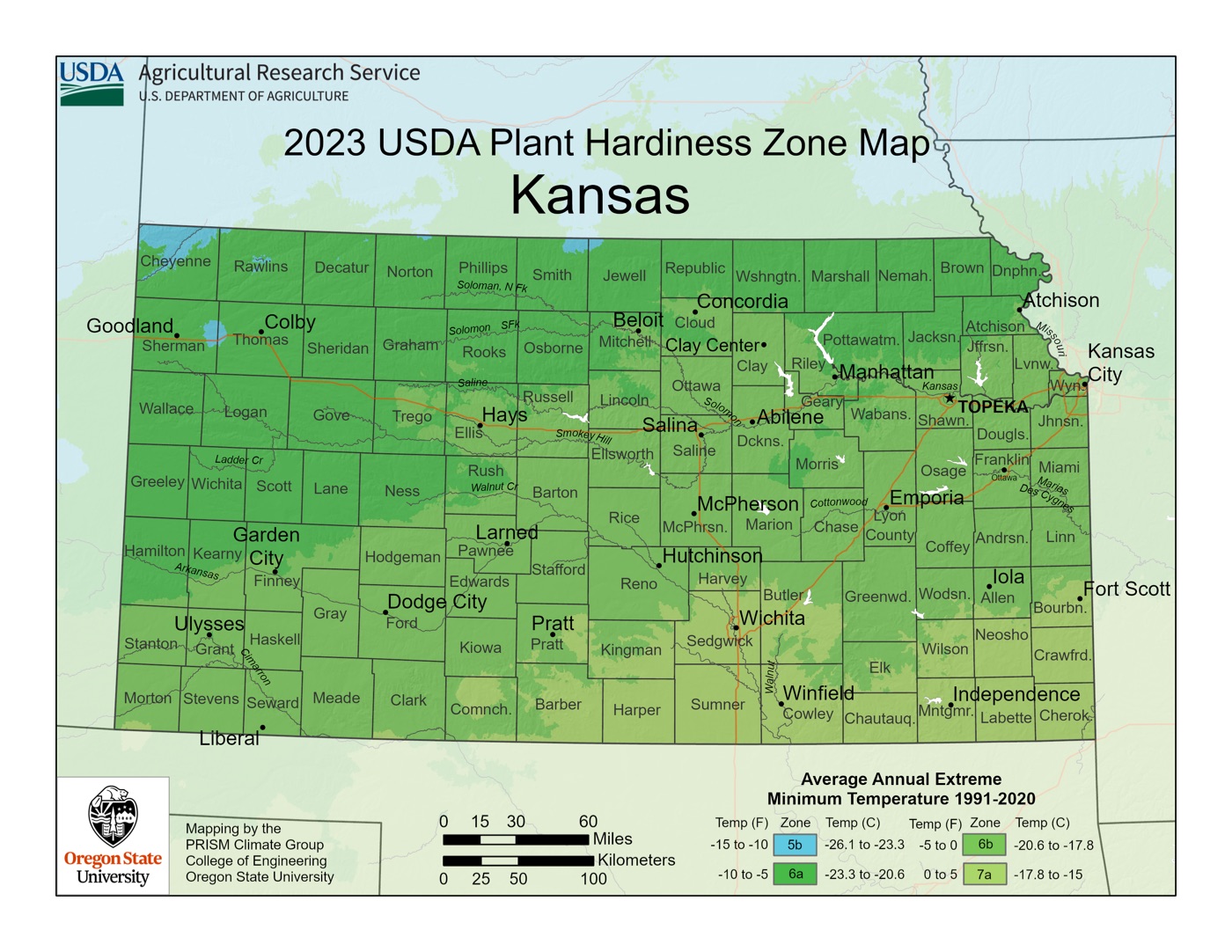 Kansas zone map (full size, opens in a new tab)
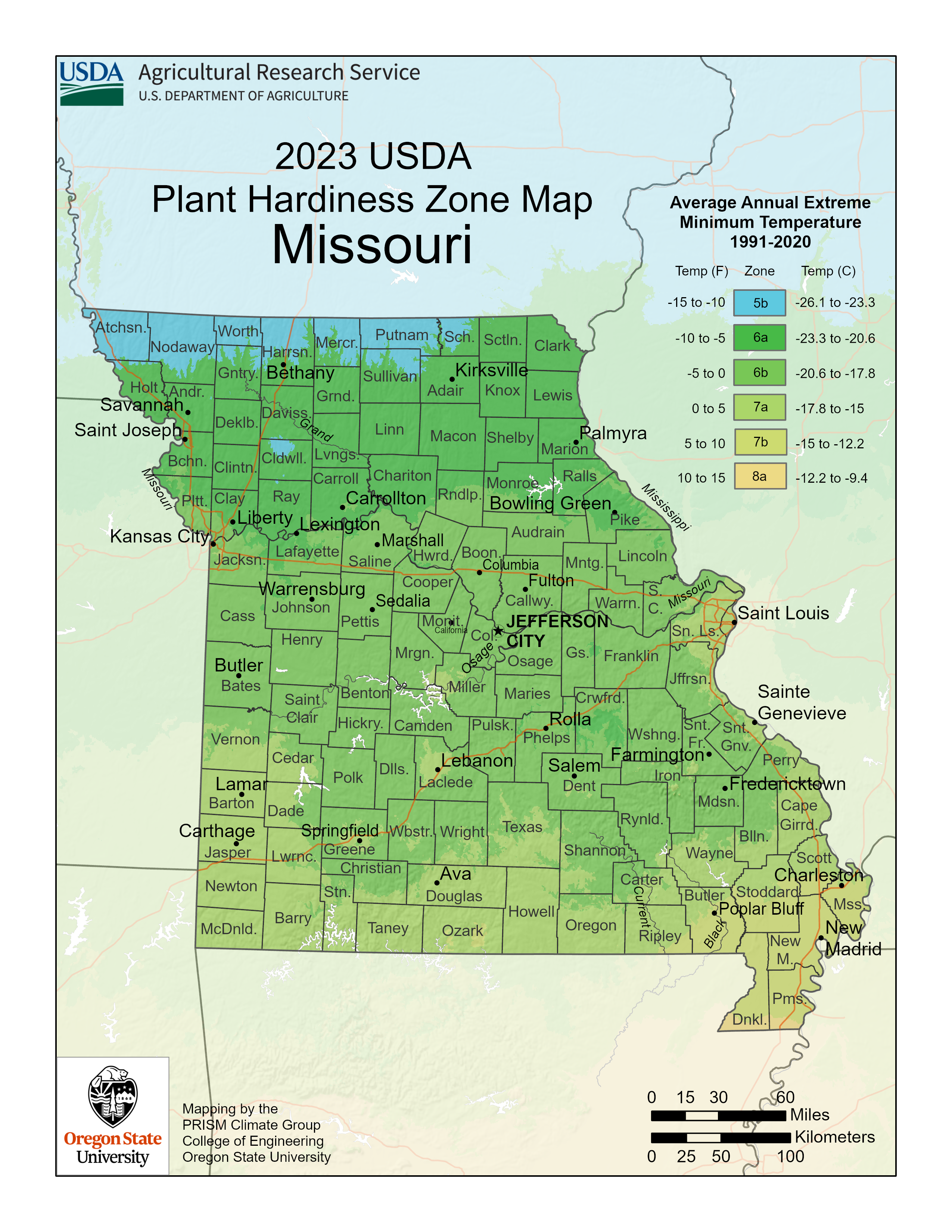
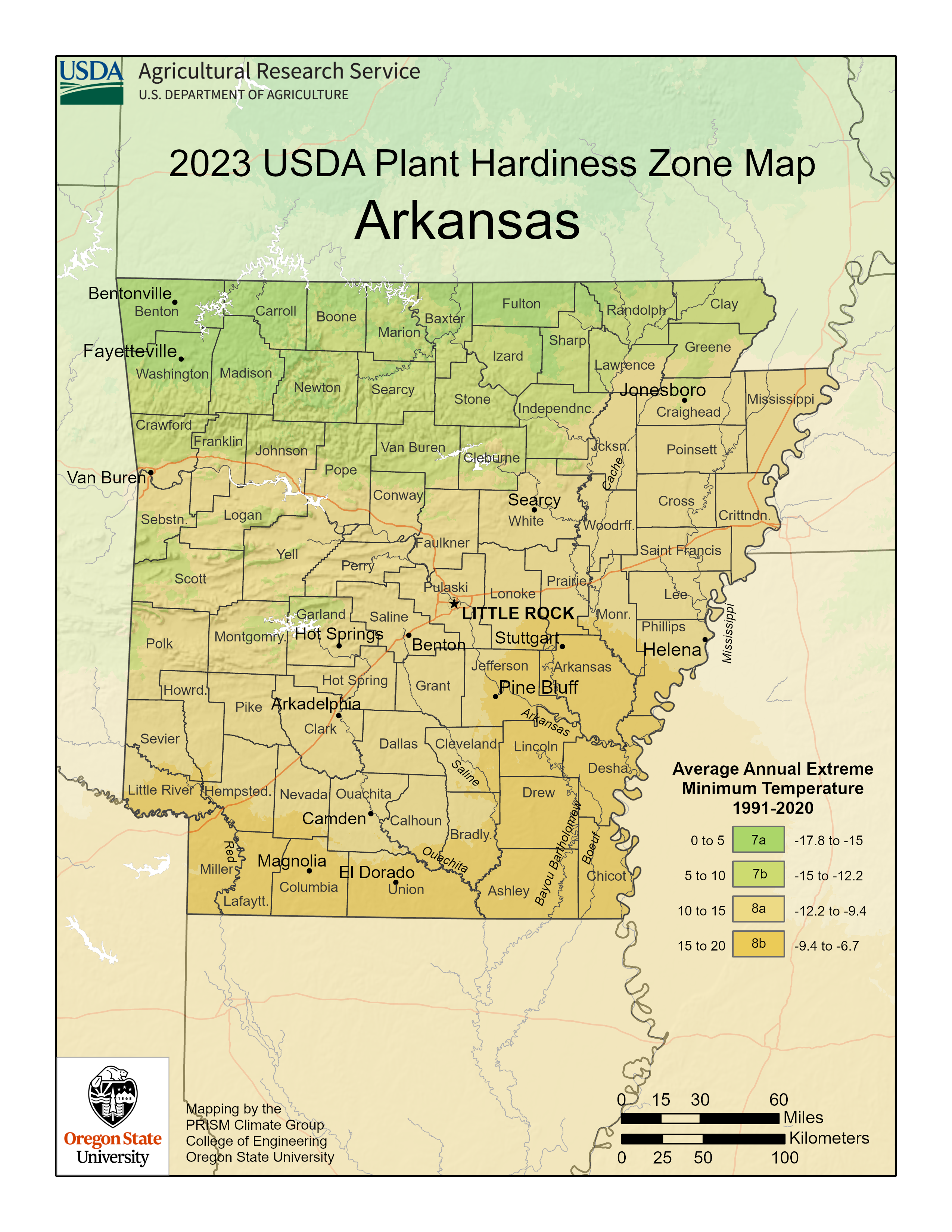
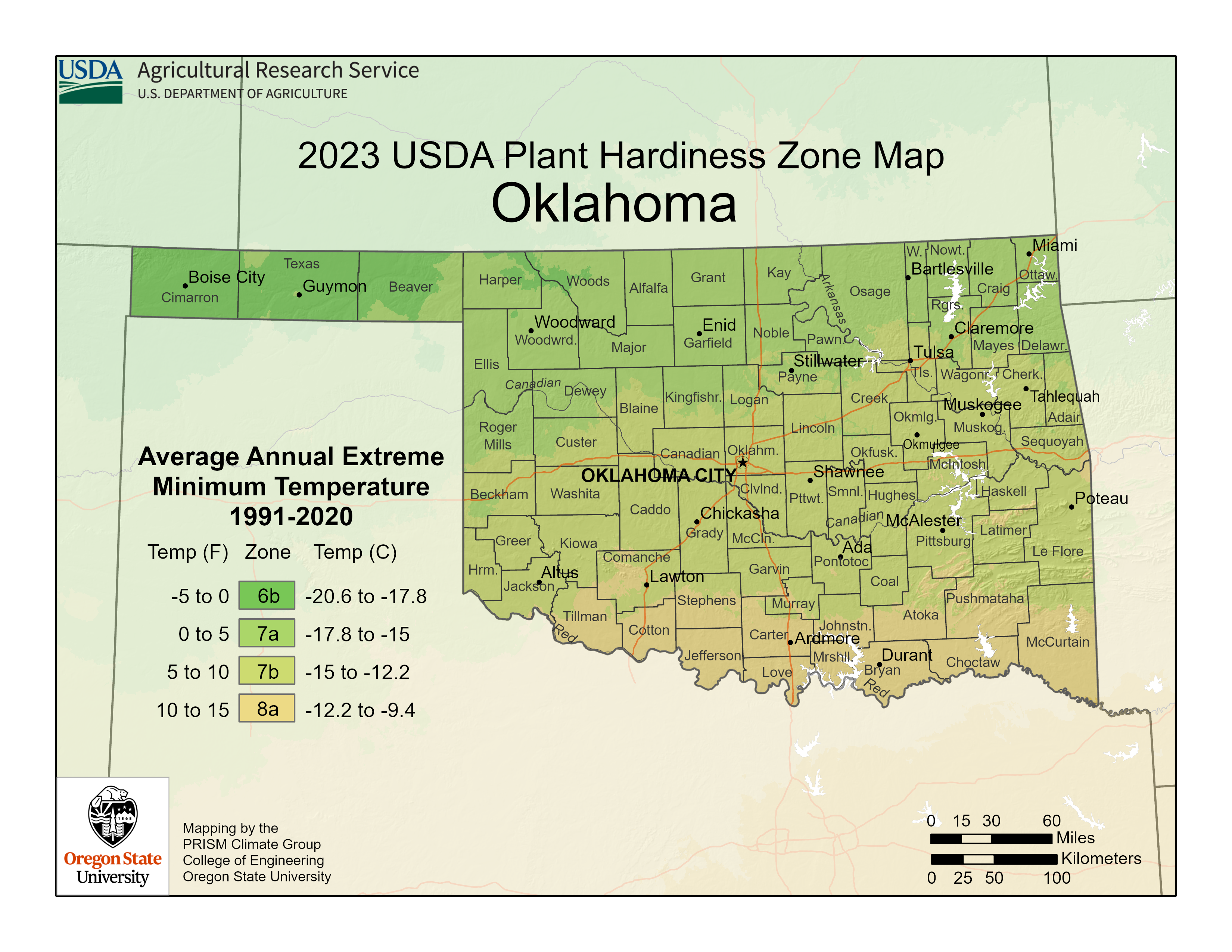
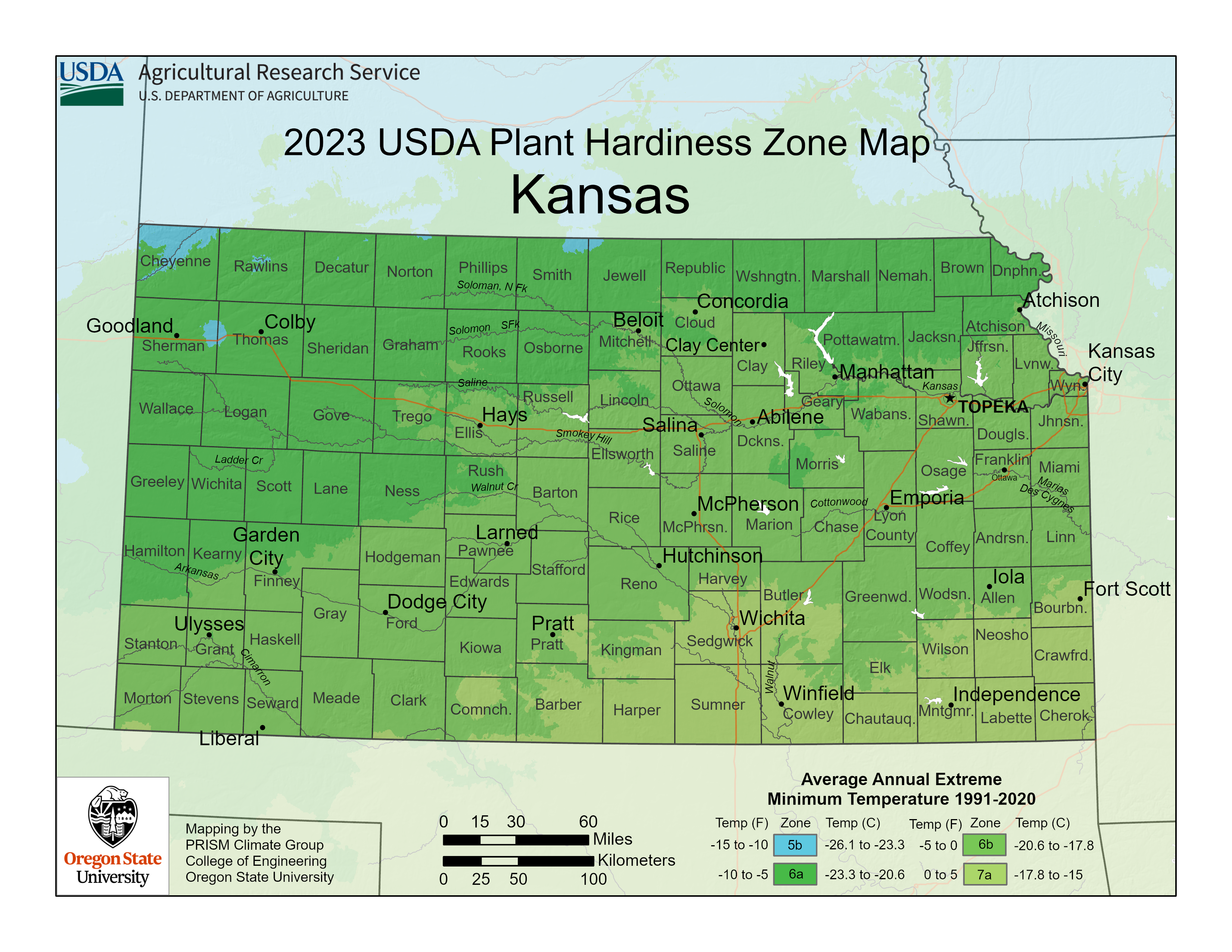
Official 2023 USDA Plant Hardiness Zone Maps. Tap a map to open it full size.
Maps: USDA Agricultural Research Service, with mapping by the PRISM Climate Group, Oregon State University.
Plant Patent
Not patented. This is the straight species, not a named variety, so there are no restrictions on growing it from seed or division.
About the Ostrich Fern
Ostrich fern is a tall fern named for its fronds, which look like ostrich plumes. It grows naturally along cool woodland streams. In midsummer it sends up stiff, dark brown fertile fronds that stand through winter. In spring its tightly coiled new fronds, called fiddleheads, are harvested and cooked as a vegetable.
Heat is its weak spot. One source lists it as hardy through zone 8, another only through zone 7. In warmer areas like ours, shade and constant moisture are extremely important, and the fronds scorch if the soil dries out.
It spreads. Underground runners form new plants, and it’s strongly competitive. It can crowd out less vigorous shade plants.
Choosing a Spot
- Deep shade and moisture. A shady, moist spot, like the stream banks where it grows wild. Avoid hot, sunny, or dry spots.
- Rich, moist soil.
- Room to spread. It forms colonies and can push out other plants.
Planting
Set the plant so its crown, where the stems meet the roots, is even with the soil line. Container-grown plants can be planted at any time of year. Water them in well.
Watering
Keep the soil constantly moist. The fronds scorch and dry up if it dries out, so water during dry spells.
Mulch and Fertilizer
Mulch 2 to 4 inches deep. If the plant needs feeding, a light application of a balanced fertilizer when growth starts in spring is enough for most perennials.
Pruning
No pruning needed.
Common Problems
- Scorched, dried fronds: A sign the soil got too dry or the plant got too much sun and heat.
- Spreading: It can crowd out other shade plants.
- Pests: No major pests. Deer usually leave it alone, but they may eat emerging fiddleheads.
Harvest
Fiddleheads are the young fronds in spring, harvested when they’re an inch or two above the ground. Ostrich fern fiddleheads have a brown, papery covering and a smooth stem with a deep U-shaped groove on the inside. Make sure you can tell ostrich fern from other ferns, since some aren’t edible.
Never eat them raw or undercooked. Rinse them, soak them in clean water to remove the brown scales, then boil them for 15 minutes or steam them for 10 to 12 minutes.
Propagation
Divide the crowns in spring.
Availability
Currently out of stock until Spring 2027.
Our nursery stock changes through the season. Contact us to check what we have on hand, current sizes, and pricing.
Sources
Growing information on this page was checked against these public references:
- Matteuccia struthiopteris (North Carolina Extension Gardener Plant Toolbox) (opens in a new tab)
- Native Plants of PA: Ostrich Fern (Penn State Extension) (opens in a new tab)
- Gardening in the Shade (University of Minnesota Extension) (opens in a new tab)
- Facts on Fiddleheads, Bulletin 4198 (University of Maine Cooperative Extension) (opens in a new tab)
- Herbaceous Ornamentals, MG9 (University of Missouri Extension) (opens in a new tab)
Disclaimer: The information on this page is based on publicly available knowledge and research. Individual results may vary.