Pink Crepe Myrtle
Lagerstroemia indica
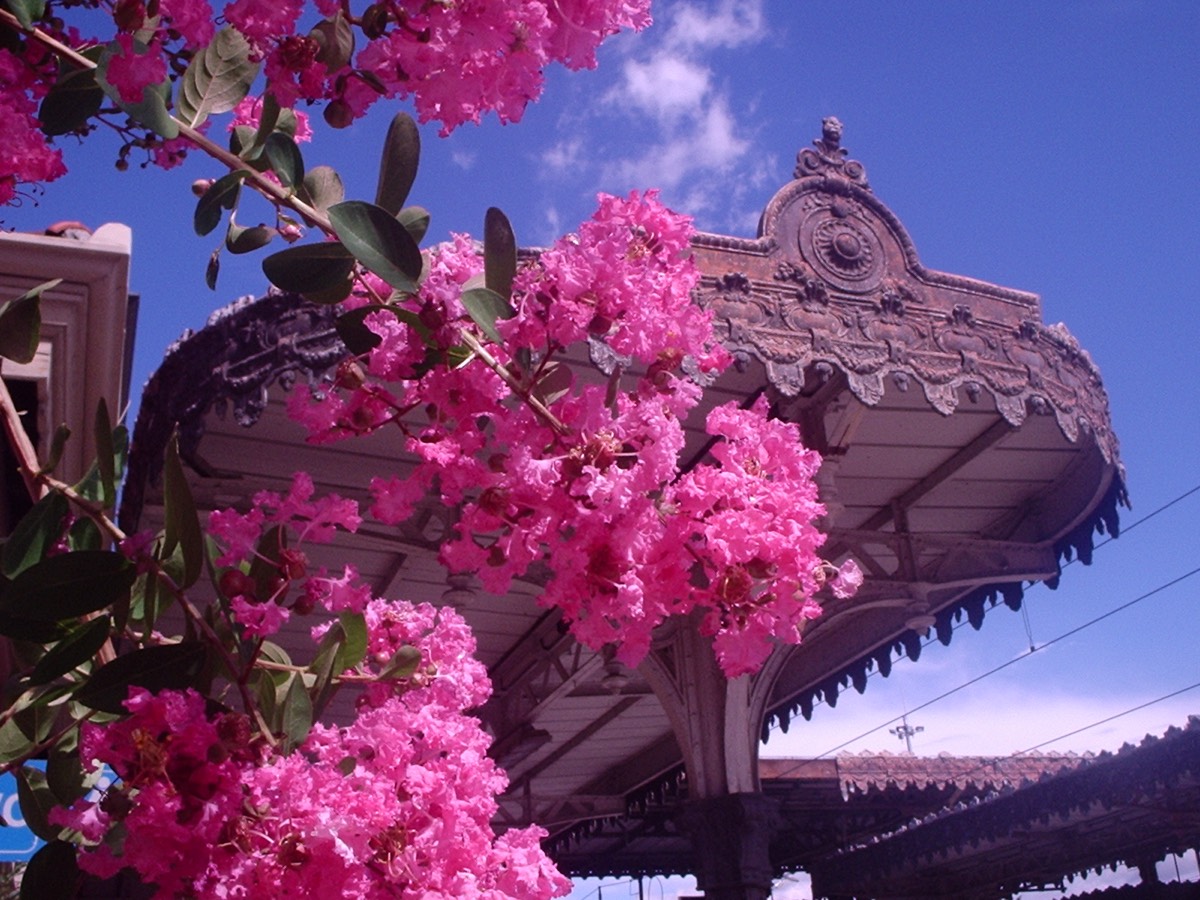
Crepe myrtle is a summer-blooming shrub or small tree with big clusters of crinkled pink flowers from July to September and smooth, peeling bark. It loves heat and full sun.
At a Glance
| Plant type | Deciduous flowering shrub or small tree |
|---|---|
| Family | Loosestrife family (Lythraceae) |
| Other names | Crape myrtle, lilac of the South |
| Native range | Asia, from the Himalayas to southern China, Indochina, Japan, and the Philippines. Not native to North America. |
| Mature height | 6 to 30 feet, depending on the variety |
| Mature spread | 6 to 30 feet, depending on the variety |
| Growth rate | Fast |
| Flowers | Crinkled pink flowers 1 to 1 1/2 inches across, in clusters 6 to 18 inches long at the tips of new growth. July to September. |
| Foliage | Fall color is yellow, orange, or red. The bark is smooth, pale brown to gray, and peels in patches. |
| Toxicity | Non-toxic to dogs, cats, and horses. |
Growing Conditions
| USDA hardiness zones | 6 to 9 |
|---|---|
| Sun | Full sun. Shade means fewer flowers and more disease. |
| Soil | Moist, well-drained soil. Tolerates clay. |
| Soil pH | Slightly acidic is best (5.0 to 6.5). Tolerates alkaline soil. |
| Water | Low to medium. Needs regular watering for about two years until it's established, then it's drought tolerant. |
| Tolerates | Drought, deer, pollution, alkaline soil |
| Does poorly with | Shade, cold winters (top growth can be damaged in zones 5 and 6) |
Will It Grow Here?
Yes, anywhere in our area. Pink Crepe Myrtle is hardy in zones 6 to 9, which covers every zone in our area (6b through 8a).
| Zone | Grows here? | Towns in this zone |
|---|---|---|
| 6b (our farm) | Yes | Lebanon, MO; Bolivar, MO; Iola, KS; Garnett, KS |
| 7a | Yes | Springfield, MO; Joplin, MO; Fayetteville, AR; Bentonville, AR |
| 7b | Yes | Harrison, AR; Tulsa, OK; Broken Arrow, OK; Tahlequah, OK |
| 8a | Yes | Van Buren, AR; Alma, AR |
Not sure which zone you're in? Look up your ZIP code on the USDA Plant Hardiness Zone Map (opens in a new tab).
-
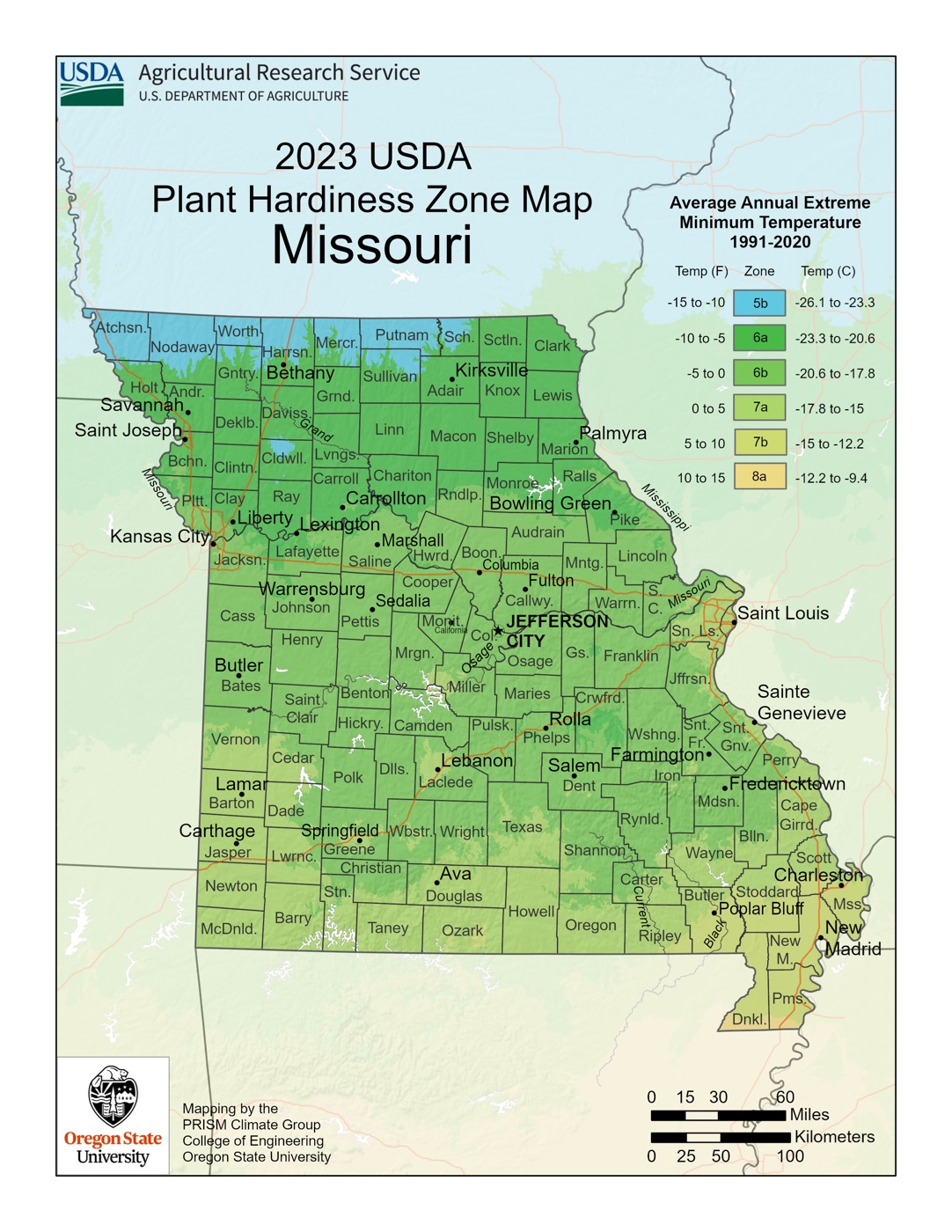 Missouri zone map (full size, opens in a new tab)
-
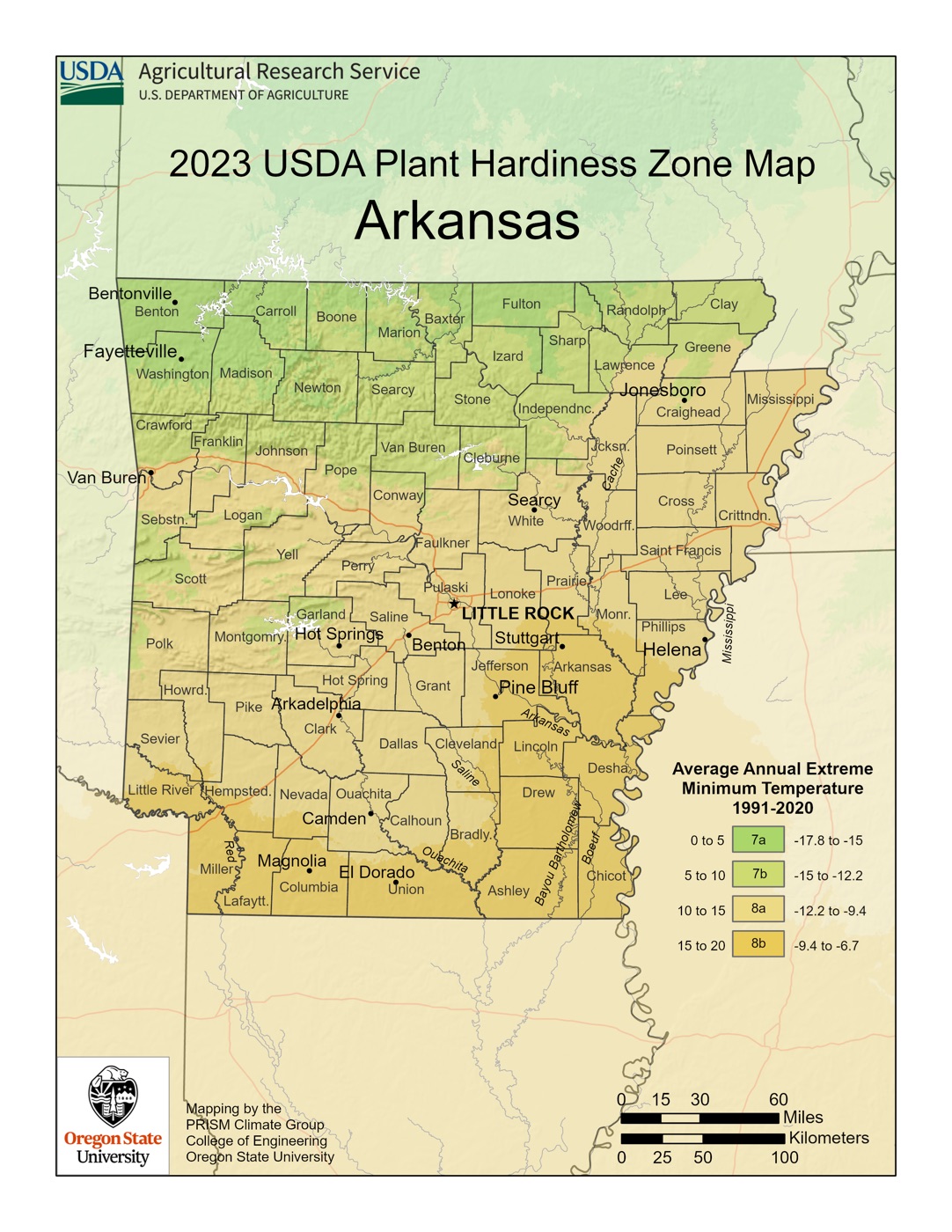 Arkansas zone map (full size, opens in a new tab)
-
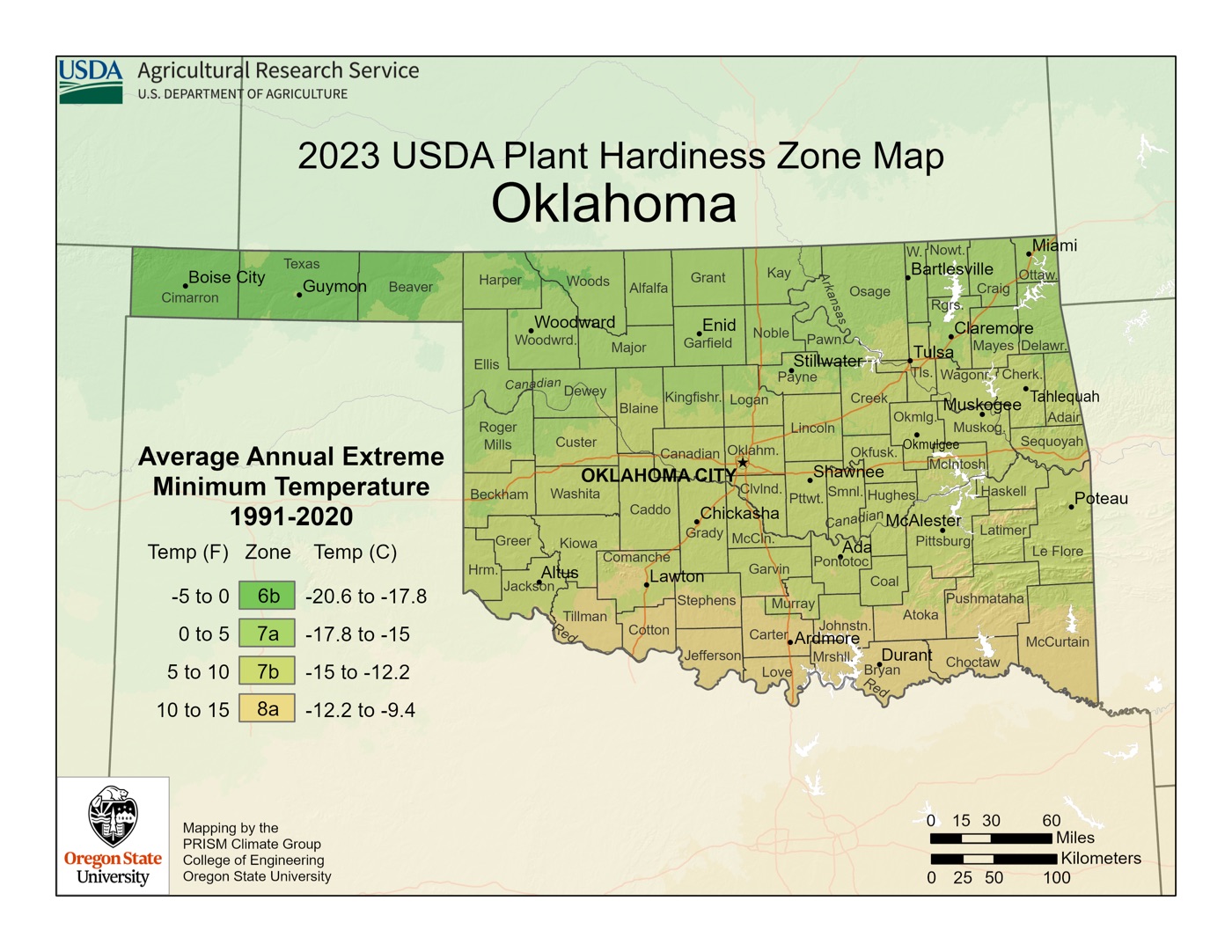 Oklahoma zone map (full size, opens in a new tab)
-
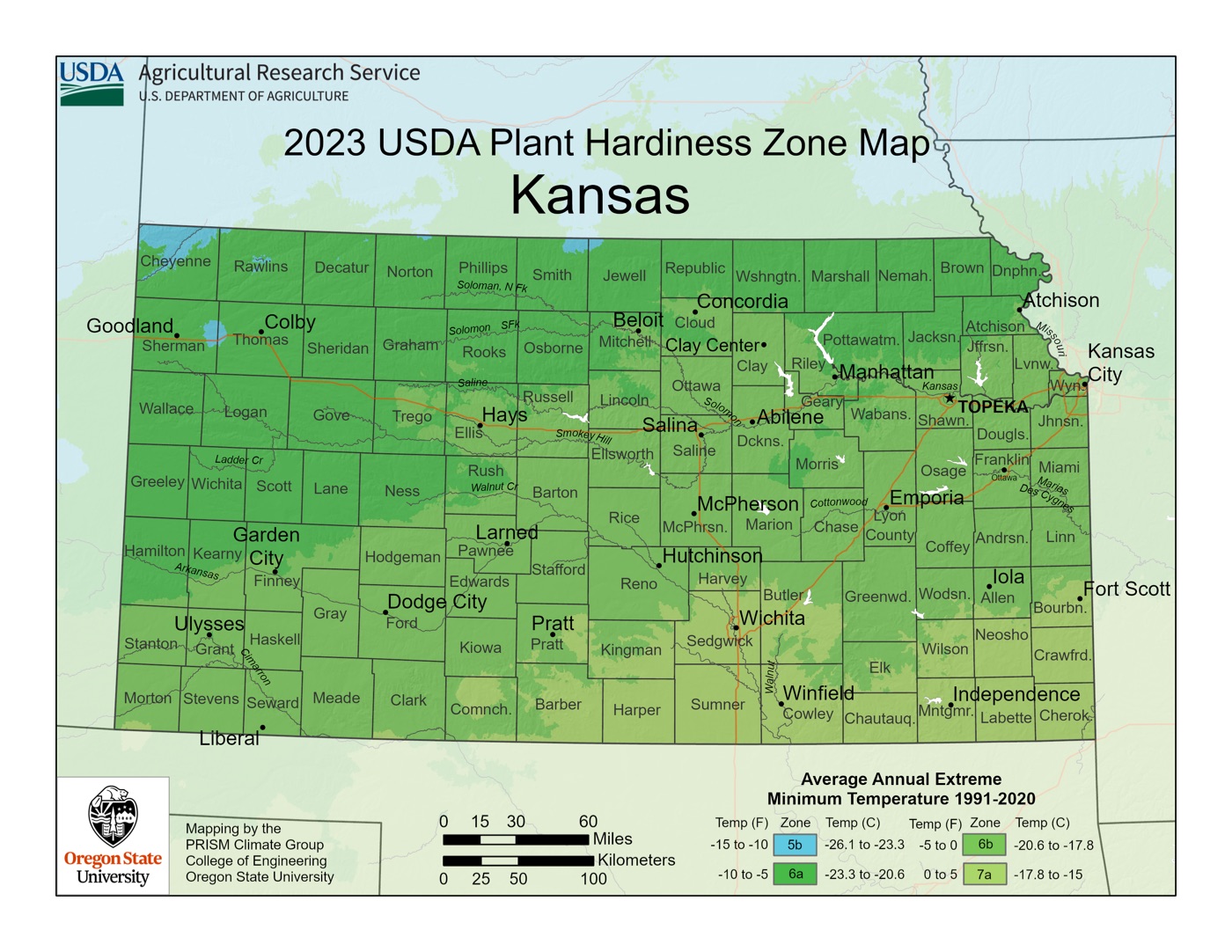 Kansas zone map (full size, opens in a new tab)
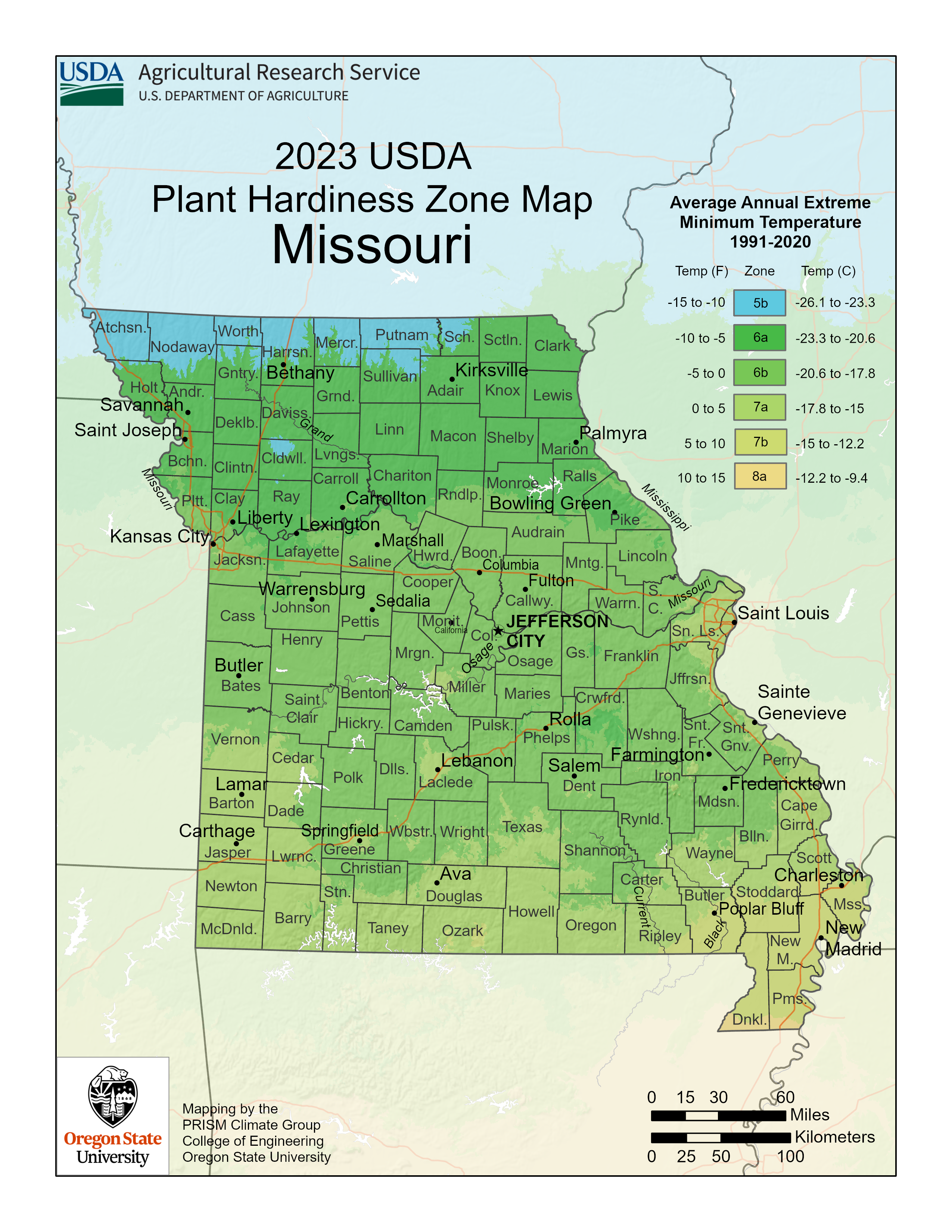
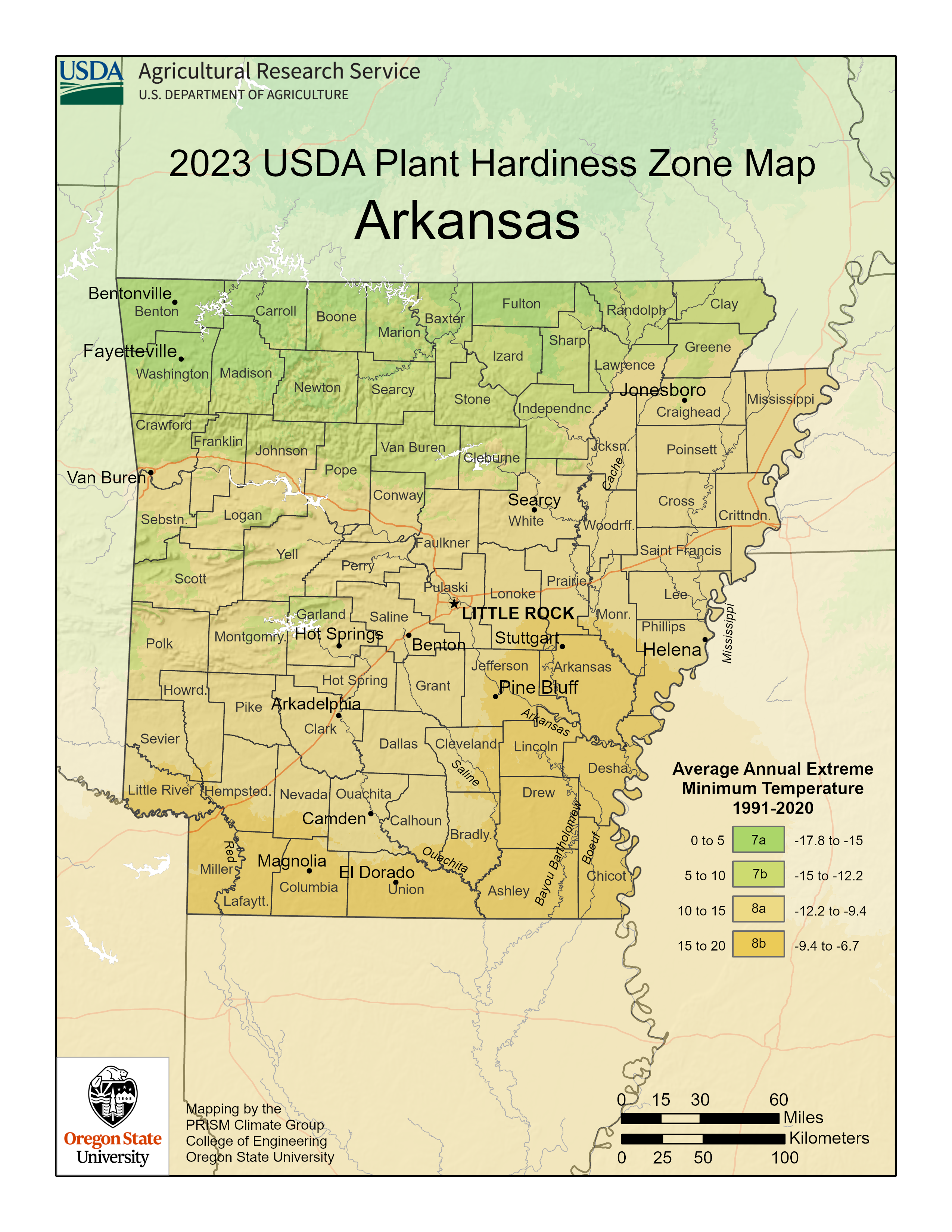
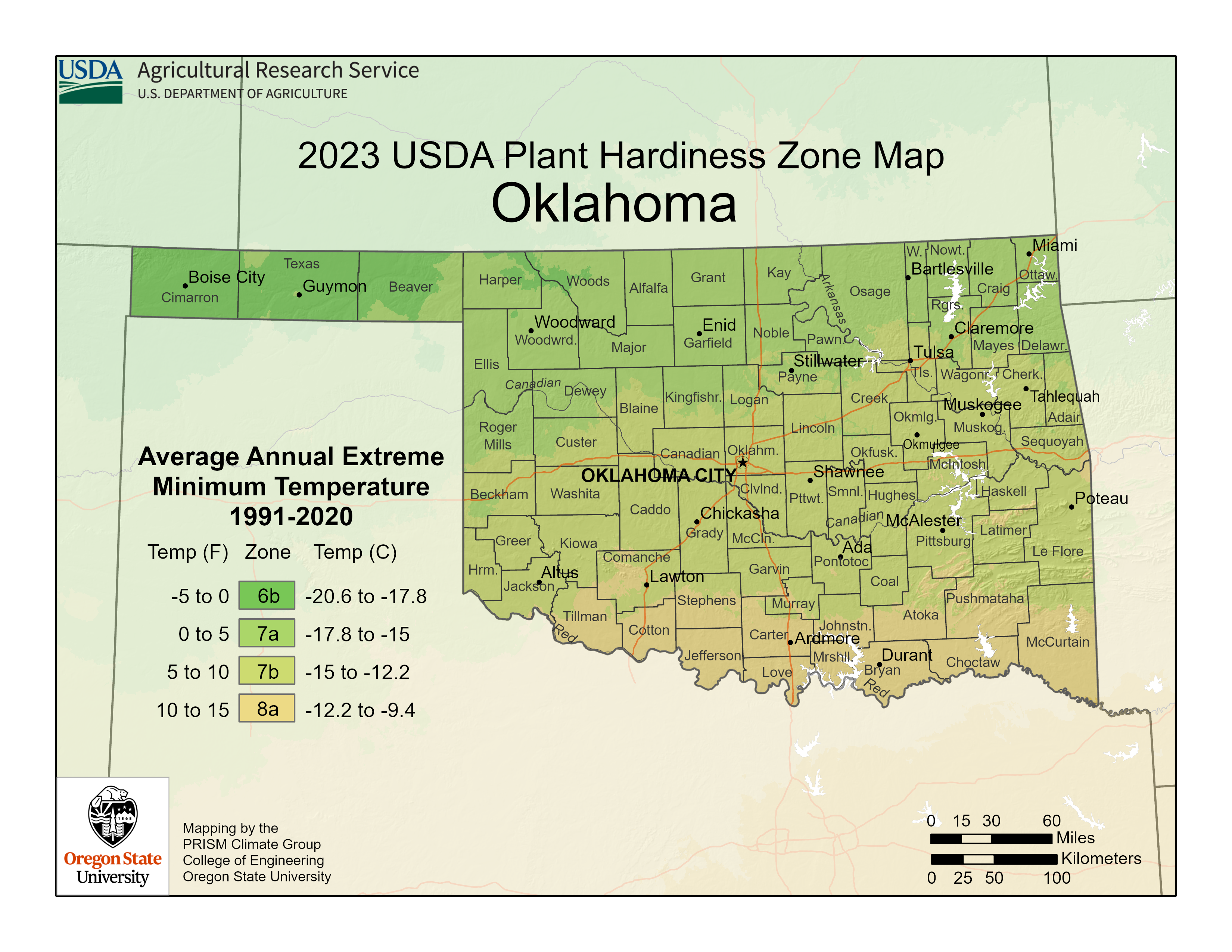
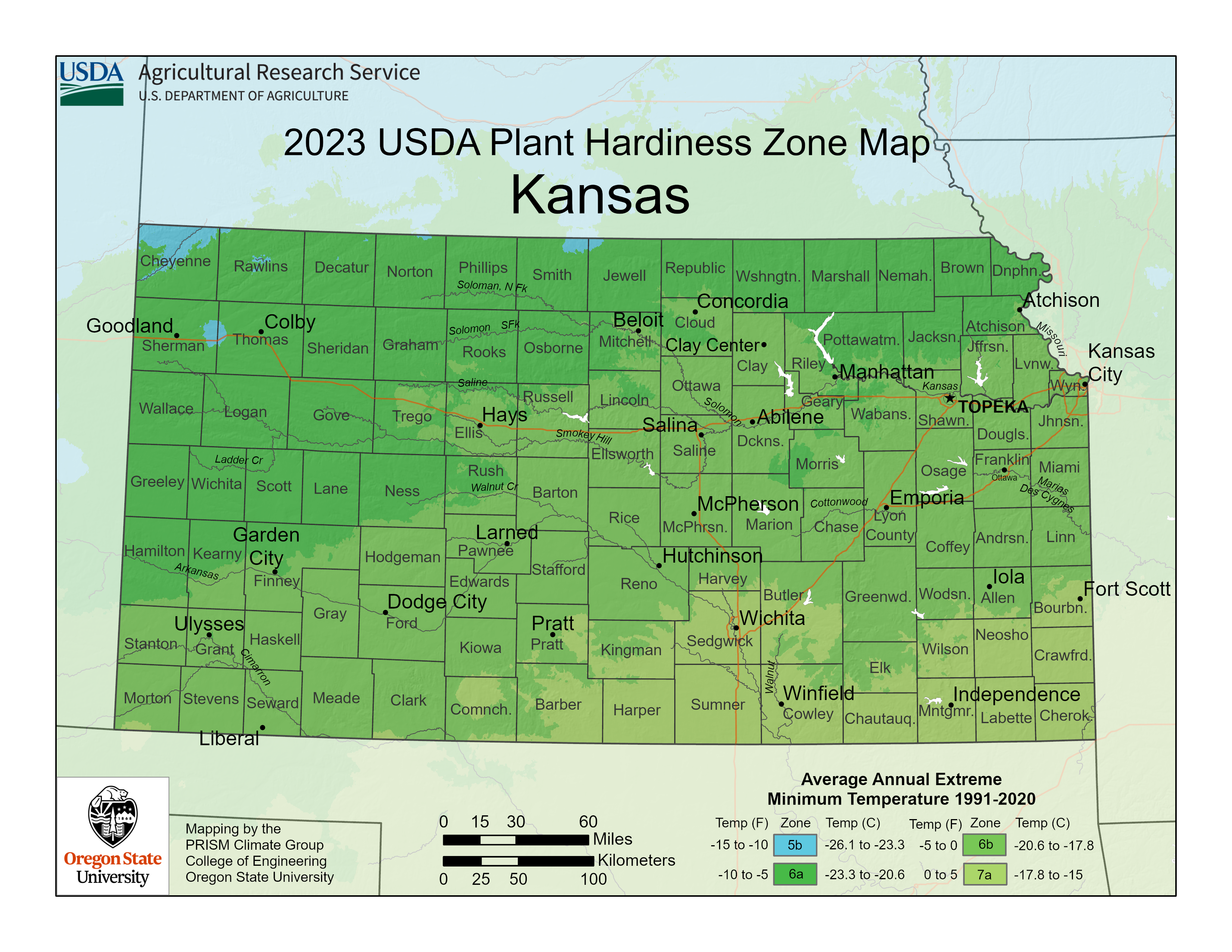
Official 2023 USDA Plant Hardiness Zone Maps. Tap a map to open it full size.
Maps: USDA Agricultural Research Service, with mapping by the PRISM Climate Group, Oregon State University.
Plant Patent
Our supplier sells this as a pink-flowered crepe myrtle and doesn't list a named variety or patent. Check the plant tag before propagating.
About the Pink Crepe Myrtle
Crepe myrtle comes from Asia and is sometimes called “lilac of the South.” From July into September it carries large clusters of crinkled pink flowers at the tips of the branches. The smooth bark peels in patches, which gives it interest in winter too.
Choosing a Spot
- Full sun and good air flow. Shade means fewer flowers and more disease.
- Shelter in colder spots. In zone 6, plant it where it’s protected from winter winds.
- Well-drained soil. It tolerates clay.
- Size depends on variety. Crepe myrtles range from 6 to 30 feet tall, so ask us about the size of the plants we carry.
Planting
- Dig wide, not deep. Make the hole at least 1 1/2 to 2 times as wide as the root ball and only as deep. In poorly drained or compacted soil, make it 3 to 4 times as wide and not quite as deep.
- Set the top of the root ball even with the surrounding soil or slightly above. Planting even 3 inches too deep lets water collect around the roots.
- Slice circling roots. If roots circle the outside of the root ball, make three or four cuts an inch or two deep from top to bottom.
- Backfill with the soil you dug out. Amendments usually aren’t needed.
- Skip fertilizer at planting, and water right away.
Watering
New plants establish fastest with light, frequent watering. In summer a new shrub may need water several times a week. Overwatering kills as easily as drought, so feel the soil before you water. Keep watering regularly for about two years until it’s established. After that it’s drought tolerant.
Mulch and Fertilizer
Spread organic mulch no more than 3 inches deep after it settles, and keep it off the stems. In zone 6, mulching helps protect the roots in winter.
Go light on fertilizer. Heavy nitrogen means fewer flowers and soft, leafy growth that’s more easily injured in winter. Light applications of a complete fertilizer in spring and summer are enough.
Pruning
Crepe myrtle doesn’t need heavy pruning or topping to control its size. Severe pruning ruins its natural shape. If you need to thin it, prune in late winter or early spring, before the new growth that carries the flowers begins.
Common Problems
- Aphids and sooty mold: Aphids drip sticky honeydew, and a black sooty mold grows on it, coating the leaves.
- Crape myrtle bark scale: White or gray waxy crusts on stems and trunks. It reduces flowering but rarely kills the plant. Scrubbing helps remove it.
- Flea beetles and other scale insects.
- Powdery mildew: A white coating on leaves and young shoots, mostly in spring and fall.
- Cercospora leaf spot: Shows up in warm, wet weather and can strip leaves from susceptible plants by late summer.
Availability
Currently out of stock until Spring 2027.
Our nursery stock changes through the season. Contact us to check what we have on hand, current sizes, and pricing.
Sources
Growing information on this page was checked against these public references:
- Lagerstroemia indica (North Carolina Extension Gardener Plant Toolbox) (opens in a new tab)
- Crape Myrtle, HGIC 1001 (Clemson Cooperative Extension Home and Garden Information Center) (opens in a new tab)
- Crape Myrtle (ASPCA Toxic and Non-Toxic Plants) (opens in a new tab)
- Planting a Tree or a Shrub, FSA-6128 (University of Arkansas Cooperative Extension) (opens in a new tab)
Disclaimer: The information on this page is based on publicly available knowledge and research. Individual results may vary.