Pink Weigela
Weigela florida
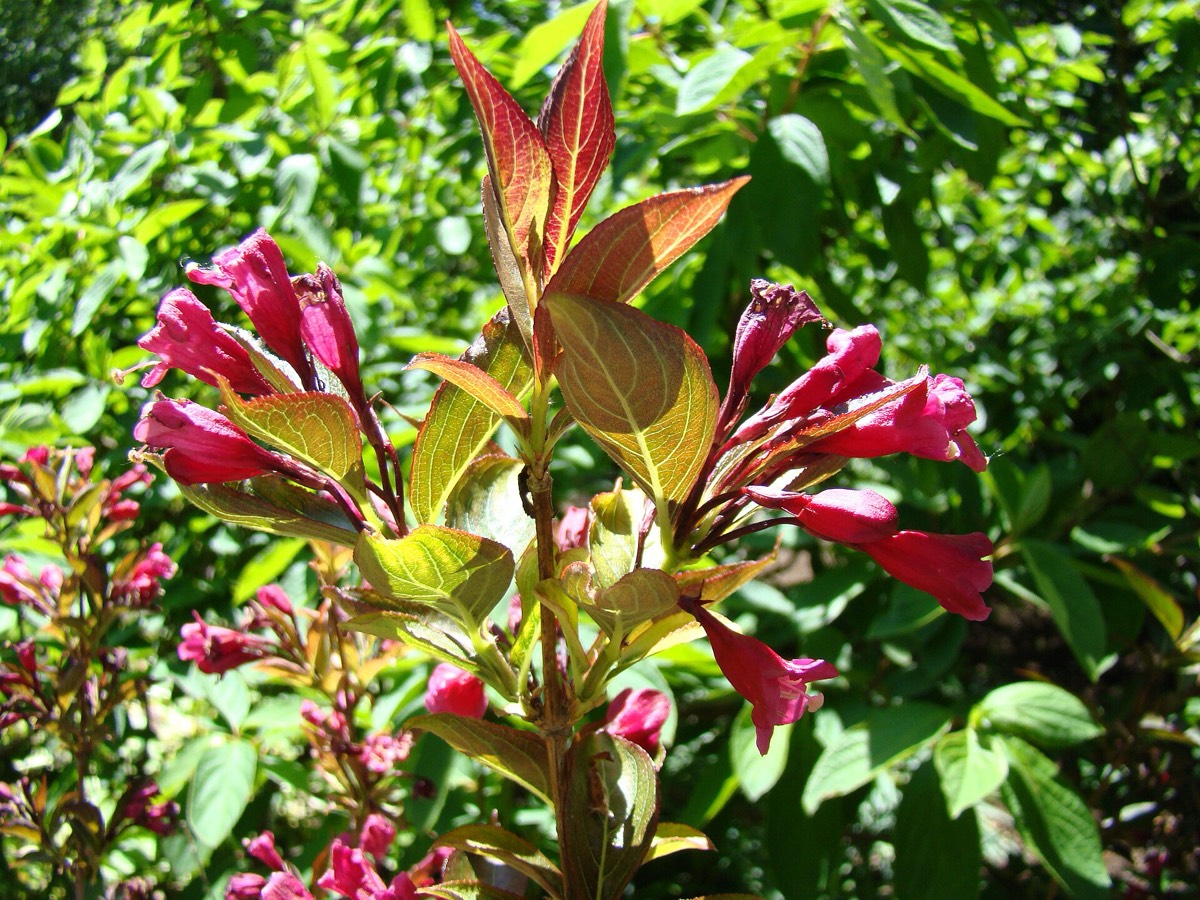
Weigela is an easy, old-fashioned shrub covered in rosy pink, trumpet-shaped flowers in late spring, with a few more later in summer. Hummingbirds visit the flowers. It does best in full sun and moist, well-drained soil.
At a Glance
| Plant type | Deciduous flowering shrub |
|---|---|
| Family | Honeysuckle family (Caprifoliaceae) |
| Other names | Old-fashioned weigela |
| Native range | Northern China, Korea, and Japan. Not native to North America. |
| Mature height | 6 to 9 feet |
| Mature spread | 9 to 12 feet |
| Growth rate | Medium |
| Flowers | Tubular, funnel-shaped flowers 1 to 2 inches long, rosy pink outside and paler inside. Late spring to early summer for about two weeks, with a few more later in the season. |
Growing Conditions
| USDA hardiness zones | 4 to 8 |
|---|---|
| Sun | Full sun for the most flowers. Tolerates part shade with fewer blooms. |
| Soil | Moist, well-drained soil. Tolerates clay. |
| Soil pH | Adaptable, including alkaline soil |
| Water | Medium. The roots are shallow, so water during dry spells. Tolerates occasional drought. |
| Tolerates | Clay, alkaline soil, air pollution, light salt, occasional drought |
| Does poorly with | Winter dieback |
Will It Grow Here?
Yes, anywhere in our area. Pink Weigela is hardy in zones 4 to 8, which covers every zone in our area (6b through 8a).
| Zone | Grows here? | Towns in this zone |
|---|---|---|
| 6b (our farm) | Yes | Lebanon, MO; Bolivar, MO; Iola, KS; Garnett, KS |
| 7a | Yes | Springfield, MO; Joplin, MO; Fayetteville, AR; Bentonville, AR |
| 7b | Yes | Harrison, AR; Tulsa, OK; Broken Arrow, OK; Tahlequah, OK |
| 8a | Yes | Van Buren, AR; Alma, AR |
Not sure which zone you're in? Look up your ZIP code on the USDA Plant Hardiness Zone Map (opens in a new tab).
-
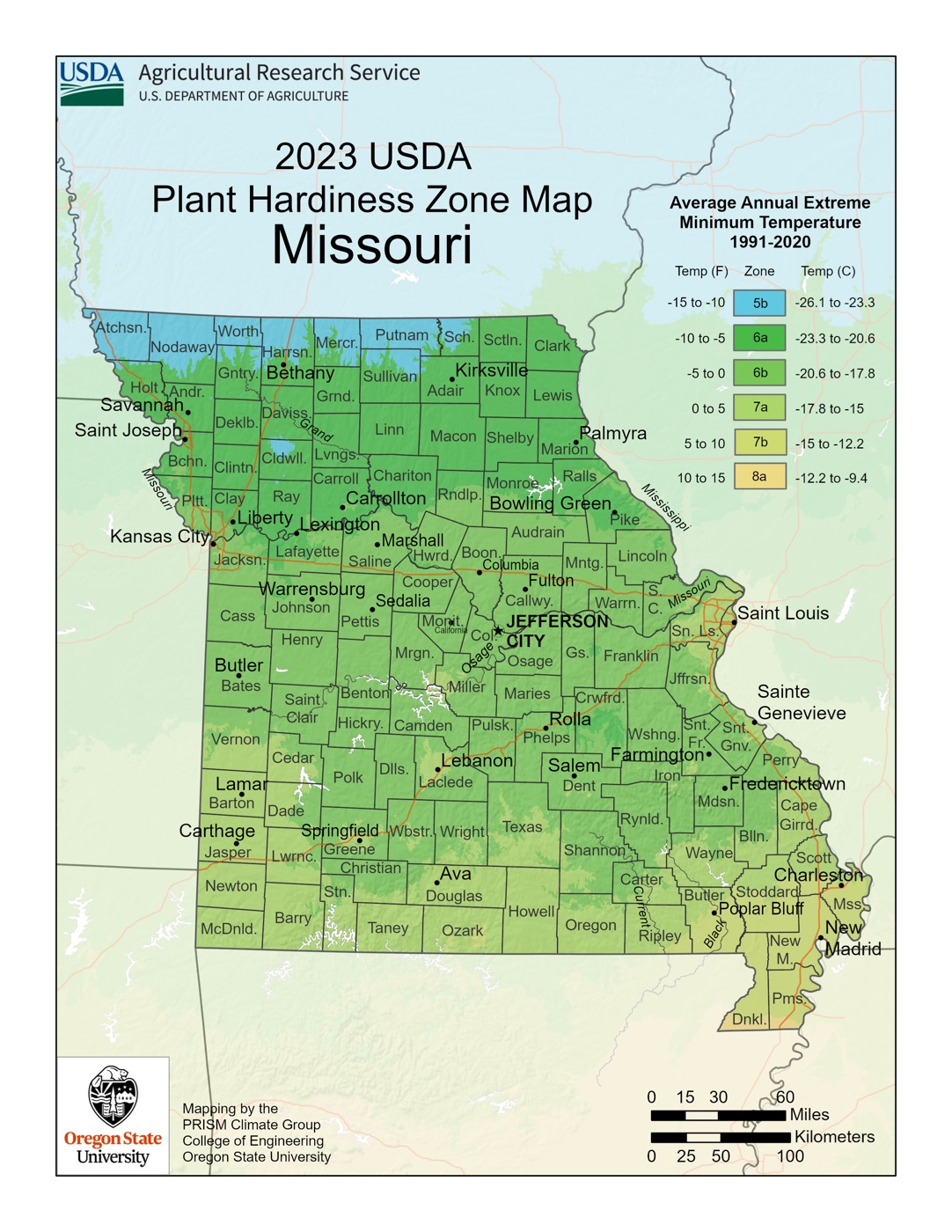 Missouri zone map (full size, opens in a new tab)
-
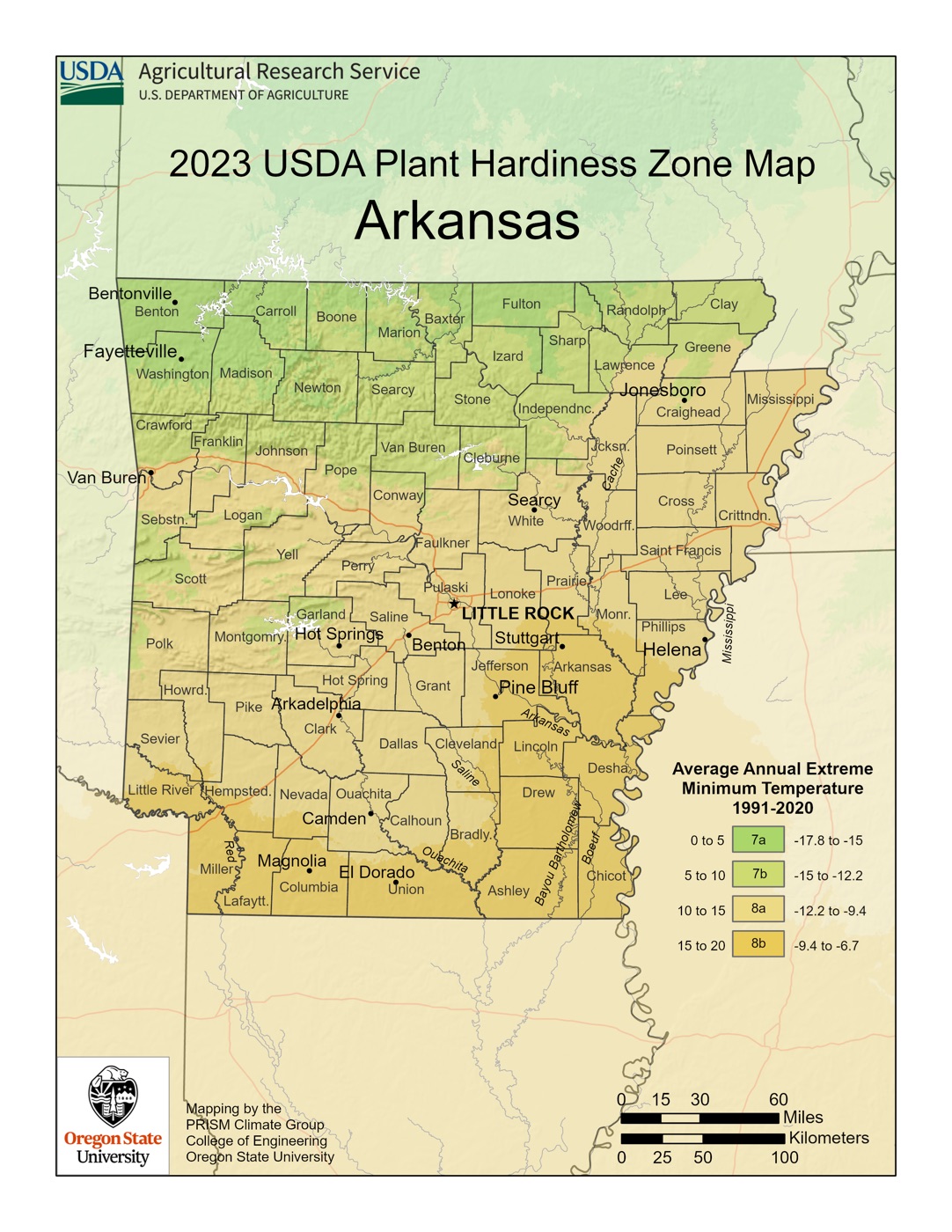 Arkansas zone map (full size, opens in a new tab)
-
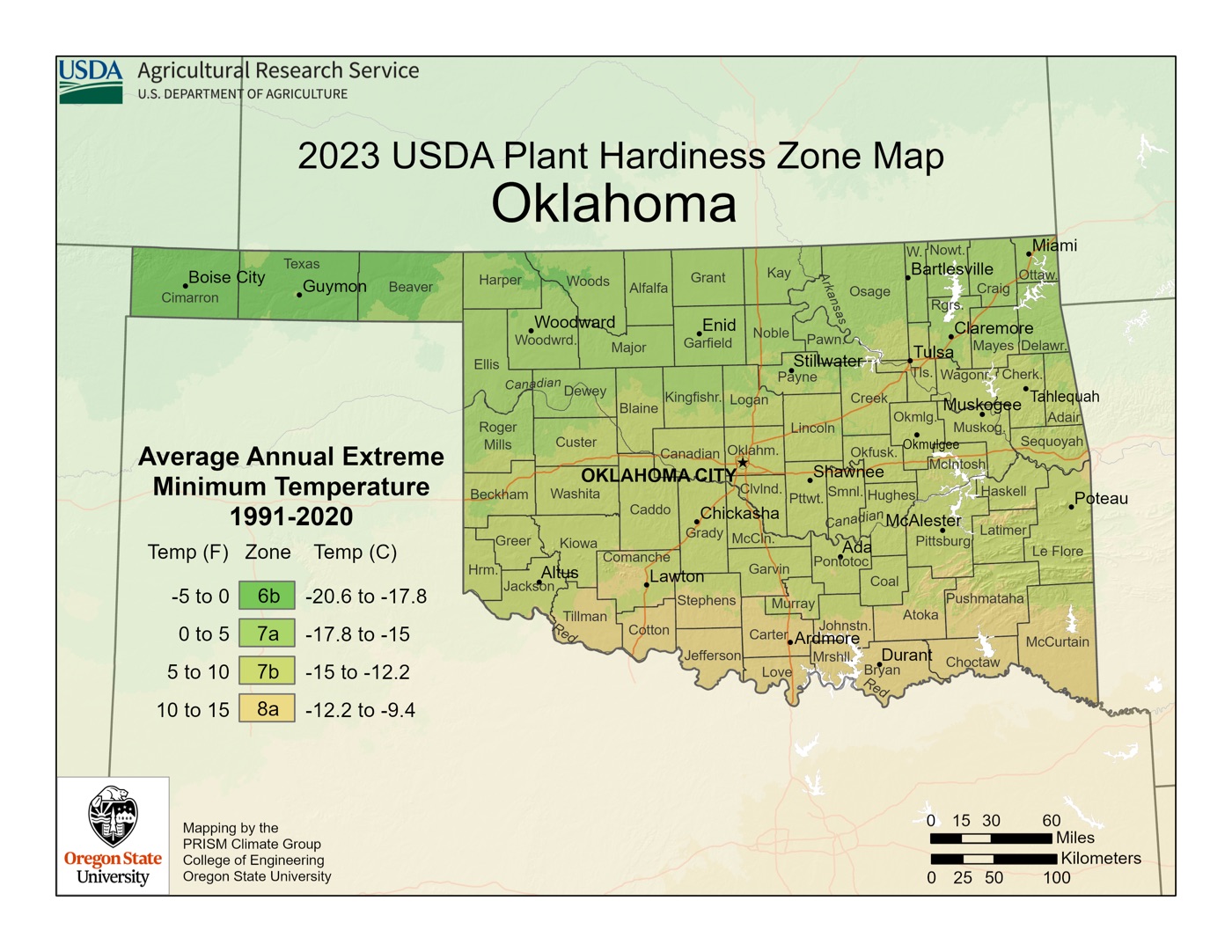 Oklahoma zone map (full size, opens in a new tab)
-
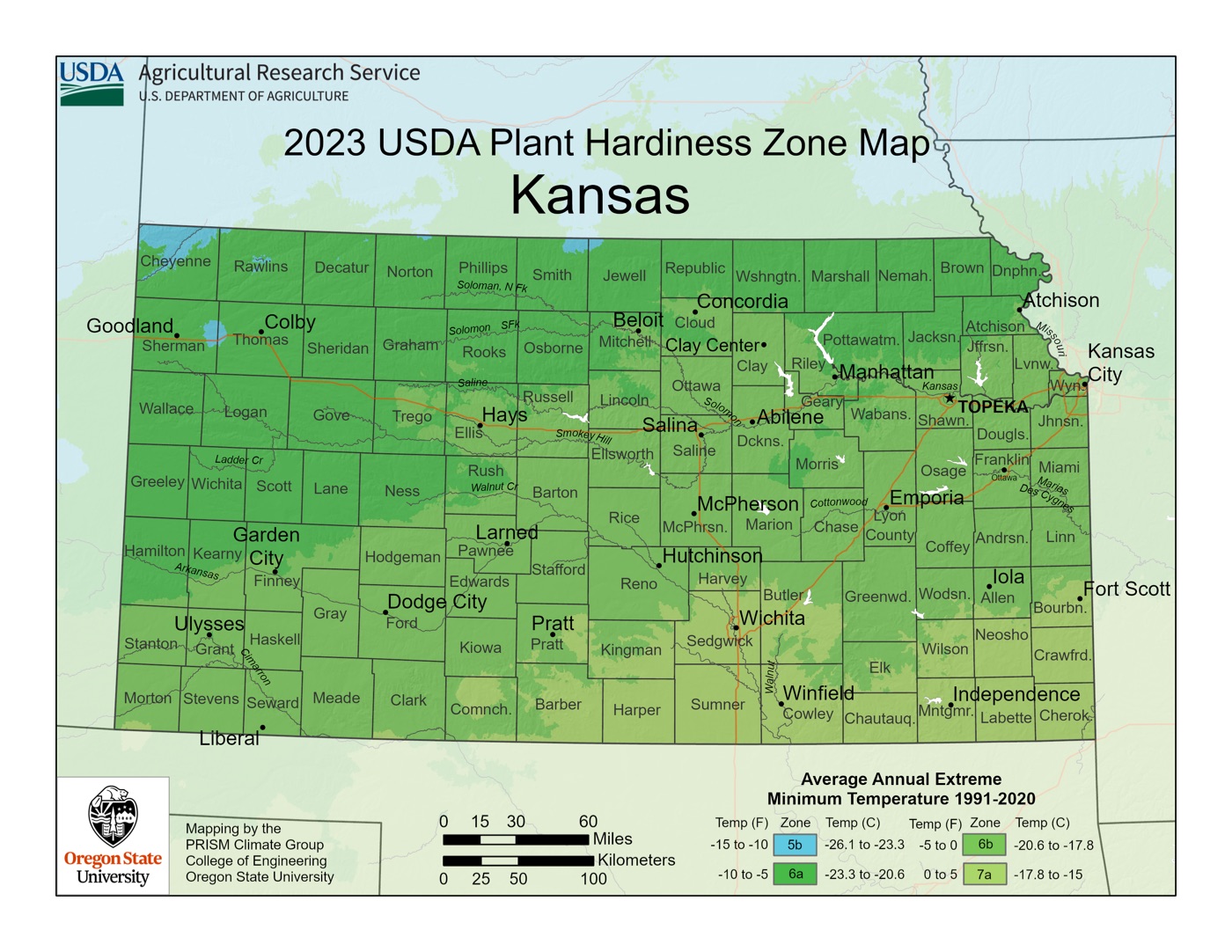 Kansas zone map (full size, opens in a new tab)
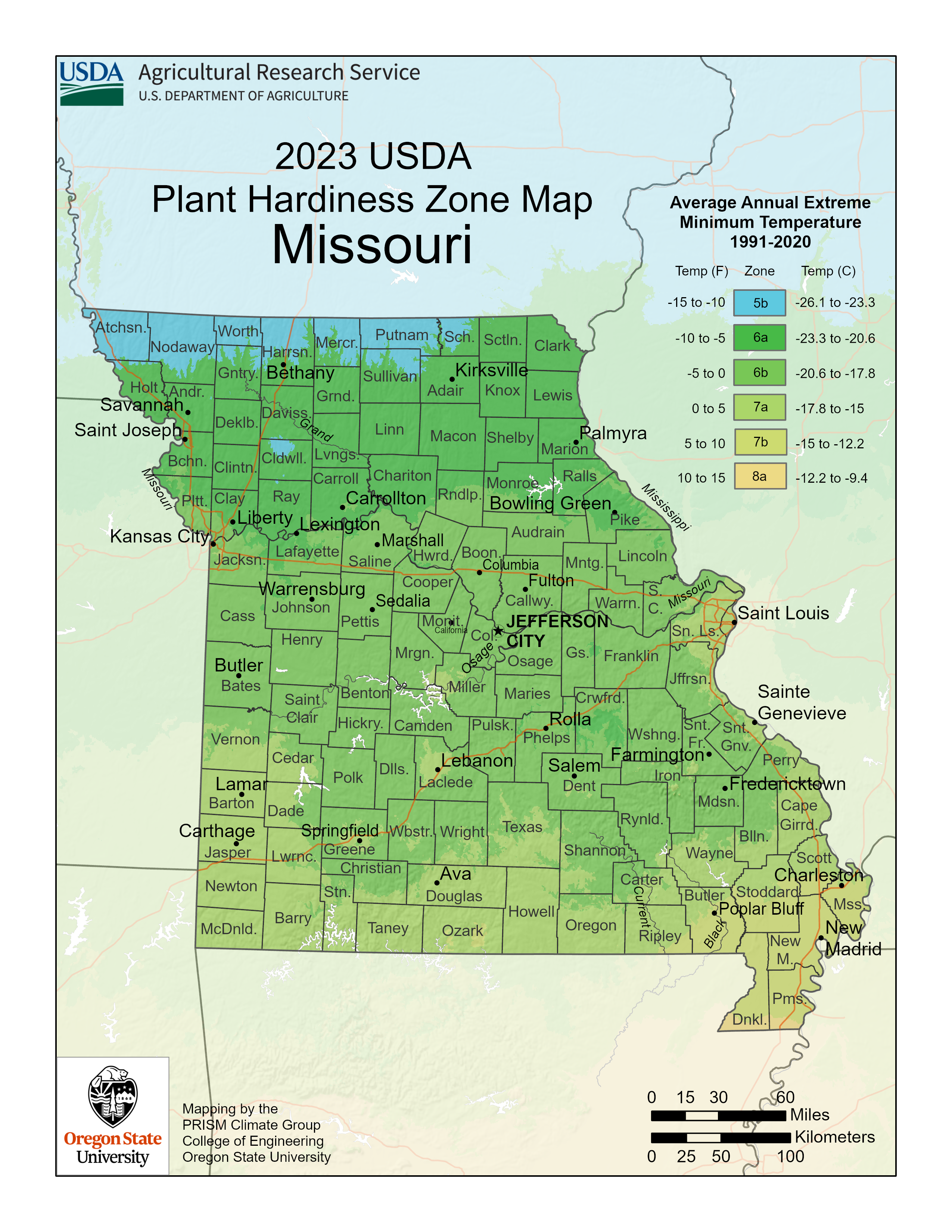
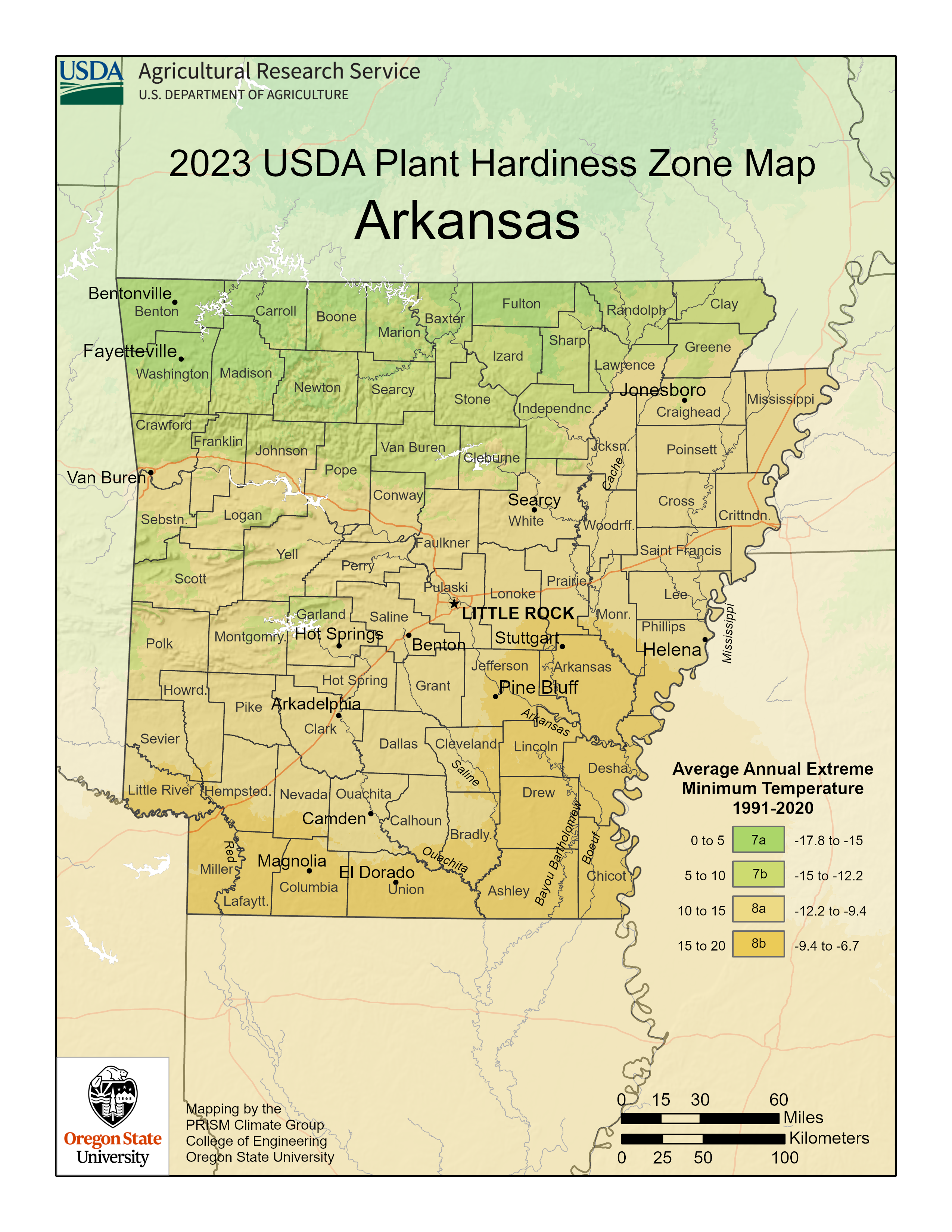
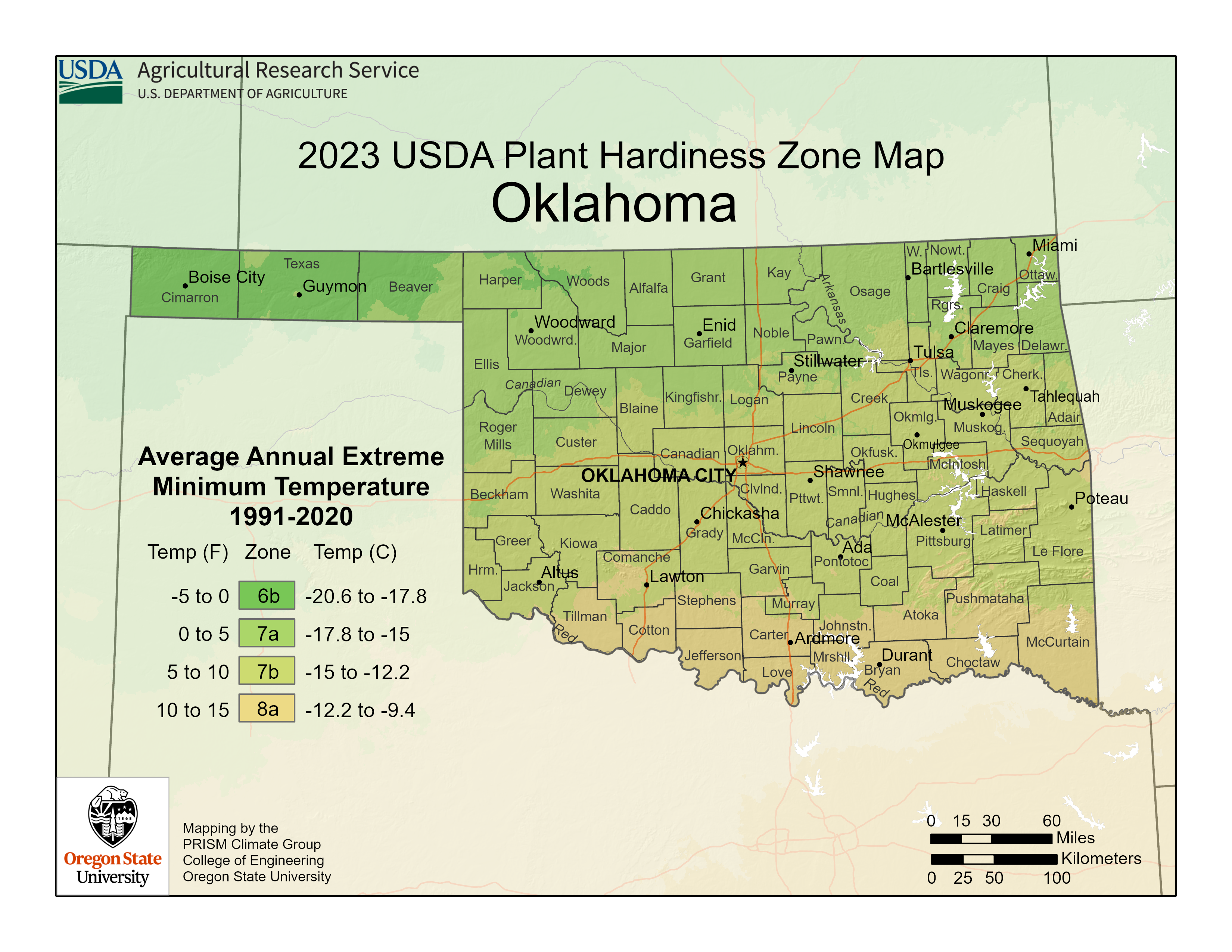
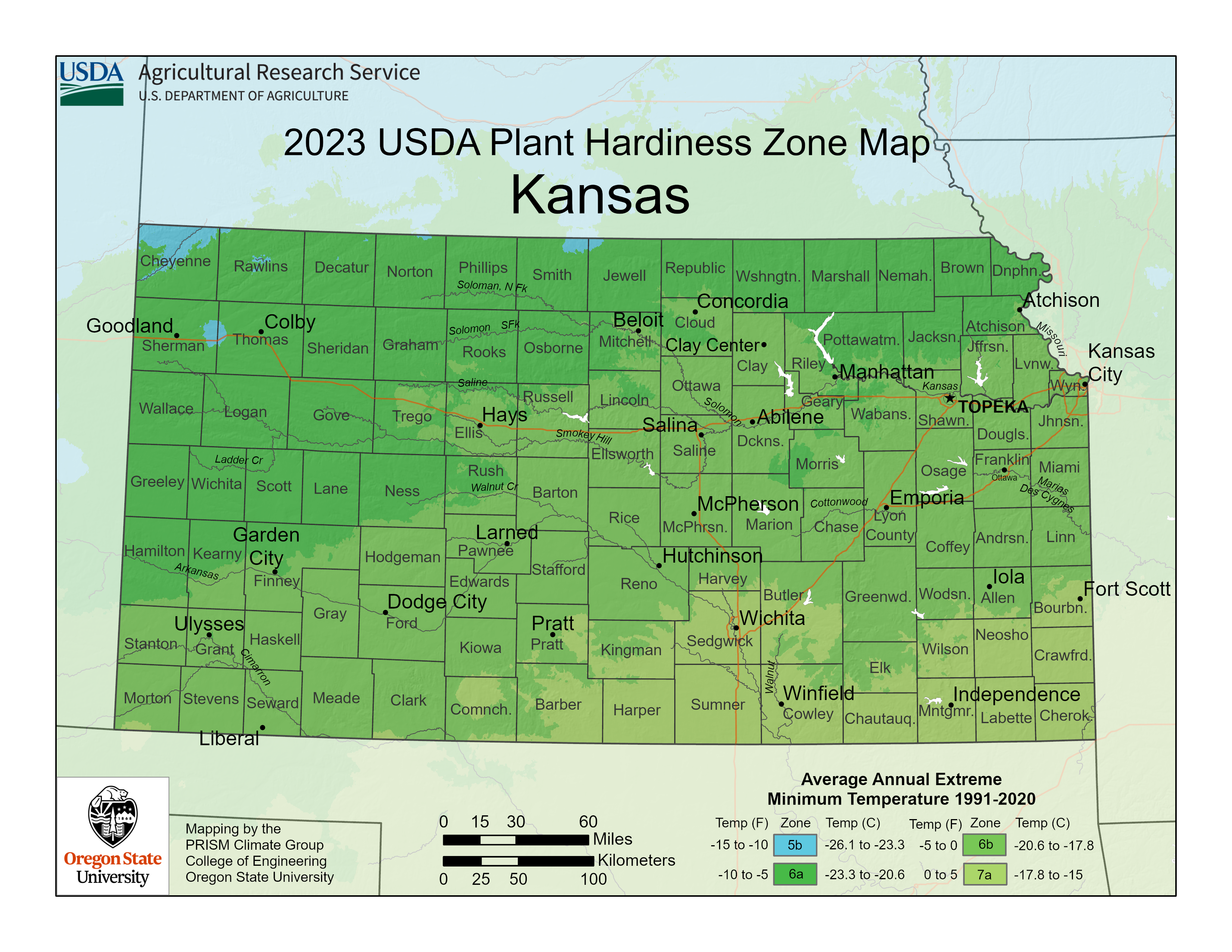
Official 2023 USDA Plant Hardiness Zone Maps. Tap a map to open it full size.
Maps: USDA Agricultural Research Service, with mapping by the PRISM Climate Group, Oregon State University.
Plant Patent
Our supplier sells this as a pink-flowered weigela and doesn't list a named variety or patent. Check the plant tag before propagating.
About the Pink Weigela
Weigela comes from northern China, Korea, and Japan. In late spring it’s covered in trumpet-shaped flowers that are rosy pink on the outside and paler inside. The main show lasts about two weeks, and a few more flowers open through the summer. Hummingbirds and butterflies visit the flowers.
Choosing a Spot
- Full sun gives the most flowers. It grows in part shade but blooms less.
- Moist, well-drained soil. It tolerates clay and alkaline soil.
- Room to spread. It grows 6 to 9 feet tall and wider than it is tall, 9 to 12 feet.
Planting
- Dig wide, not deep. Make the hole at least 1 1/2 to 2 times as wide as the root ball and only as deep. In poorly drained or compacted soil, make it 3 to 4 times as wide and not quite as deep.
- Set the top of the root ball even with the surrounding soil or slightly above. Planting even 3 inches too deep lets water collect around the roots.
- Slice circling roots. If roots circle the outside of the root ball, make three or four cuts an inch or two deep from top to bottom.
- Backfill with the soil you dug out. Amendments usually aren’t needed.
- Skip fertilizer at planting, and water right away.
Watering
New plants establish fastest with light, frequent watering. In summer a new shrub may need water several times a week. Overwatering kills as easily as drought, so feel the soil before you water. The roots are shallow, so even established plants benefit from water during dry periods.
Mulch and Fertilizer
Spread organic mulch no more than 3 inches deep after it settles, and keep it off the stems. The shallow roots benefit from mulch. Fertilize only if a soil test calls for it.
Pruning
Weigela blooms on old wood, so prune soon after it flowers. It doesn’t need pruning every year. Removing some of the older branches keeps it vigorous, and an old, overgrown plant can be cut to the ground to renew it.
Common Problems
- Few serious problems. Insect and disease damage is minimal.
- Aphids: Wash them off with a strong spray of water.
- Powdery mildew: Can appear in wet springs.
- Winter dieback: Some stems may die back in winter.
- Deer: Sources disagree; one says deer may damage it, another lists it as deer resistant.
Good for Wildlife
Hummingbirds and butterflies visit the flowers.
Availability
Currently out of stock until Spring 2027.
Our nursery stock changes through the season. Contact us to check what we have on hand, current sizes, and pricing.
Sources
Growing information on this page was checked against these public references:
- Weigela florida (North Carolina Extension Gardener Plant Toolbox) (opens in a new tab)
- Old fashioned weigela (The Morton Arboretum) (opens in a new tab)
- Planting a Tree or a Shrub, FSA-6128 (University of Arkansas Cooperative Extension) (opens in a new tab)
Disclaimer: The information on this page is based on publicly available knowledge and research. Individual results may vary.