Sugar Maple
Acer saccharum
Sugar maple is a big, long-lived shade tree that grows wild across Missouri. It's known for its fall color and as the source of real maple syrup. It grows slowly and wants room, deep soil, and steady moisture.
At a Glance
| Plant type | Deciduous shade tree |
|---|---|
| Family | Maple family (Sapindaceae) |
| Other names | Hard maple, sugartree |
| Native range | Eastern North America, from Nova Scotia and Manitoba south to Georgia and west into Missouri, Kansas, and Oklahoma. Common throughout Missouri. |
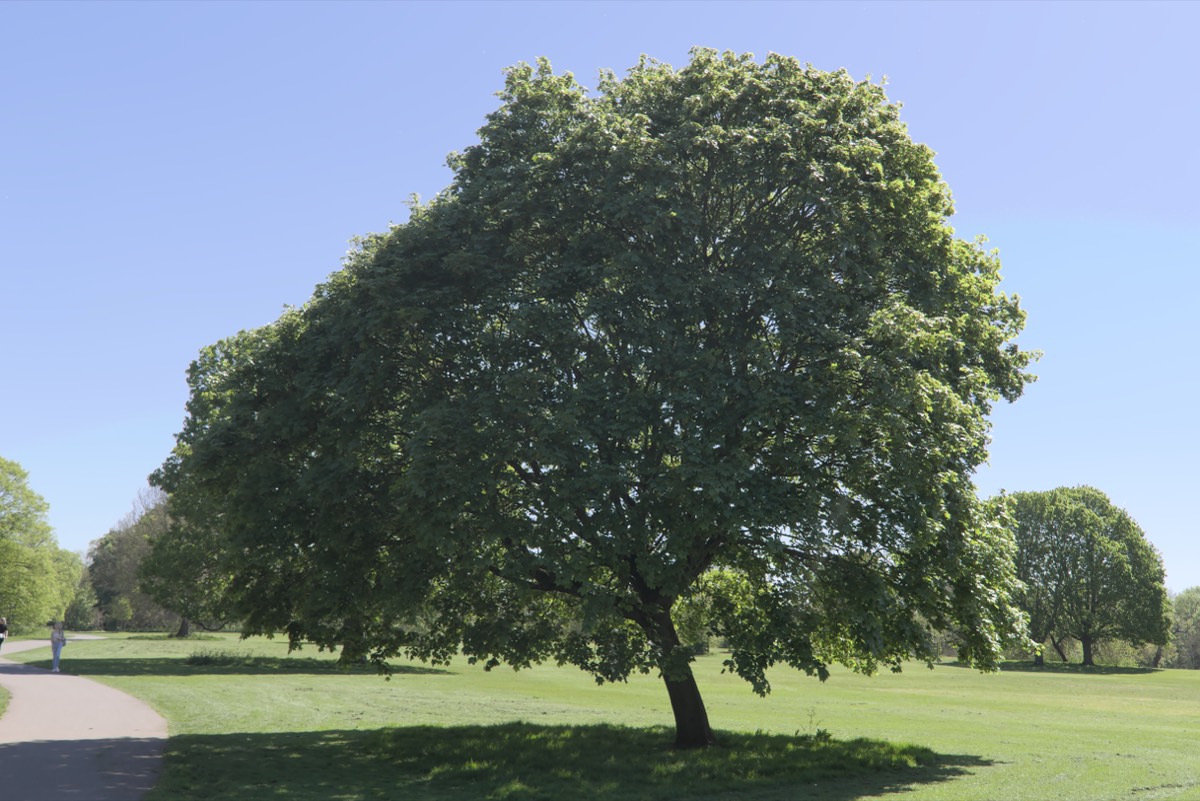
| Mature height | 60 to 75 feet in a yard. Forest trees can reach 100 feet or more. |
| Mature spread | 40 to 50 feet |
| Growth rate | Slow to medium, faster in the open |
| Lifespan | Very long-lived. Mature trees reach 300 to 400 years. |
| Flowers | Small greenish-yellow clusters on long, drooping stalks, late March to May. Not showy. Trees seldom flower until they're at least 22 years old. |
| Fruit or seed | Paired winged seeds ("helicopters"), about 1 inch long. They ripen over the summer and drop in fall. |
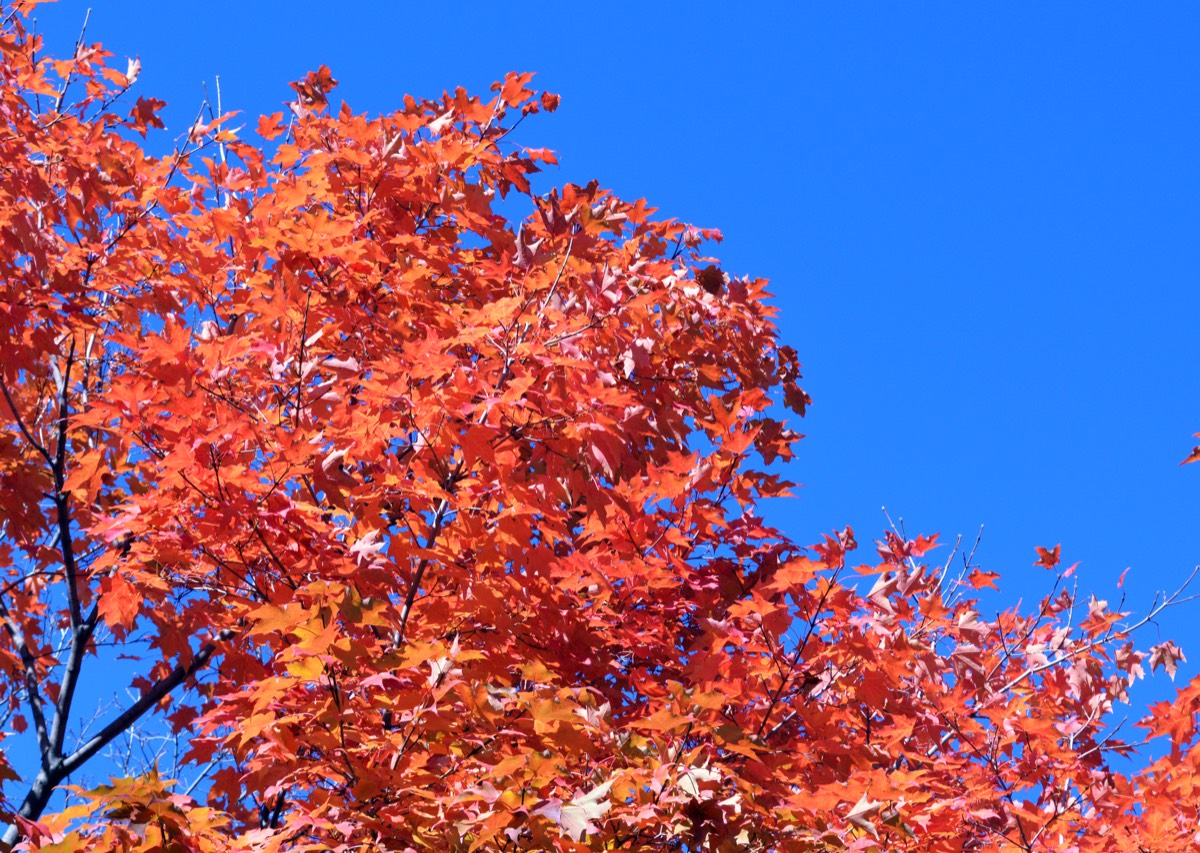
| Foliage | Five-lobed leaves, 2 to 6 inches long, dark green in summer. Fall color is yellow, orange, or red and varies from tree to tree. |
Growing Conditions
| USDA hardiness zones | 3 to 8 |
|---|---|
| Sun | Full sun to part shade. Young trees handle shade well. |
| Soil | Deep, moist, well-drained loam. Will grow in clay or sand if the soil drains and isn't packed down. |
| Soil pH | Most common on soils of 5.5 to 7.3. Slightly acidic is best, though some sources list it as tolerant of alkaline soil. |
| Water | Medium. Sensitive to drought, so water during dry spells. |
| Tolerates | Shade, cold winters, clay, black walnut |
| Does poorly with | Road salt, compacted soil, flooding during the growing season, drought, high heat, air pollution |
Will It Grow Here?
Yes, anywhere in our area. Sugar Maple is hardy in zones 3 to 8, which covers every zone in our area (6b through 8a).
| Zone | Grows here? | Towns in this zone |
|---|---|---|
| 6b (our farm) | Yes | Lebanon, MO; Bolivar, MO; Iola, KS; Garnett, KS |
| 7a | Yes | Springfield, MO; Joplin, MO; Fayetteville, AR; Bentonville, AR |
| 7b | Yes | Harrison, AR; Tulsa, OK; Broken Arrow, OK; Tahlequah, OK |
| 8a | Yes | Van Buren, AR; Alma, AR |
Not sure which zone you're in? Look up your ZIP code on the USDA Plant Hardiness Zone Map (opens in a new tab).
-
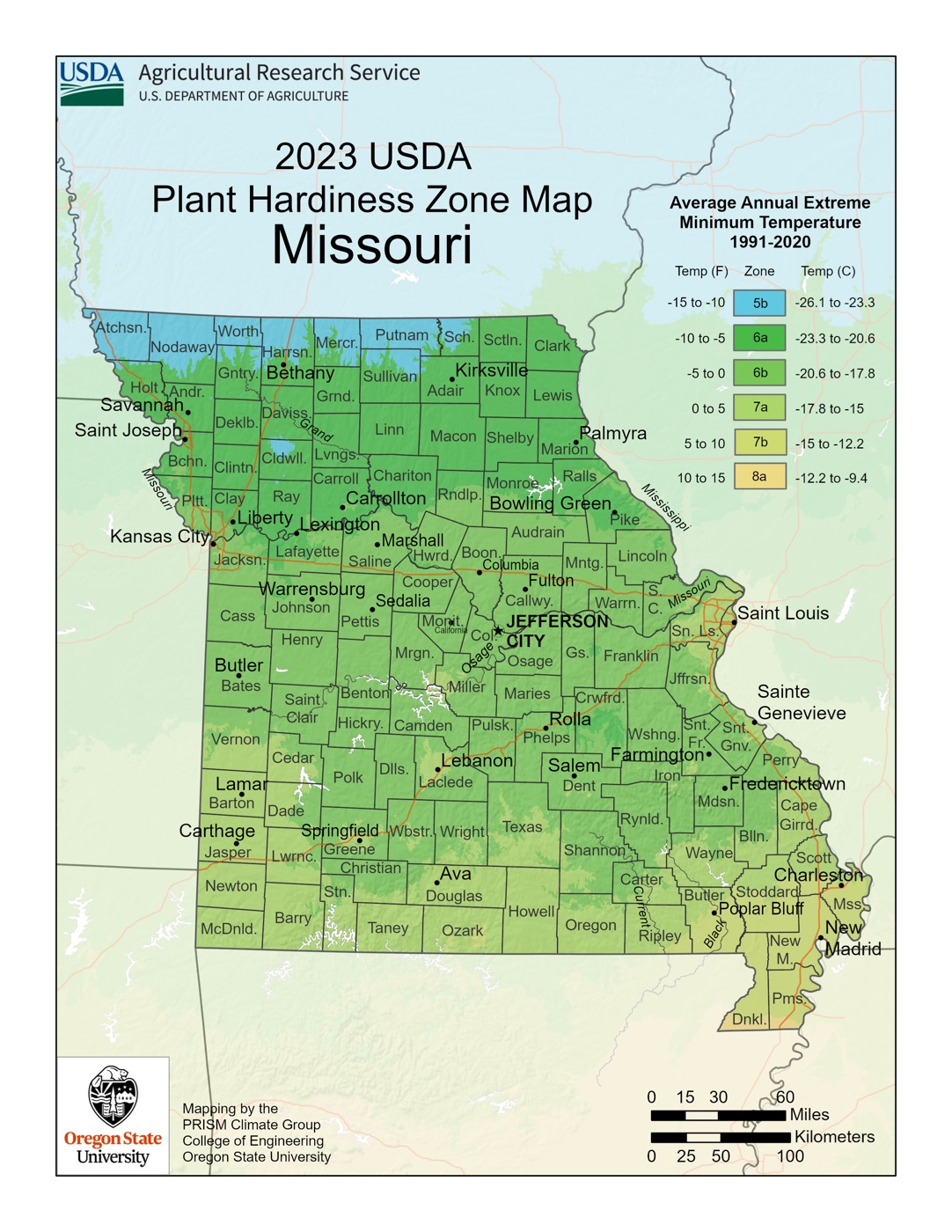 Missouri zone map (full size, opens in a new tab)
-
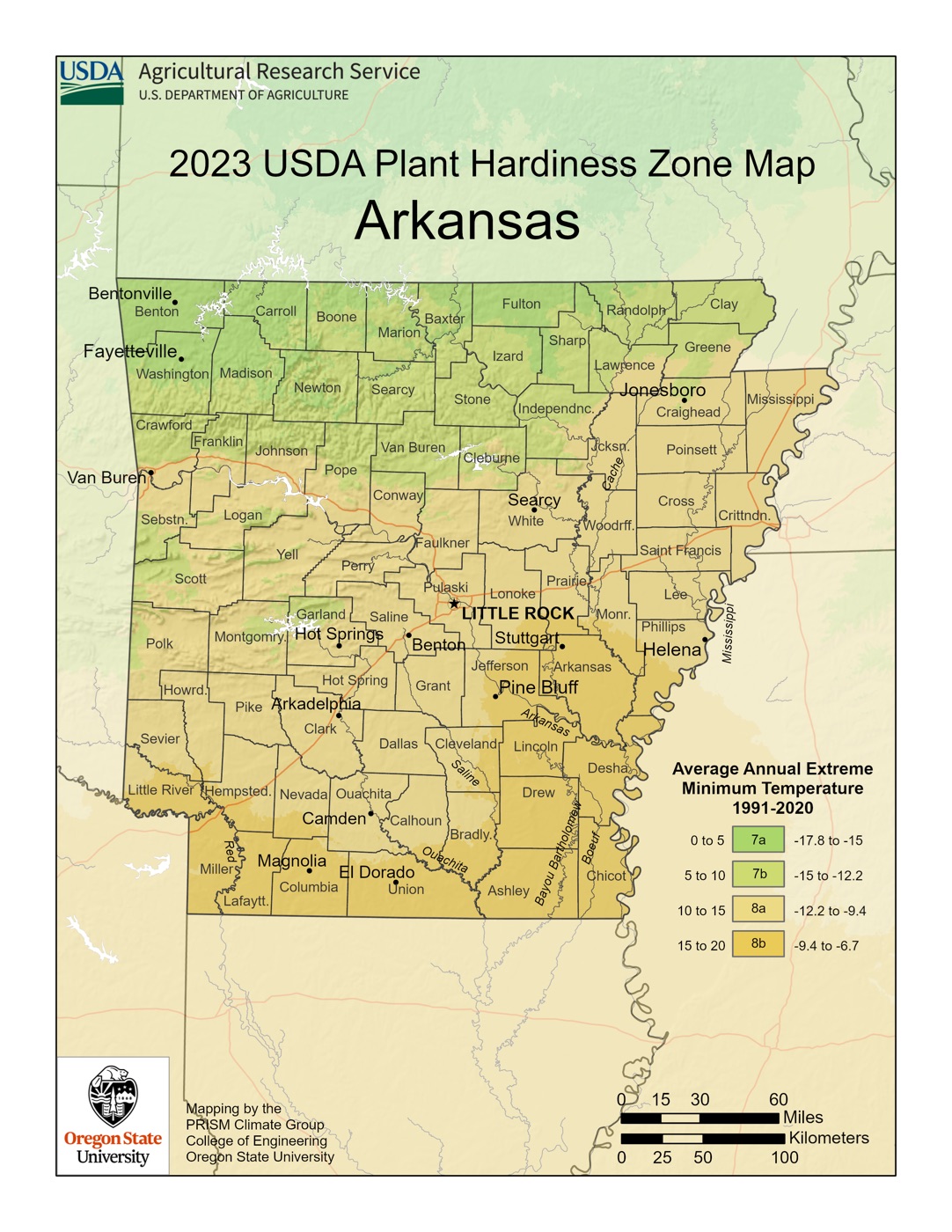 Arkansas zone map (full size, opens in a new tab)
-
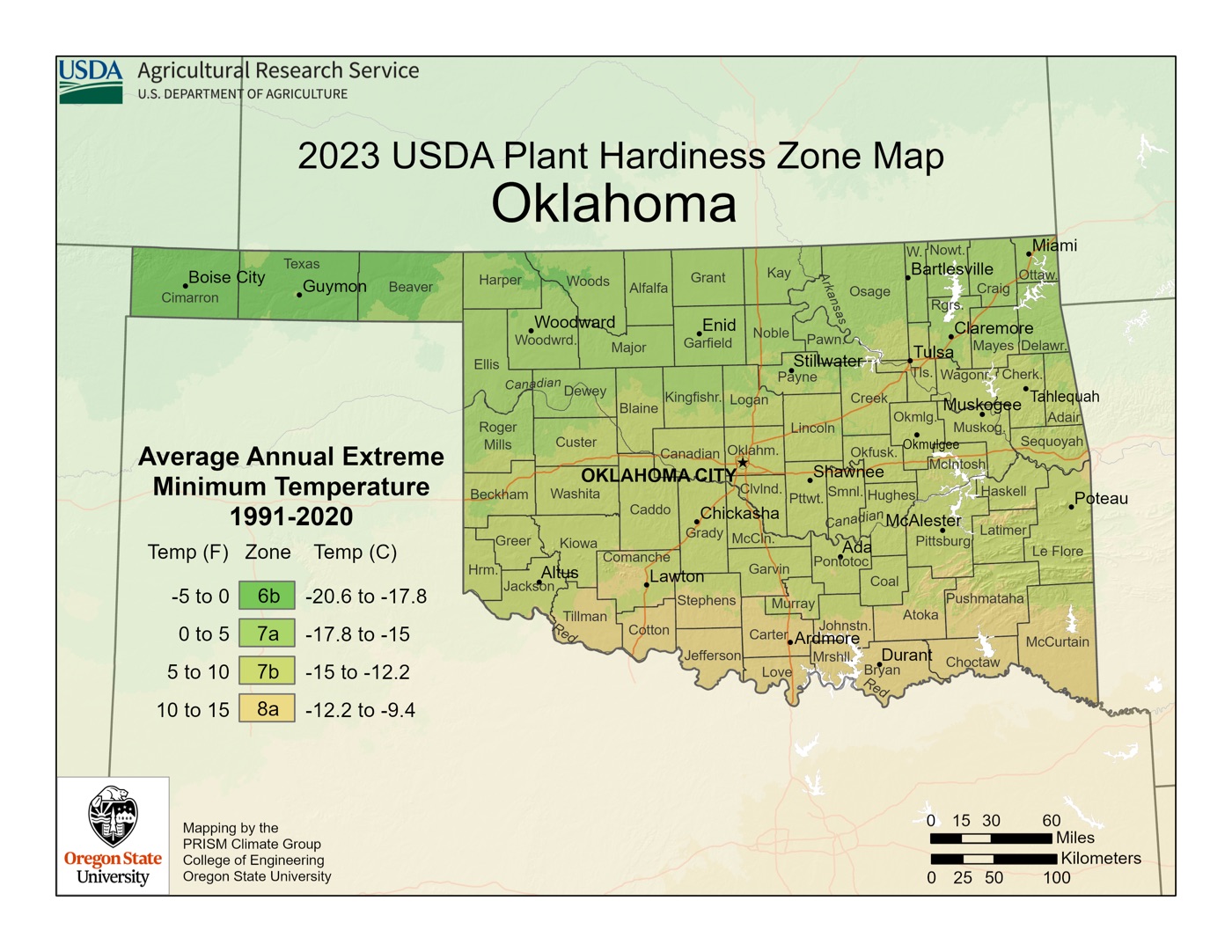 Oklahoma zone map (full size, opens in a new tab)
-
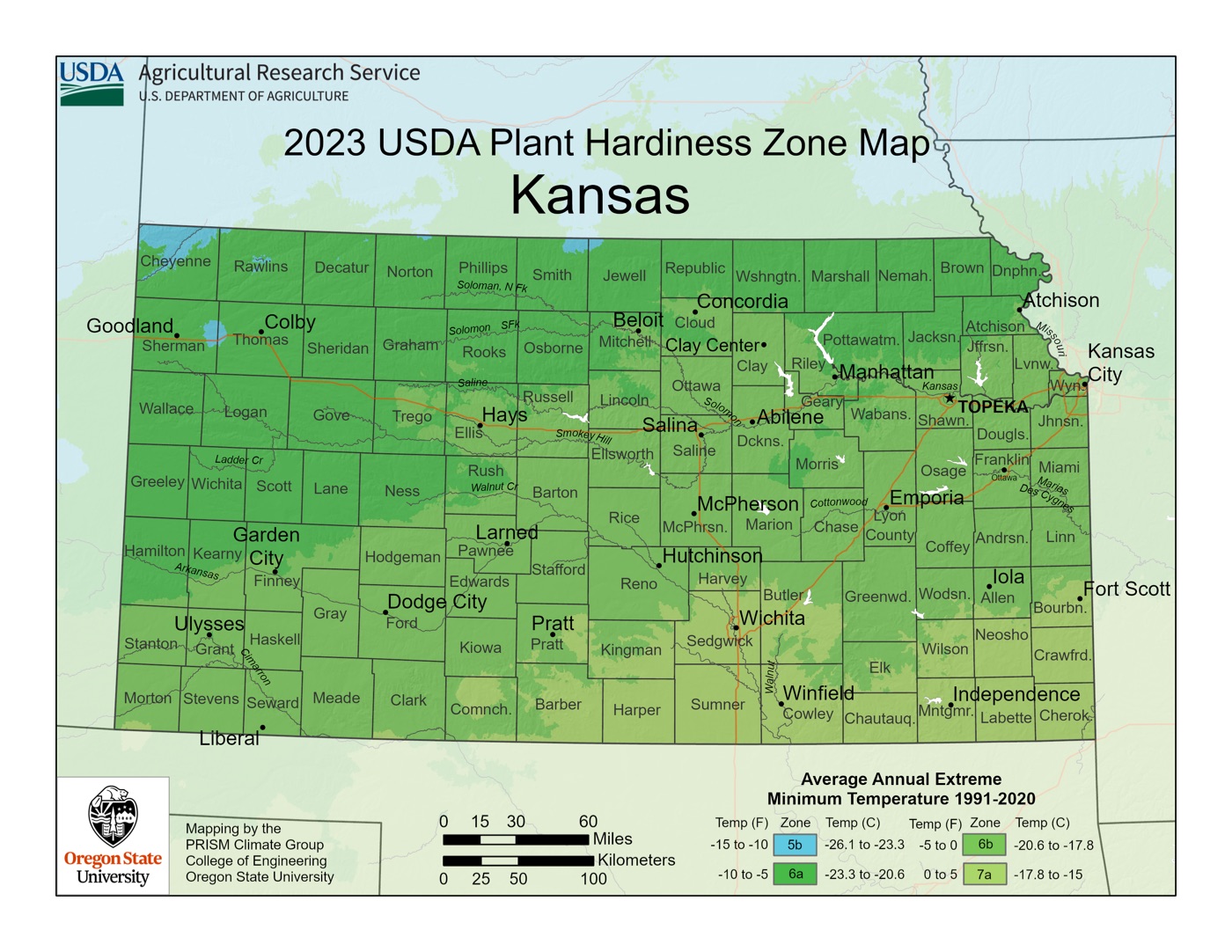 Kansas zone map (full size, opens in a new tab)
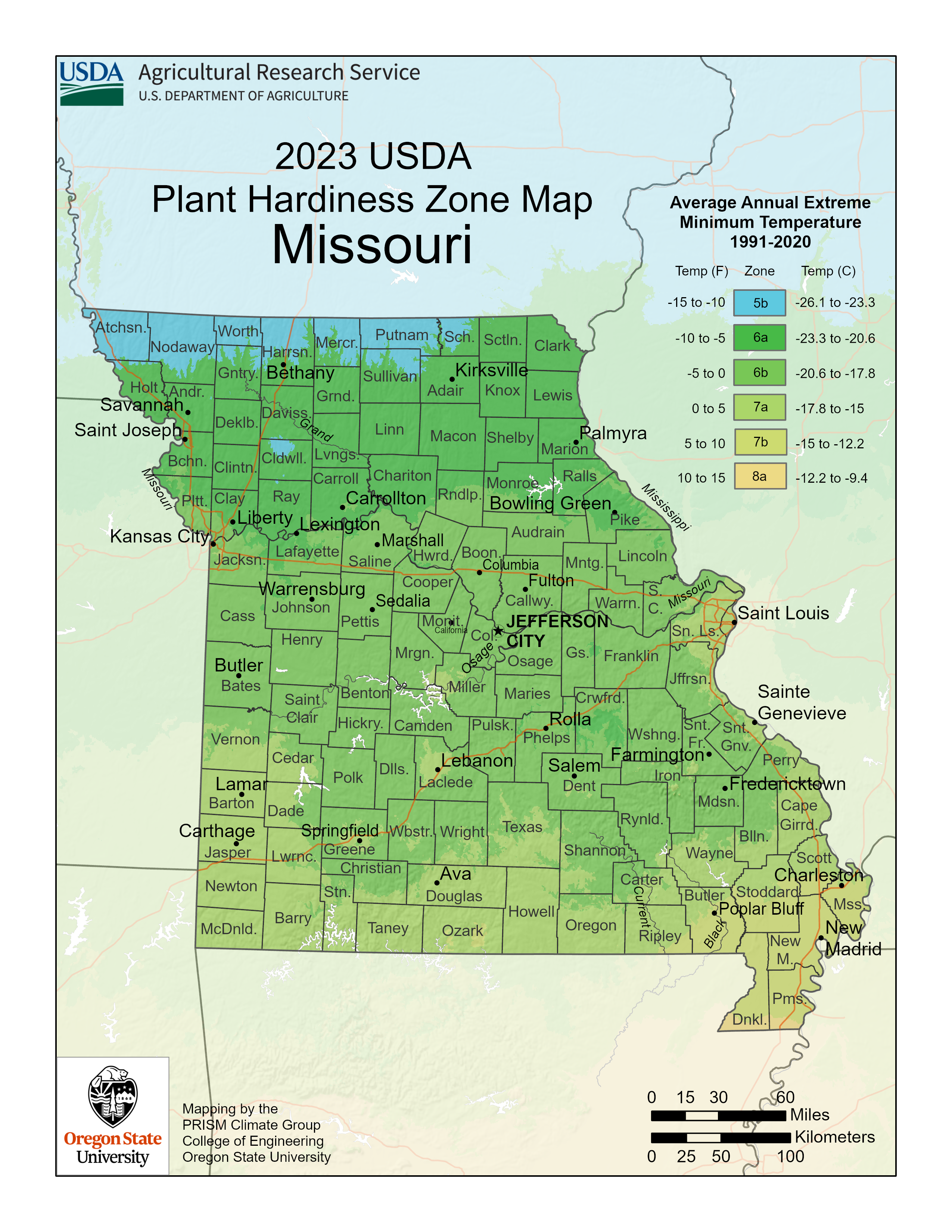
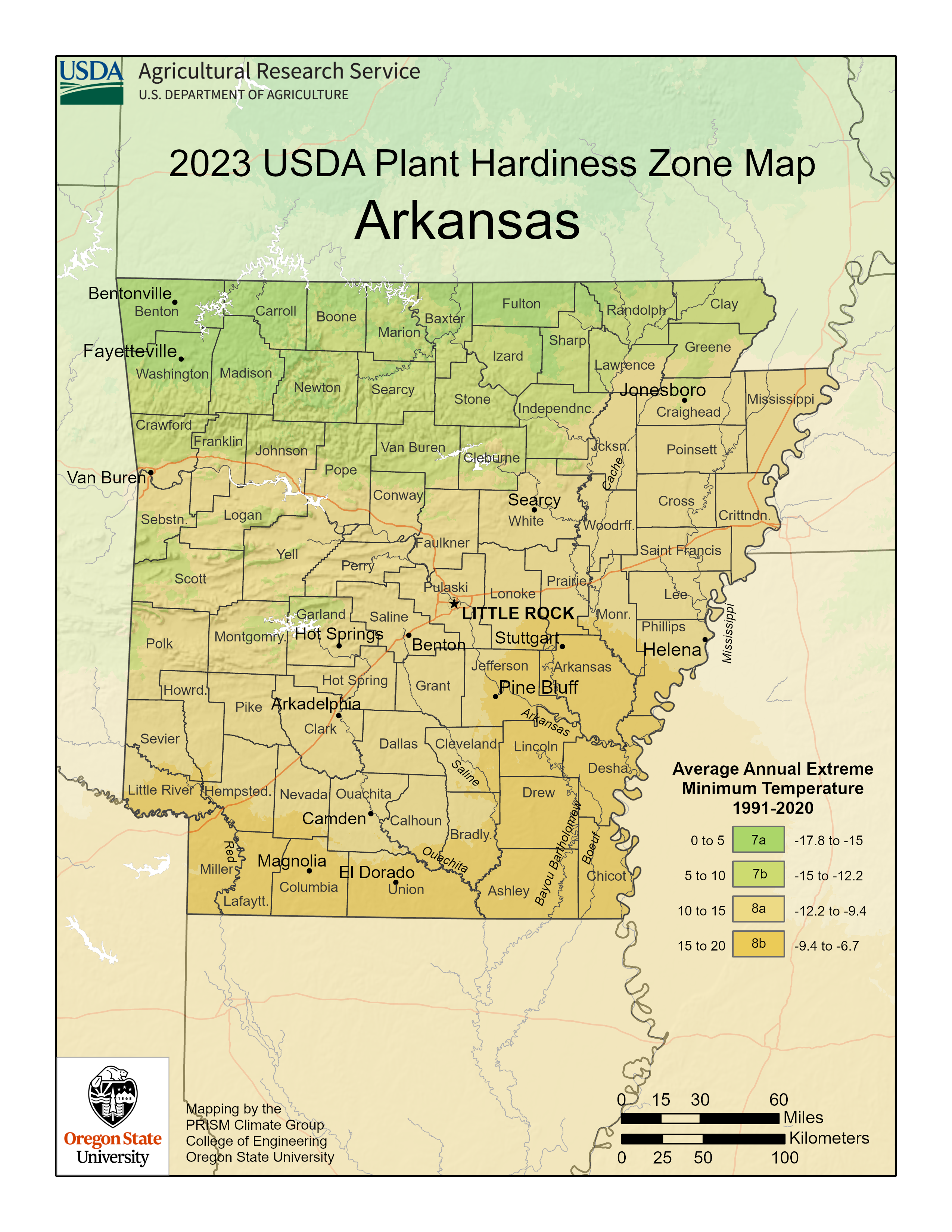
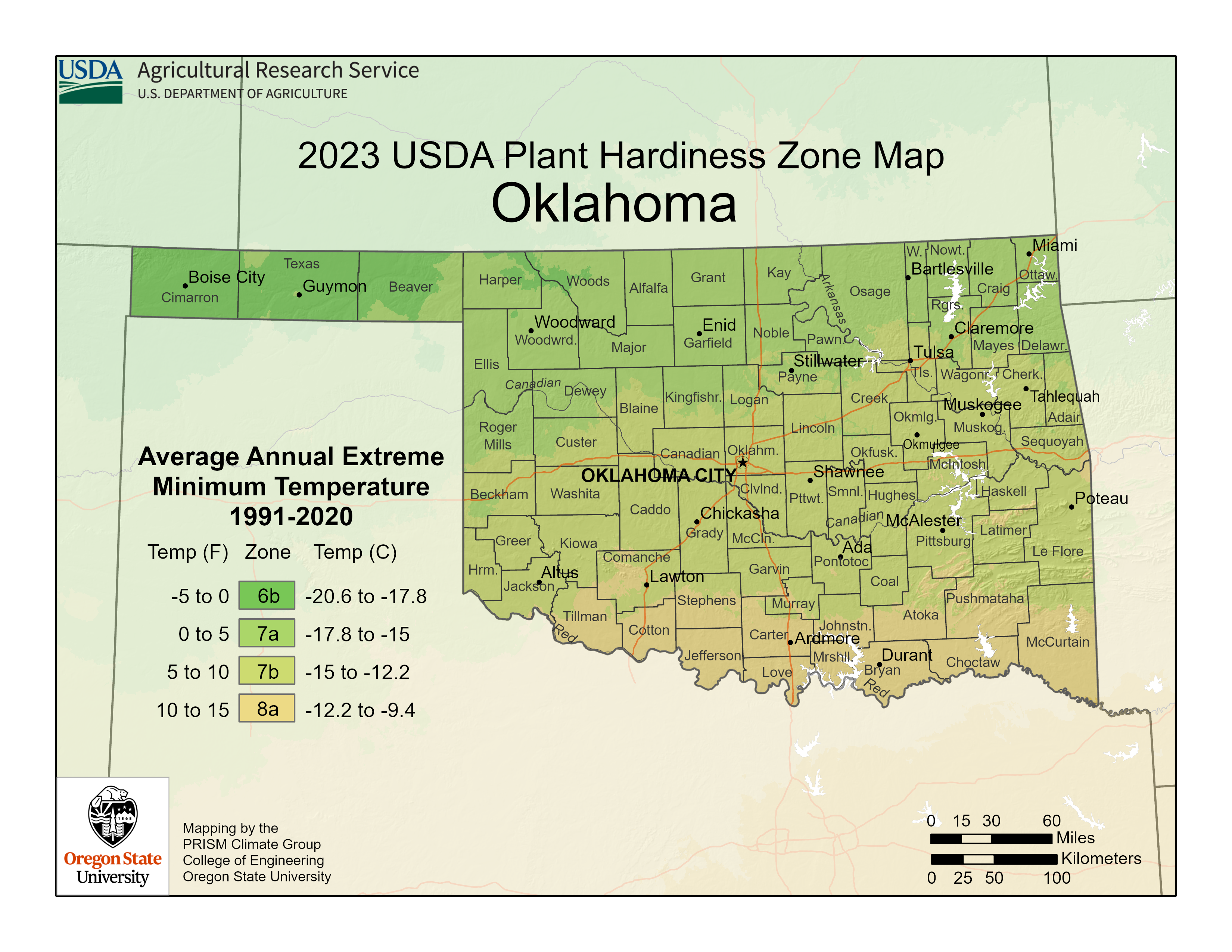
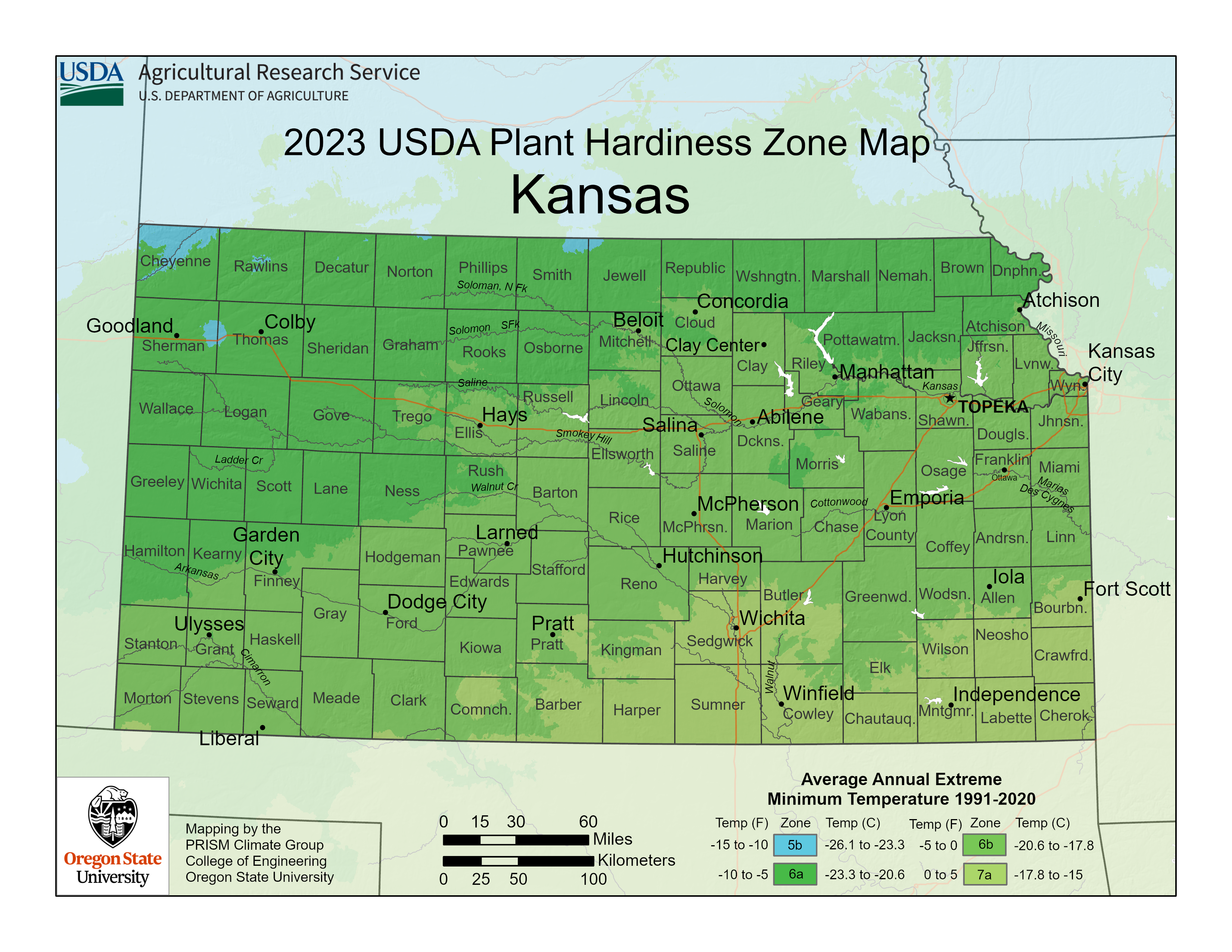
Official 2023 USDA Plant Hardiness Zone Maps. Tap a map to open it full size.
Maps: USDA Agricultural Research Service, with mapping by the PRISM Climate Group, Oregon State University.
Plant Patent
Not patented. This is the straight species, not a named variety, so there are no restrictions on growing it from seed or cuttings.
About the Sugar Maple
Sugar maple grows wild all over Missouri, in upland woods, along bluffs, and on stream banks. It’s the tree behind real maple syrup. The sap has about twice the sugar of other maples, and it’s the only tree used today for commercial syrup. Even so, it takes roughly 32 to 40 gallons of sap to boil down to one gallon of syrup.
The wood is hard, heavy, and strong. It’s used for flooring, furniture, cutting blocks, tool handles, bowling pins, and musical instruments. Bird’s-eye maple, a figured wood valued for veneer, comes from sugar maple.
It’s a popular landscape tree, valued for its fall color. The crown is dense and spreading, and in autumn it turns some mix of yellow, orange, and red. No two trees color up quite the same. Sugar maple is the state tree of New York, Vermont, West Virginia, and Wisconsin.
Choosing a Spot
Sugar maple can live for centuries, so pick its spot carefully.
- Give it room. The crown can spread 35 to 50 feet. Keep it well clear of the house, power lines, and other big trees.
- Keep it away from pavement and pipes. The roots can crack sidewalks and clog drains and septic lines.
- Keep it away from roads. Road salt and salt spray damage sugar maple badly. It also struggles with the heat, packed soil, and pollution along streets.
- Skip low, wet spots. The roots don’t tolerate standing water during the growing season, and heavy, poorly drained soil makes verticillium wilt more likely.
Planting
Sugar maple transplants well.
- Dig wide, not deep. Make the hole two to three times as wide as the root ball and only as deep. Set the root ball on undisturbed soil so it won’t settle.
- Check the depth. The root flare, where the trunk widens into the roots, should end up at or slightly above the finished soil level. Don’t plant it deeper than it grew in the nursery.
- Slice circling roots. If roots circle the outside of a container root ball, make three or four cuts an inch or two deep from the top of the root ball to the bottom. Left alone, circling roots can strangle the trunk years later.
- Balled-and-burlapped trees: Cut away the twine, pull the burlap back so none shows above ground, and remove the top part of any wire basket.
- Backfill with the soil you dug out. Compost or peat is optional. If you use it, keep it under a fifth of the mix. In heavy clay, set the tree a little high so the top of the root ball sits slightly above grade.
- Water it in slowly and thoroughly.
- Hold off on nitrogen fertilizer. It pushes leaf growth at the expense of new roots. Add phosphorus or potassium only if a soil test calls for it.
- Stake only on windy sites. Use soft, loose ties no higher than a third of the way up the trunk, and take the stakes off after one growing season.
Watering
For the first season, water small amounts often. An easy method from University of Missouri Extension: drill a few 1/8-inch holes near the bottom of a 5-gallon bucket, set it beside the tree, and fill it two or three times a week through the first season. Don’t overdo it, though. Soggy soil in hot weather can kill a young tree almost as fast as drought.
Sugar maple is sensitive to drought, so keep watering an established tree during dry spells. Brown, crispy leaf edges in summer (called leaf scorch) mean it isn’t getting enough water.
Mulch and Fertilizer
Spread mulch 2 to 3 inches deep, tapering to less than an inch at the trunk. Never pile it against the bark. Keeping a ring around the tree free of grass helps it grow and keeps string trimmers away from the trunk.
Get a soil test before you fertilize. Your county extension office can help with that.
Pruning
At planting, only take off branches that are broken or that cross and rub. Don’t cut the top (the main leader). If the tree sends up two or more competing leaders later, keep the strongest and remove the rest. Over the next few years, favor branches that leave the trunk at a wide angle. Narrow forks are weak and tend to split in storms. Don’t remove more than about 20 percent of a young tree’s branches at once.
Early spring, before the leaves come out, is the best time to prune because the cuts close fastest. Maples “bleed” sap from cuts made then. It looks alarming, but it does little harm. If it bothers you, prune in late spring once the tree is in full leaf. Skip the wound paint or tar; research shows it does little or nothing to help cuts close.
Common Problems
- Leaf scorch: Brown, dry leaf edges in hot, dry weather. Water deeply.
- Verticillium wilt: A disease that can kill trees. It’s more likely in heavy, poorly drained soil.
- Girdling roots: Roots that circle the trunk can strangle it years later. Slicing circling roots at planting helps prevent this.
- Leaf spots, tar spot, and anthracnose: Spots or blotches on the leaves, mainly on trees that are already unhealthy.
- Insects: Aphids, cottony maple scale, and borers can show up, but sugar maple isn’t highly susceptible to insect damage.
- Deer: Deer browse sugar maple.
Good for Wildlife
Squirrels and birds eat the seeds. The flowers open early in spring and give bees some of the first pollen of the year. Woodpeckers and other cavity-nesting birds nest in older trees, and the caterpillars of the imperial moth feed on maple leaves.
Availability
Currently out of stock until Spring 2027.
Our nursery stock changes through the season, and tree sizes vary. Contact us to check what we have on hand, current sizes, and pricing.
Sources
Growing information on this page was checked against these public references:
- Silvics of North America: Sugar Maple (USDA Forest Service) (opens in a new tab)
- Plant Guide: Sugar Maple (USDA Natural Resources Conservation Service) (opens in a new tab)
- Sugar Maple (The Morton Arboretum) (opens in a new tab)
- Acer saccharum (North Carolina Extension Gardener Plant Toolbox) (opens in a new tab)
- Sugar Maple Field Guide (Missouri Department of Conservation) (opens in a new tab)
- How to Plant a Tree, G6850 (University of Missouri Extension) (opens in a new tab)
- Pruning and Care of Shade Trees, G6866 (University of Missouri Extension) (opens in a new tab)
- Planting a Tree or a Shrub, FSA-6128 (University of Arkansas Cooperative Extension) (opens in a new tab)
Disclaimer: The information on this page is based on publicly available knowledge and research. Individual results may vary.