Tulip Poplar
Liriodendron tulipifera
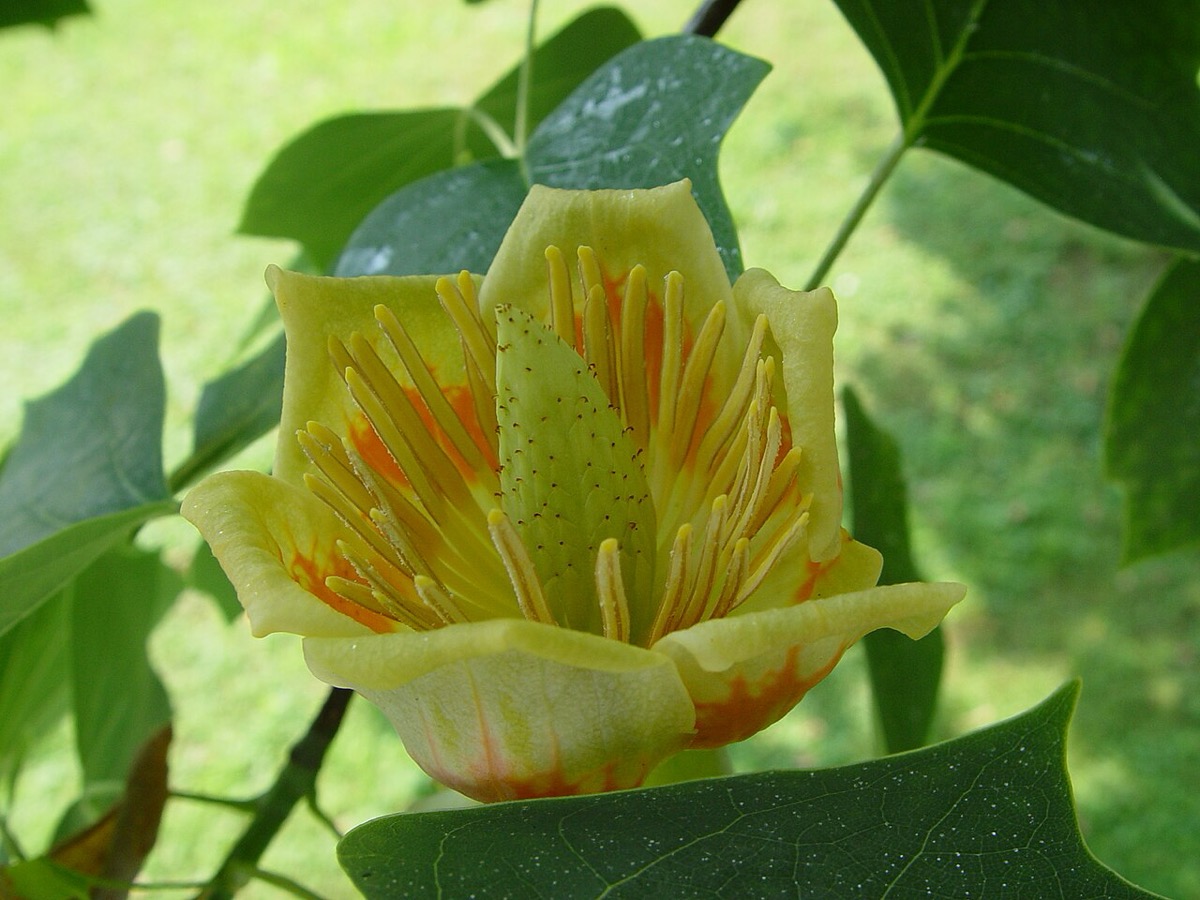
Tulip poplar is a tall, fast-growing shade tree with tulip-shaped yellow and orange flowers in late spring and golden fall color. It needs a big yard, full sun, and deep, moist soil.
At a Glance
| Plant type | Deciduous shade tree |
|---|---|
| Family | Magnolia family (Magnoliaceae) |
| Other names | Tulip tree, yellow poplar, whitewood. Despite the name, it isn't a true poplar. |
| Native range | Eastern North America, from southern New England and southern Ontario south through the eastern United States. In Missouri it's native only to a few counties in the far southeast, but it's planted across the state. |
| Mature height | 60 to 90 feet in a yard. Forest trees often reach 100 to 150 feet. |
| Mature spread | 30 to 50 feet |
| Growth rate | Fast in good soil |
| Lifespan | Usually 200 to 250 years in the wild, sometimes 300 |
| Flowers | Cup-shaped, about 2 inches long, yellow-green with an orange band at the base of each petal. May to June. They open after the leaves, high in the crown, so they're easy to miss. Trees usually don't flower until they're 15 to 20 years old. |
| Fruit or seed | A brown, cone-like cluster of winged seeds, 2 to 3 inches long. Ripens September to October, and the seeds drop through the winter. |
| Foliage | Four-lobed leaves with a squared-off tip, up to 8 inches across. Bright green in summer, golden yellow in fall. |
| Toxicity | Listed as non-toxic to cats, dogs, and horses. |
Growing Conditions
| USDA hardiness zones | 4 to 9 |
|---|---|
| Sun | Full sun. It tolerates a little shade but doesn't grow well in shade. |
| Soil | Deep, moist, well-drained loam rich in organic matter. Rarely does well in very wet or very dry spots. |
| Soil pH | Acidic to neutral is best (about 5.0 to 6.8) |
| Water | Medium. Keep the soil moist. Leaves may turn yellow and drop during hot, dry spells in midsummer. |
| Tolerates | Clay soil, black walnut |
| Does poorly with | Drought, shade, high winds and ice (the wood is weak), being moved once established |
Will It Grow Here?
Yes, anywhere in our area. Tulip Poplar is hardy in zones 4 to 9, which covers every zone in our area (6b through 8a).
| Zone | Grows here? | Towns in this zone |
|---|---|---|
| 6b (our farm) | Yes | Lebanon, MO; Bolivar, MO; Iola, KS; Garnett, KS |
| 7a | Yes | Springfield, MO; Joplin, MO; Fayetteville, AR; Bentonville, AR |
| 7b | Yes | Harrison, AR; Tulsa, OK; Broken Arrow, OK; Tahlequah, OK |
| 8a | Yes | Van Buren, AR; Alma, AR |
Not sure which zone you're in? Look up your ZIP code on the USDA Plant Hardiness Zone Map (opens in a new tab).
-
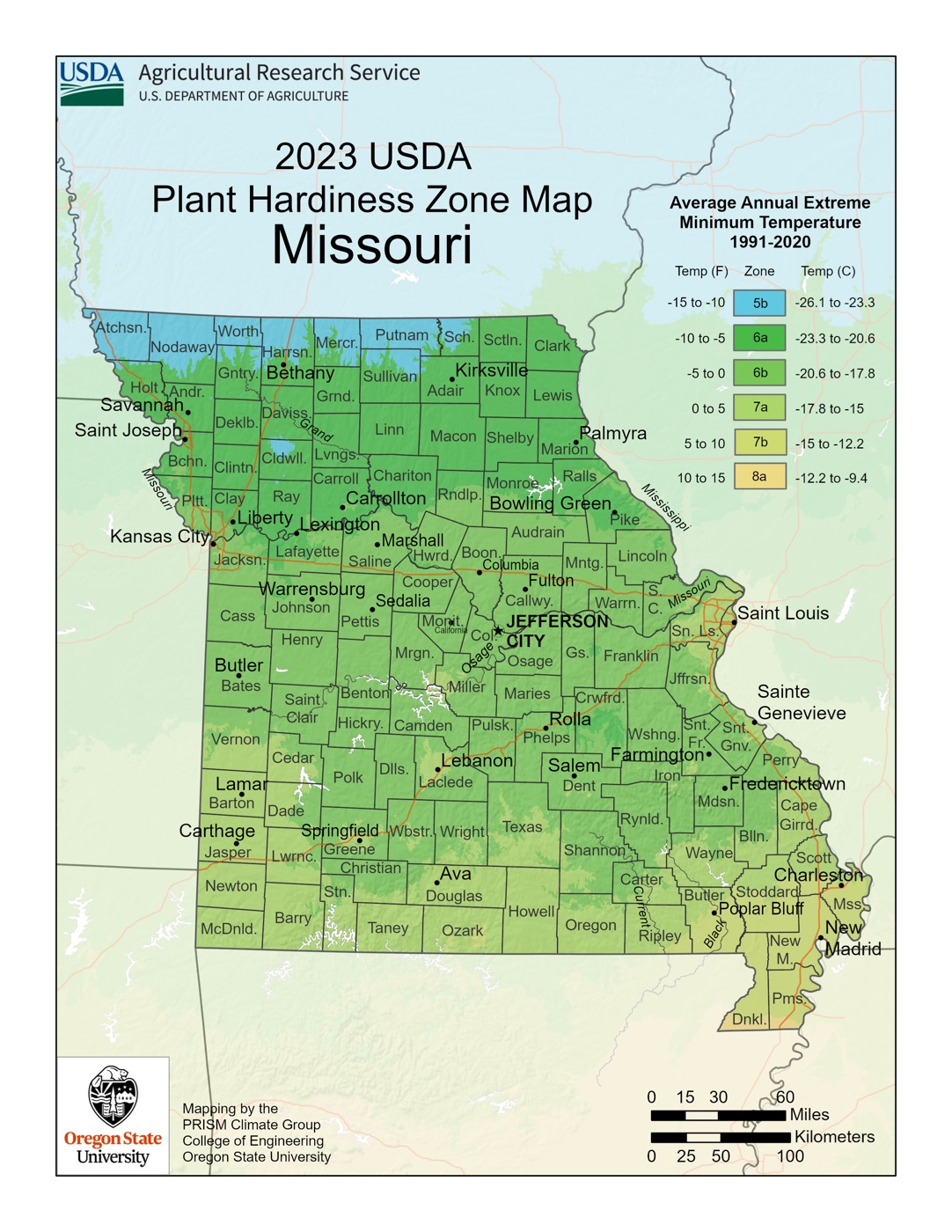 Missouri zone map (full size, opens in a new tab)
-
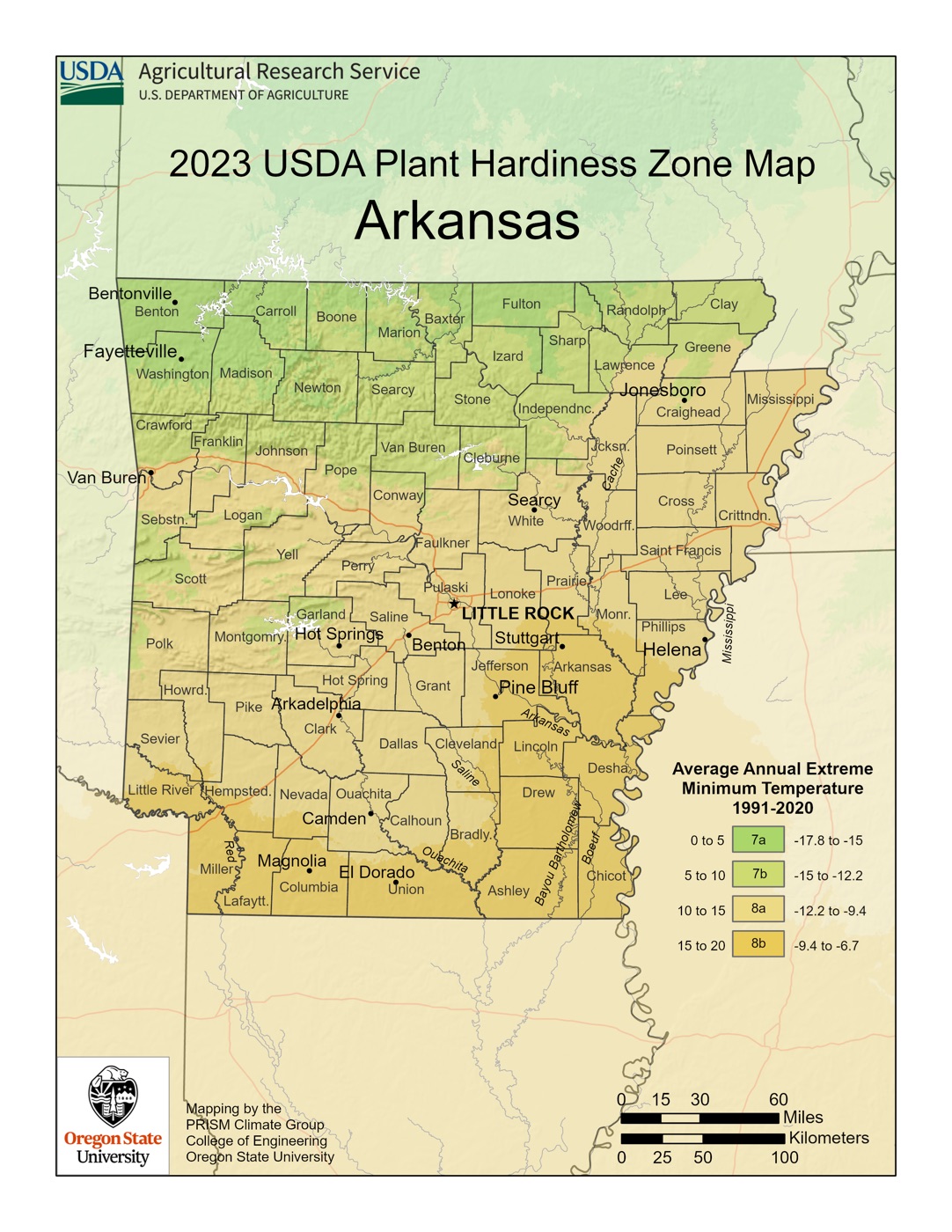 Arkansas zone map (full size, opens in a new tab)
-
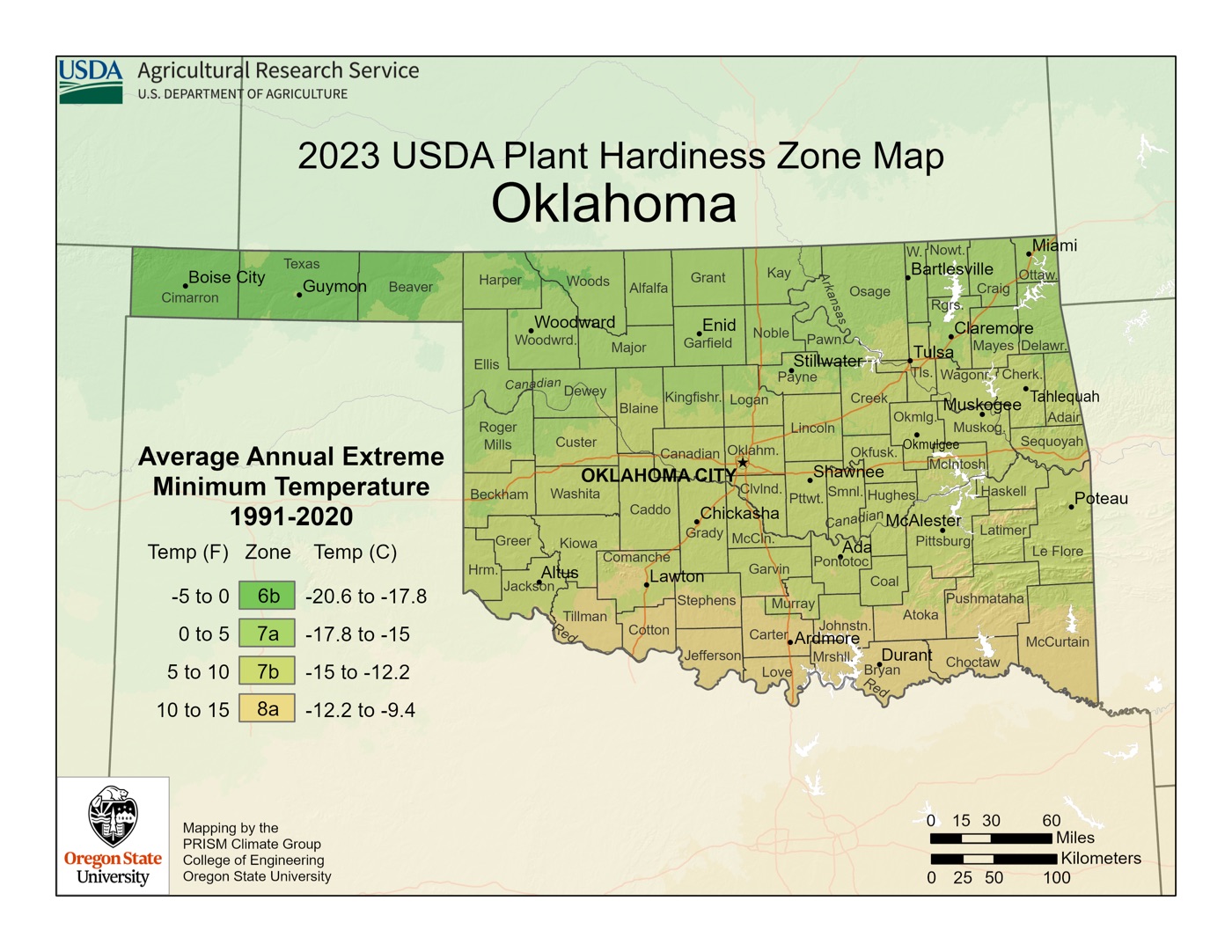 Oklahoma zone map (full size, opens in a new tab)
-
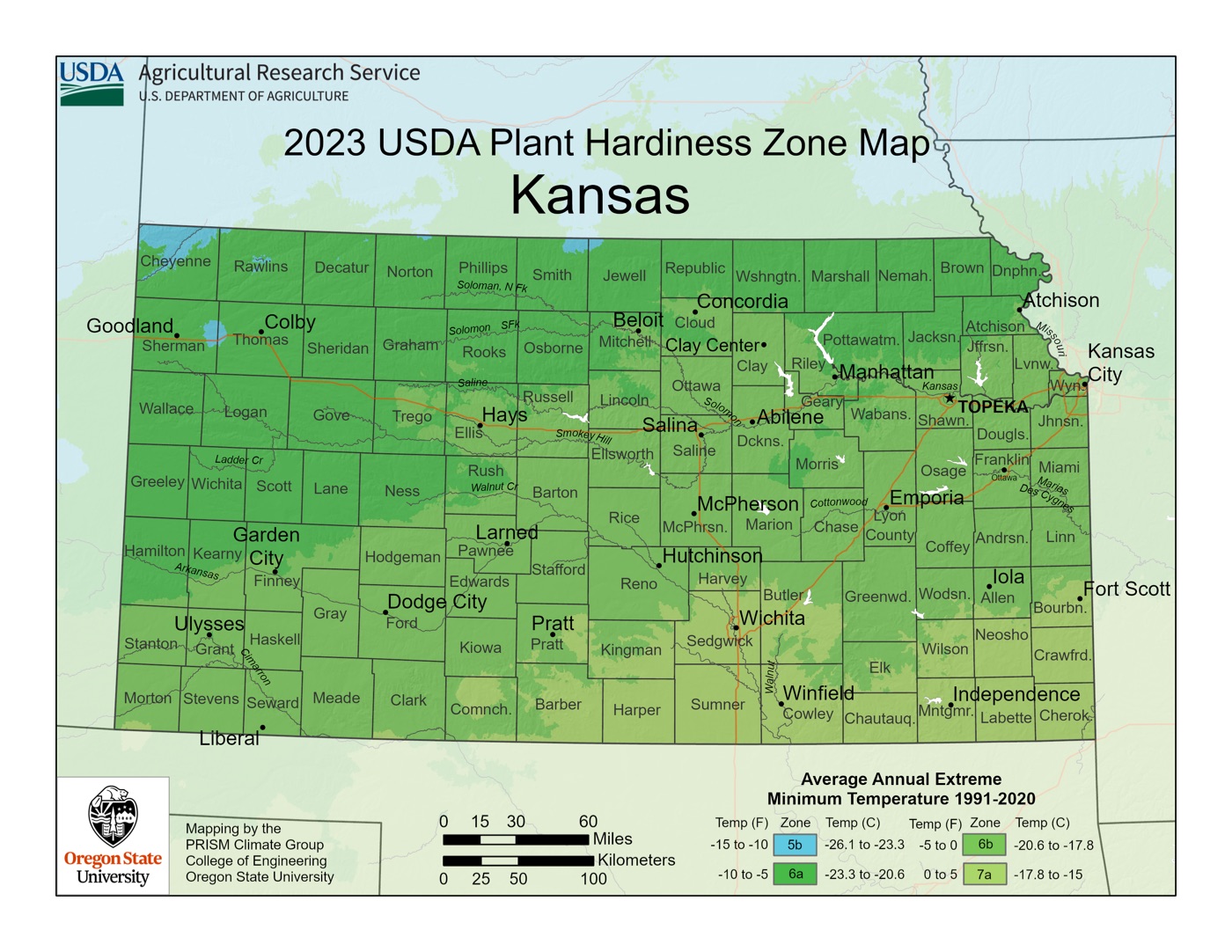 Kansas zone map (full size, opens in a new tab)
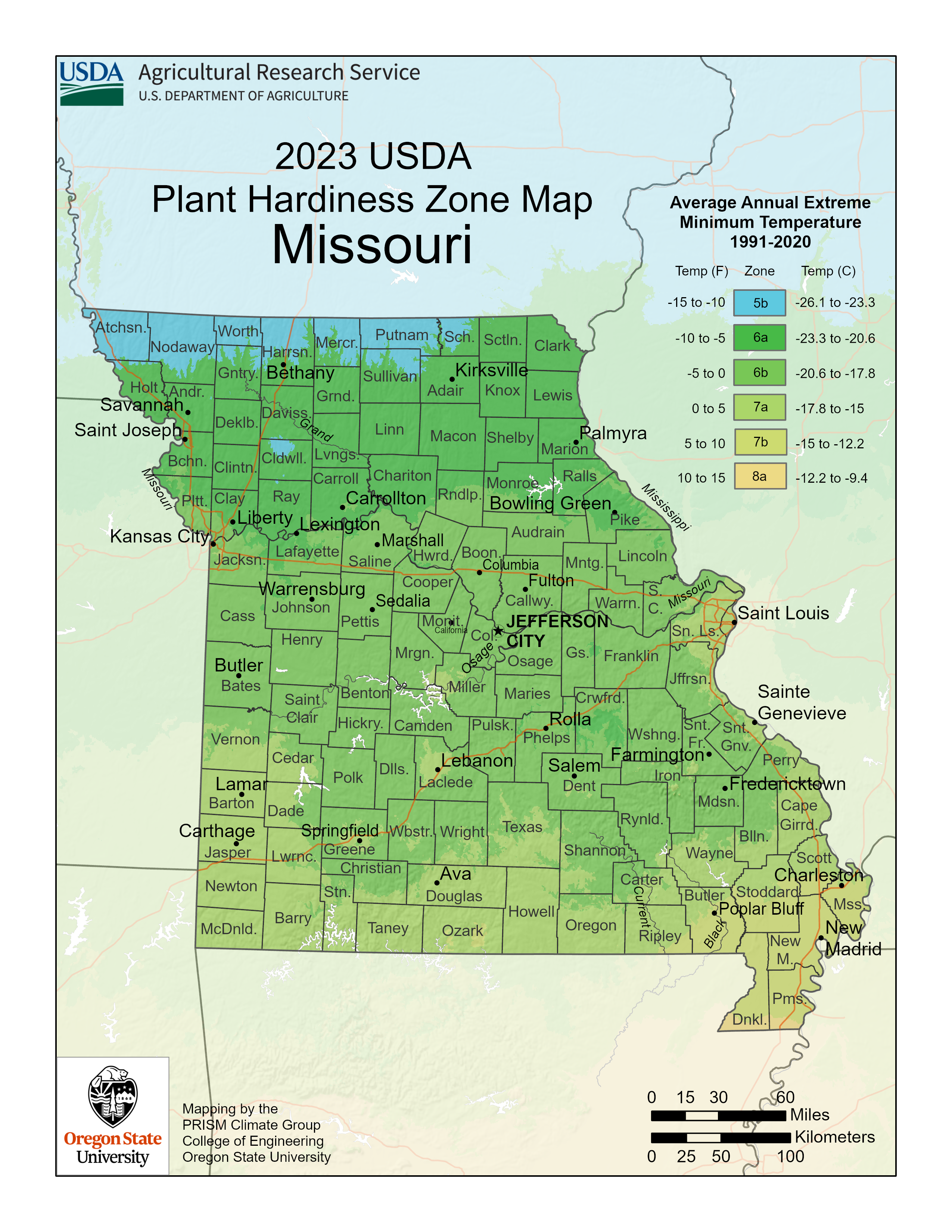
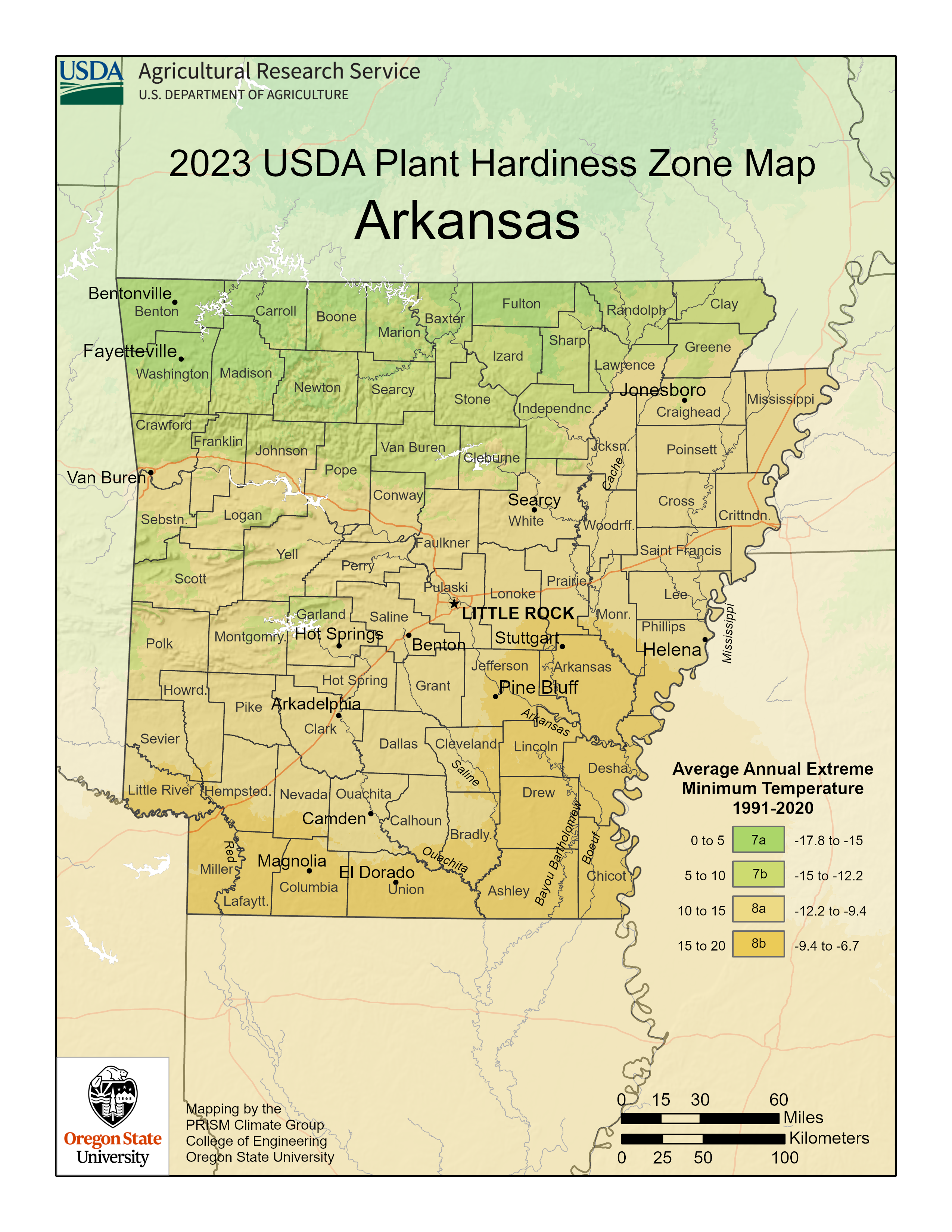
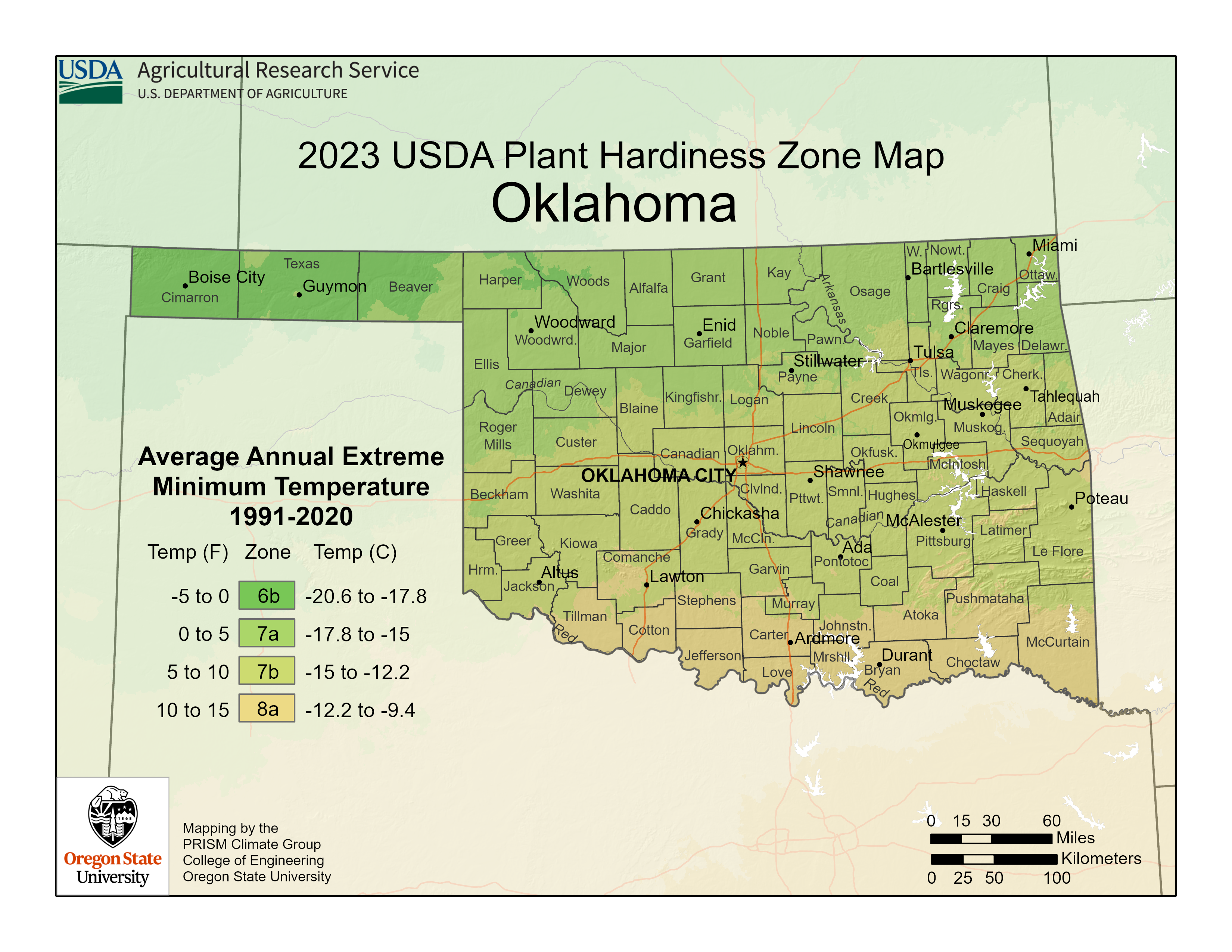
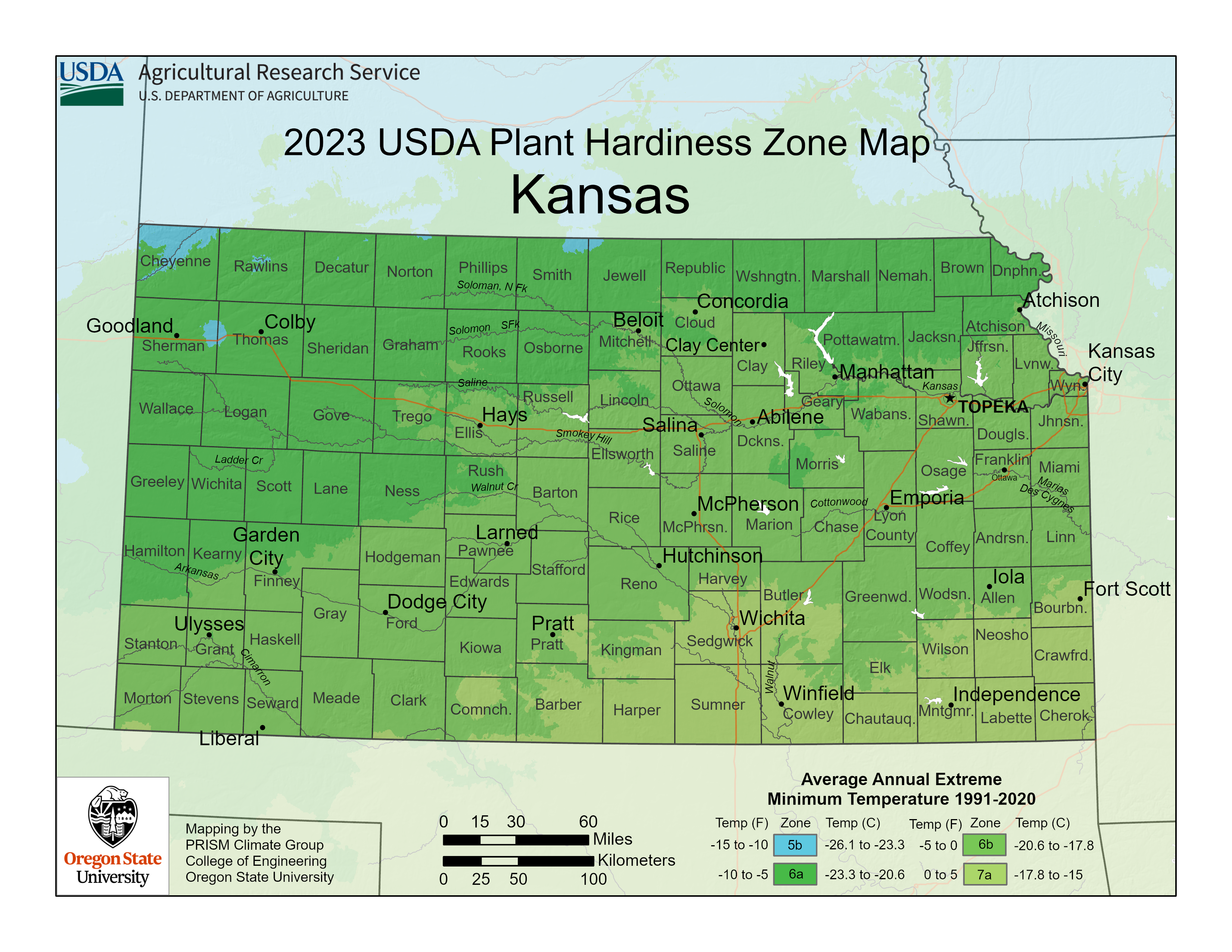
Official 2023 USDA Plant Hardiness Zone Maps. Tap a map to open it full size.
Maps: USDA Agricultural Research Service, with mapping by the PRISM Climate Group, Oregon State University.
Plant Patent
Not patented. This is the straight species, not a named variety, so there are no restrictions on growing it from seed or cuttings.
About the Tulip Poplar
Tulip poplar is a large native tree of eastern North America, named for its flowers, which look like tulips. It belongs to the magnolia family, not the poplars. Early lumbermen called it poplar because the wood is light.
The wood is used for furniture, cabinets, plywood, and musical instruments, and Native Americans made dugout canoes from the trunks. It’s the state tree of Kentucky, Tennessee, and Indiana. It’s also a good honey tree: one tree under 20 years old can produce about 8 pounds of nectar in a season.
Choosing a Spot
- Give it a lot of room. It grows 60 to 90 feet tall and 30 to 50 feet wide. It’s too big for most home lots and isn’t recommended as a street tree.
- Plan for falling limbs. The wood is fairly weak, and branches can break in high wind or under ice and snow. Keep it clear of the house, driveway, and power lines.
- Full sun. It doesn’t grow well in shade.
- Deep, moist, well-drained soil. It rarely does well where the ground stays very wet or very dry.
- Expect little to grow under it. The roots are shallow, which limits what you can plant beneath the tree.
Planting
Plant in spring. Tulip poplar is hard to transplant, and young trees moved in spring do best.
- Dig wide, not deep. Make the hole two to three times as wide as the root ball and only as deep. Set the root ball on undisturbed soil.
- Check the depth. The root flare, where the trunk widens into the roots, should end up at or slightly above the finished soil level. Don’t plant it deeper than it grew in the nursery.
- Slice circling roots. If roots circle the outside of a container root ball, make three or four cuts an inch or two deep from the top of the root ball to the bottom. Left alone, circling roots can strangle the trunk years later.
- Balled-and-burlapped trees: Remove the twine once the tree is in the hole, pull back the burlap so none is left above ground, and remove the top of any wire basket.
- Backfill with the soil you dug out. Amendments usually aren’t needed. If you add compost or peat, keep it under 20 percent of the backfill.
- Skip fertilizer at planting. Too much nitrogen pushes top growth at the expense of roots.
- Stake only on windy sites. Tie no higher than a third of the way up the trunk with soft straps, and remove the stakes after one season.
Watering
For the first season, water small amounts often. A 5-gallon bucket with a few 1/8-inch holes drilled near the bottom, set beside the tree and filled two to three times a week, keeps the root ball moist. Don’t overdo it: overwatering a new tree in hot weather can kill it almost as fast as drought.
Tulip poplar is sensitive to heat and drought. Once established, give it a deep soak during dry spells. Leaves that turn yellow and drop in midsummer are a sign it’s too dry.
Mulch and Fertilizer
Spread mulch 2 to 4 inches deep in a wide ring, tapering to less than an inch next to the trunk. Get a soil test before you fertilize. Your county extension office can help with that.
Pruning
Prune in late winter or early spring, before the leaves come out. At planting, fix only minor problems such as broken branches, and don’t cut off the top of the main stem. If the tree sends up more than one leader, keep one and remove the rest. Favor branches that leave the trunk at a wide angle; narrow forks are weak and break in storms. Don’t remove more than about 20 percent of a young tree’s branches at once.
Common Problems
- Aphids and sooty mold: Large aphid numbers drip sticky honeydew, and a black sooty mold grows on it and coats the leaves.
- Other insects: Tuliptree scale and the yellow-poplar weevil are among its main insect pests.
- Diseases: Verticillium wilt, canker, powdery mildew, and leaf spots can occur.
- Early leaf drop: Yellowing and dropping leaves in hot, dry weather. Water deeply.
- Storm damage: Weak wood breaks in wind and ice. Good pruning while young helps.
- Deer: Deer browse young trees heavily.
Good for Wildlife
Tulip poplar is a larval host for swallowtail butterflies. Hummingbirds and bees visit the flowers. At least 10 kinds of birds, plus squirrels and mice, eat the seeds, and many birds nest in the tree.
Availability
Currently out of stock until Spring 2027.
Our nursery stock changes through the season, and tree sizes vary. Contact us to check what we have on hand, current sizes, and pricing.
Sources
Growing information on this page was checked against these public references:
- Liriodendron tulipifera (North Carolina Extension Gardener Plant Toolbox) (opens in a new tab)
- Liriodendron tulipifera (Missouri Botanical Garden Plant Finder) (opens in a new tab)
- Tulip Tree Field Guide (Missouri Department of Conservation) (opens in a new tab)
- Silvics of North America: Yellow-Poplar (USDA Forest Service) (opens in a new tab)
- Tuliptree, 2901-1074 (Virginia Cooperative Extension) (opens in a new tab)
- Liriodendron tulipifera (Cornell Woody Plants Database) (opens in a new tab)
- How to Plant a Tree, G6850 (University of Missouri Extension) (opens in a new tab)
- Pruning and Care of Shade Trees, G6866 (University of Missouri Extension) (opens in a new tab)
- Planting a Tree or a Shrub, FSA-6128 (University of Arkansas Cooperative Extension) (opens in a new tab)
- Tulip Poplar (ASPCA Toxic and Non-Toxic Plants) (opens in a new tab)
Disclaimer: The information on this page is based on publicly available knowledge and research. Individual results may vary.