White Baneberry
Actaea pachypoda
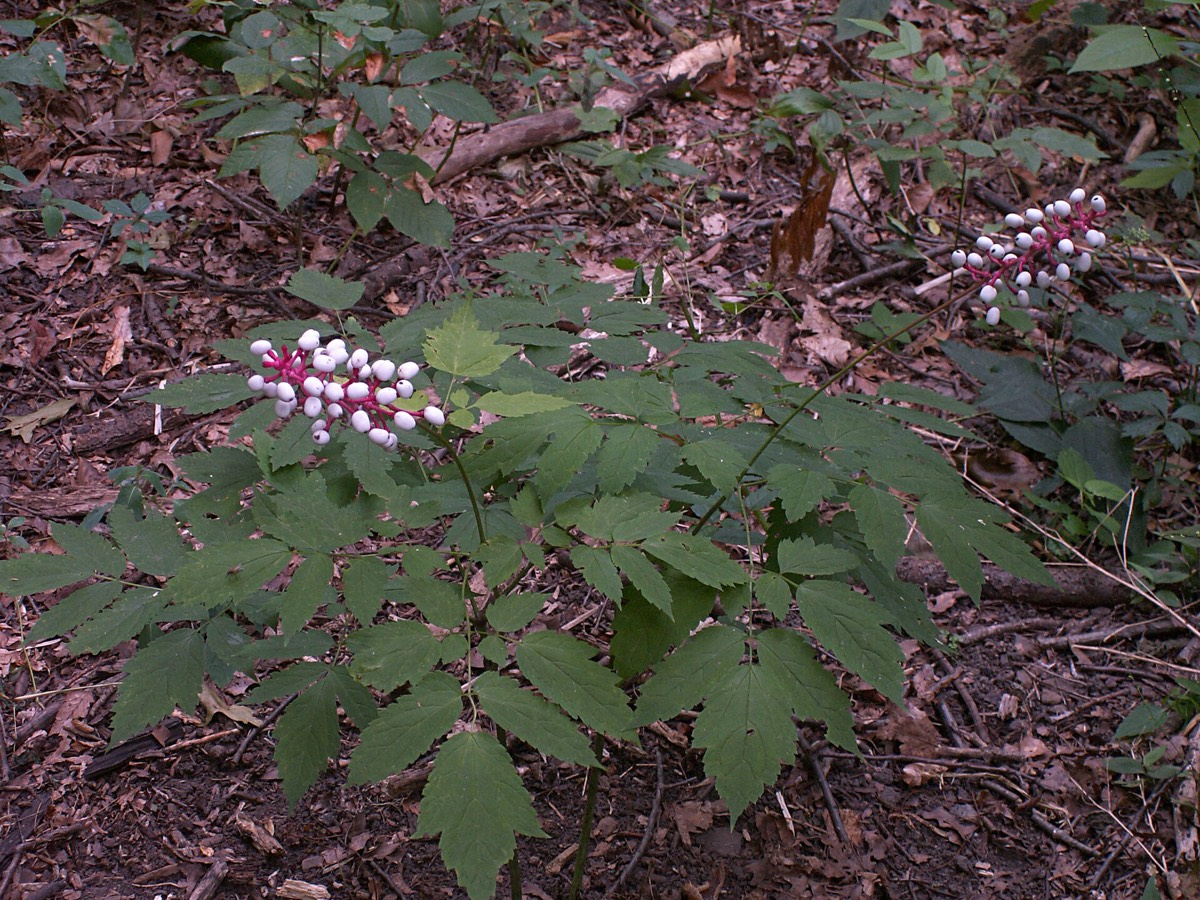
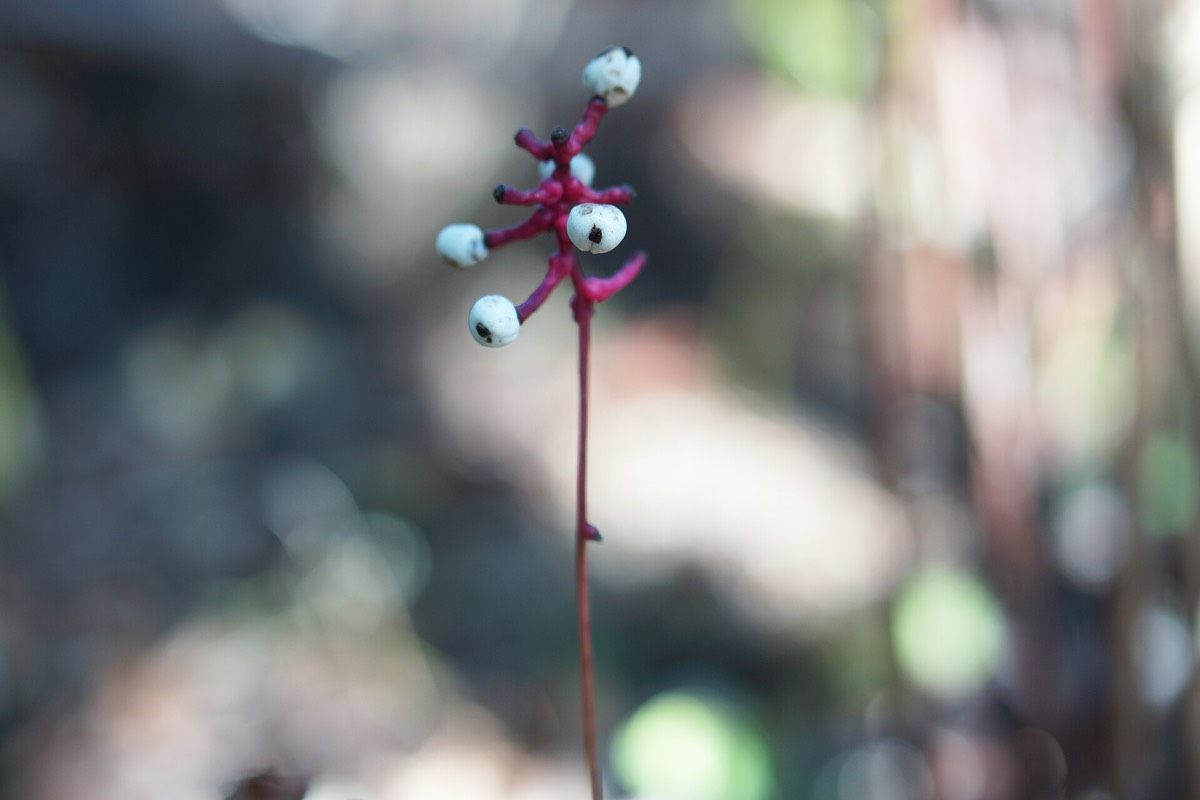
White baneberry, or doll's eyes, is a native woodland plant with white flowers in spring and striking white berries with a black dot on thick red stalks in fall. The berries and roots are highly poisonous and can be deadly. Don't plant it where young children play.
At a Glance
| Plant type | Woodland perennial |
|---|---|
| Family | Buttercup family (Ranunculaceae) |
| Other names | Doll's eyes, white cohosh, white beads, necklace weed |
| Native range | Eastern North America. In Missouri it grows in the eastern half of the state, reaching west to Dallas, Greene, Christian, and Barry counties, in deep, rich woods and ravines, often on north-facing slopes. |
| Mature height | 1 to 3 feet |
| Mature spread | 2 to 3 feet |
| Flowers | A dense cluster of small white flowers on an upright stem. Spring; May to June in Missouri. |
| Fruit or seed | White berries, each with a dark purple dot, on thick red stalks. Late summer to fall, staying on until frost. Highly poisonous. |
| Foliage | Divided leaves similar to astilbe |
| Toxicity | Highly poisonous. All parts are toxic, especially the berries and roots, and poisoning can kill people, pets, and livestock. Symptoms include burning of the mouth and throat, drooling, severe stomach cramps, headache, diarrhea, dizziness, and hallucinations. The Missouri Department of Conservation advises against planting it where young children spend time. |
Growing Conditions
| USDA hardiness zones | 3 to 8 |
|---|---|
| Sun | Part shade to full shade |
| Soil | Moist, well-drained soil rich in humus |
| Soil pH | Acidic (below 6.0) |
| Water | Medium. Keep the soil moist. |
| Tolerates | Heavy shade, deer, rabbits |
Will It Grow Here?
Yes, anywhere in our area. White Baneberry is hardy in zones 3 to 8, which covers every zone in our area (6b through 8a).
| Zone | Grows here? | Towns in this zone |
|---|---|---|
| 6b (our farm) | Yes | Lebanon, MO; Bolivar, MO; Iola, KS; Garnett, KS |
| 7a | Yes | Springfield, MO; Joplin, MO; Fayetteville, AR; Bentonville, AR |
| 7b | Yes | Harrison, AR; Tulsa, OK; Broken Arrow, OK; Tahlequah, OK |
| 8a | Yes | Van Buren, AR; Alma, AR |
Not sure which zone you're in? Look up your ZIP code on the USDA Plant Hardiness Zone Map (opens in a new tab).
-
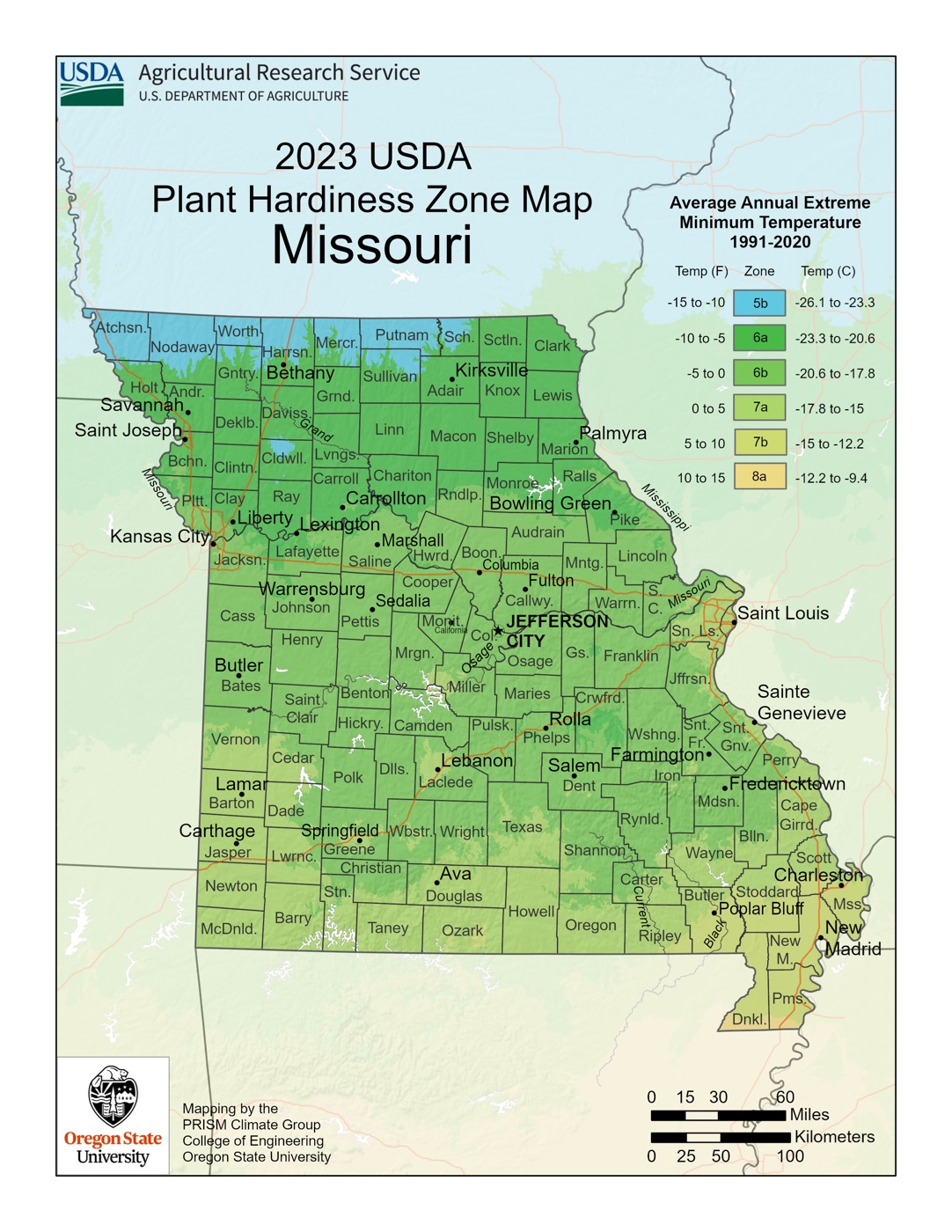 Missouri zone map (full size, opens in a new tab)
-
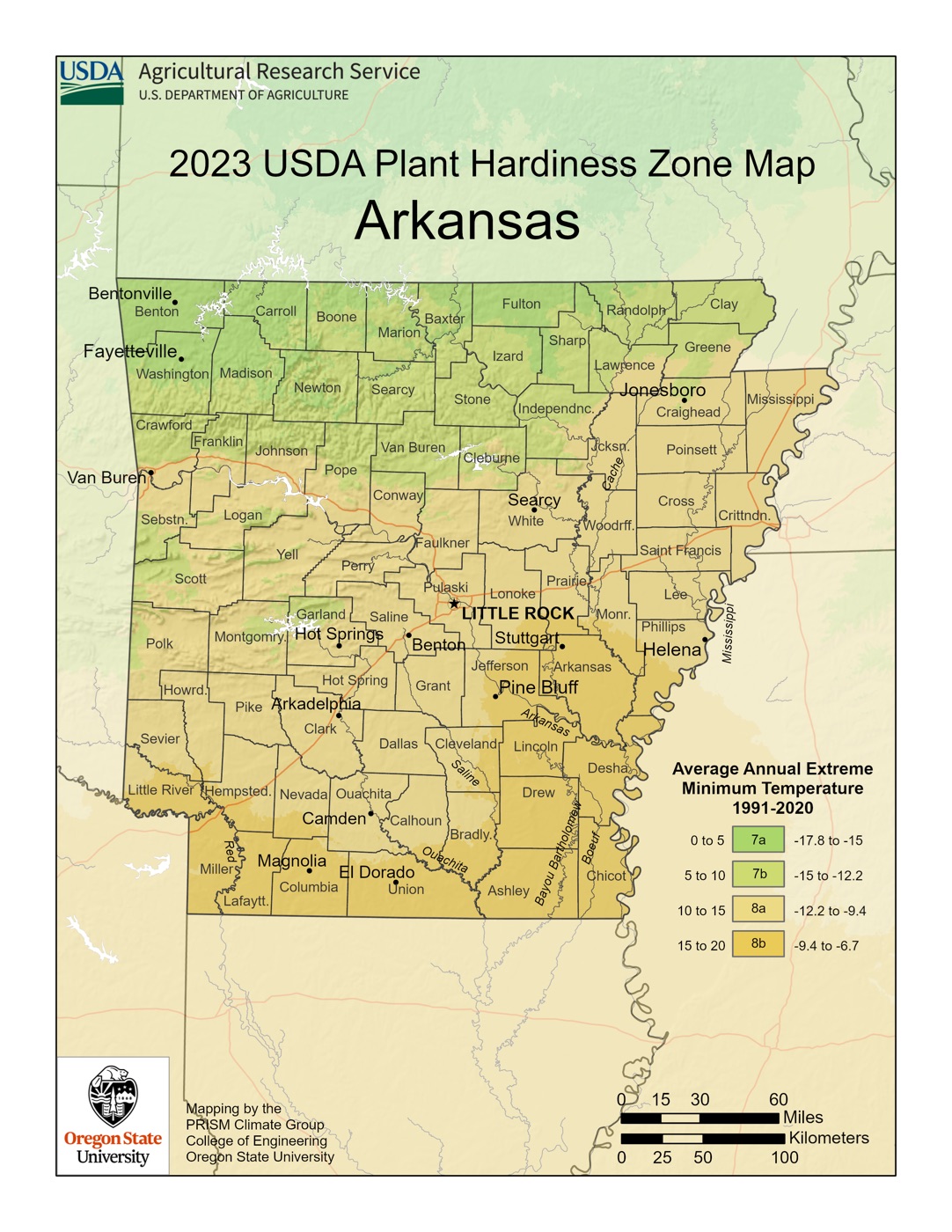 Arkansas zone map (full size, opens in a new tab)
-
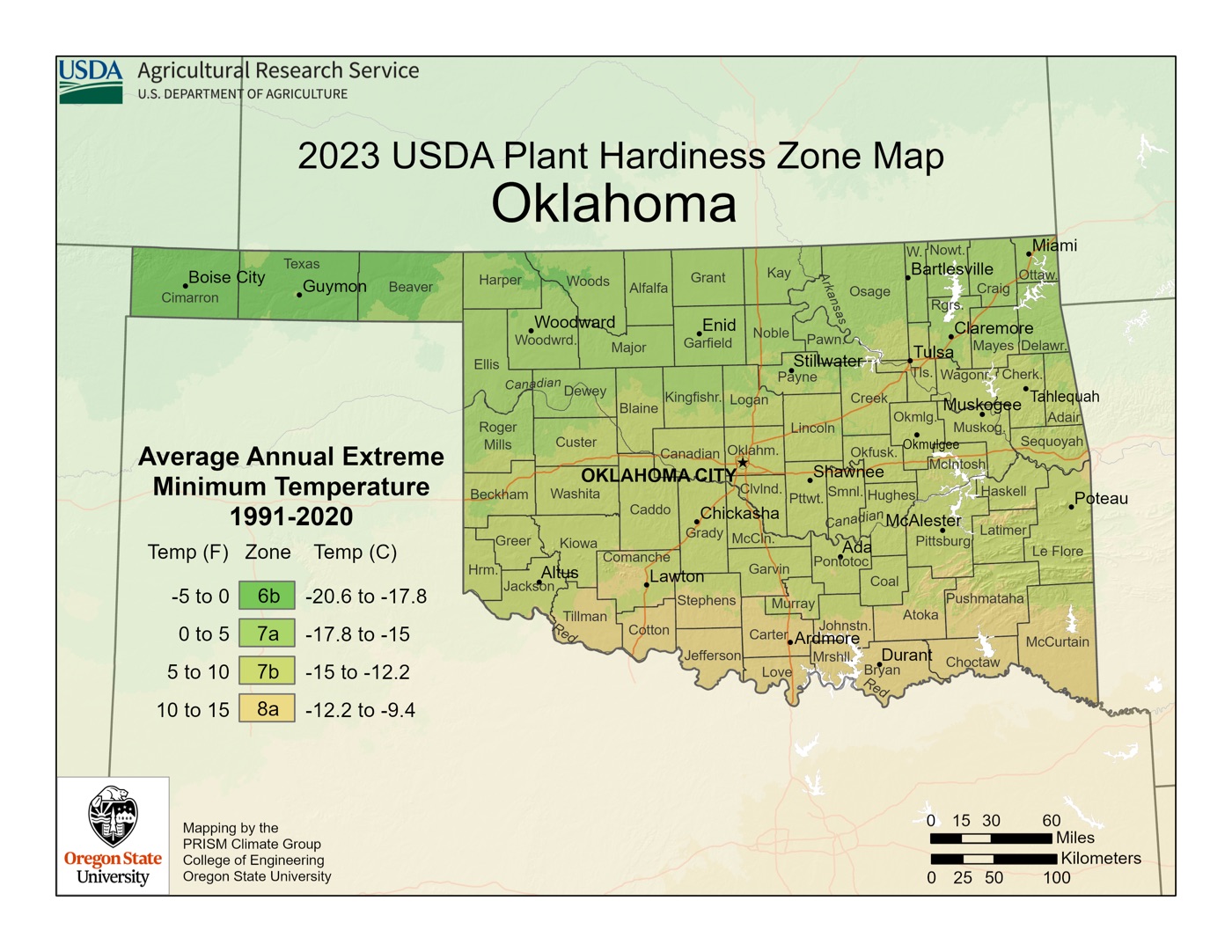 Oklahoma zone map (full size, opens in a new tab)
-
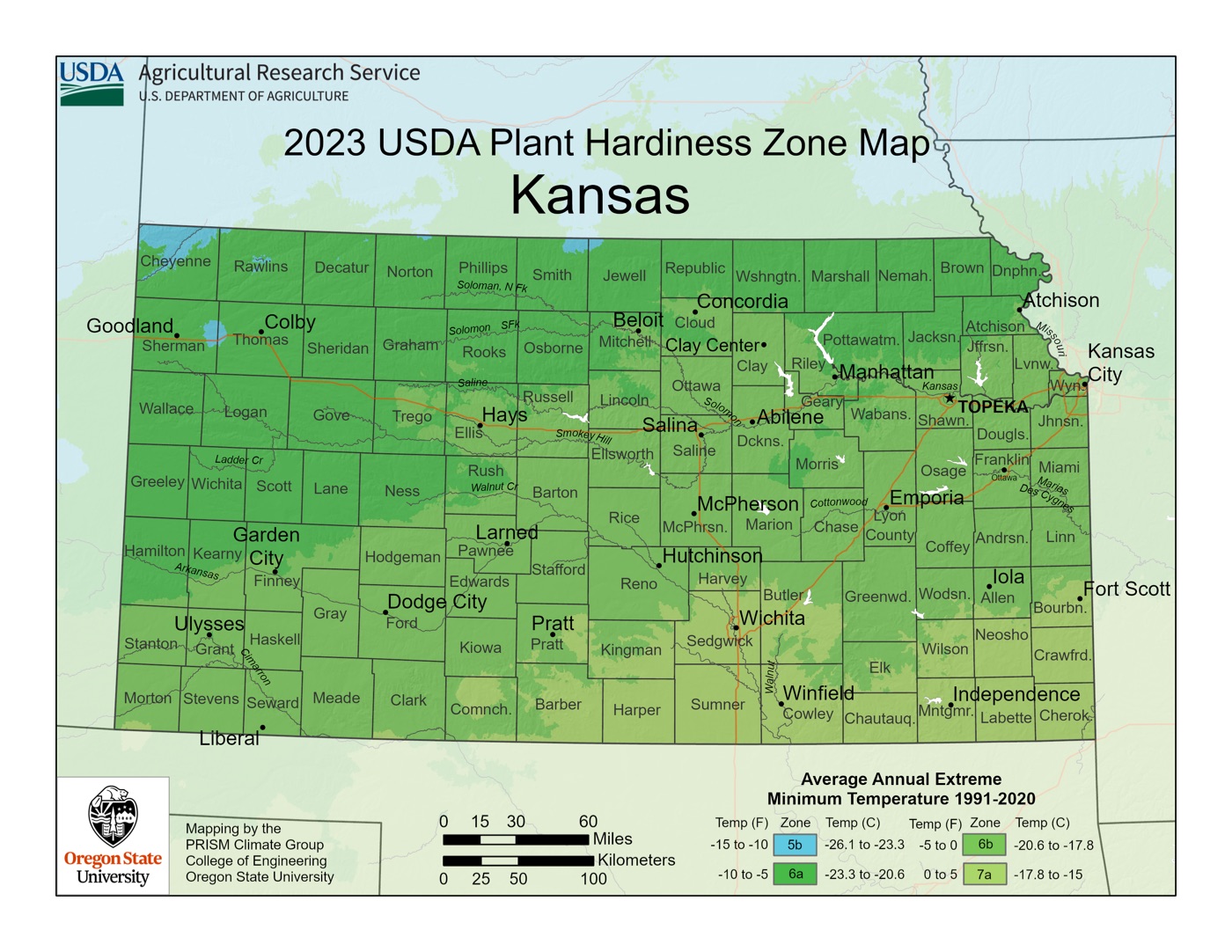 Kansas zone map (full size, opens in a new tab)
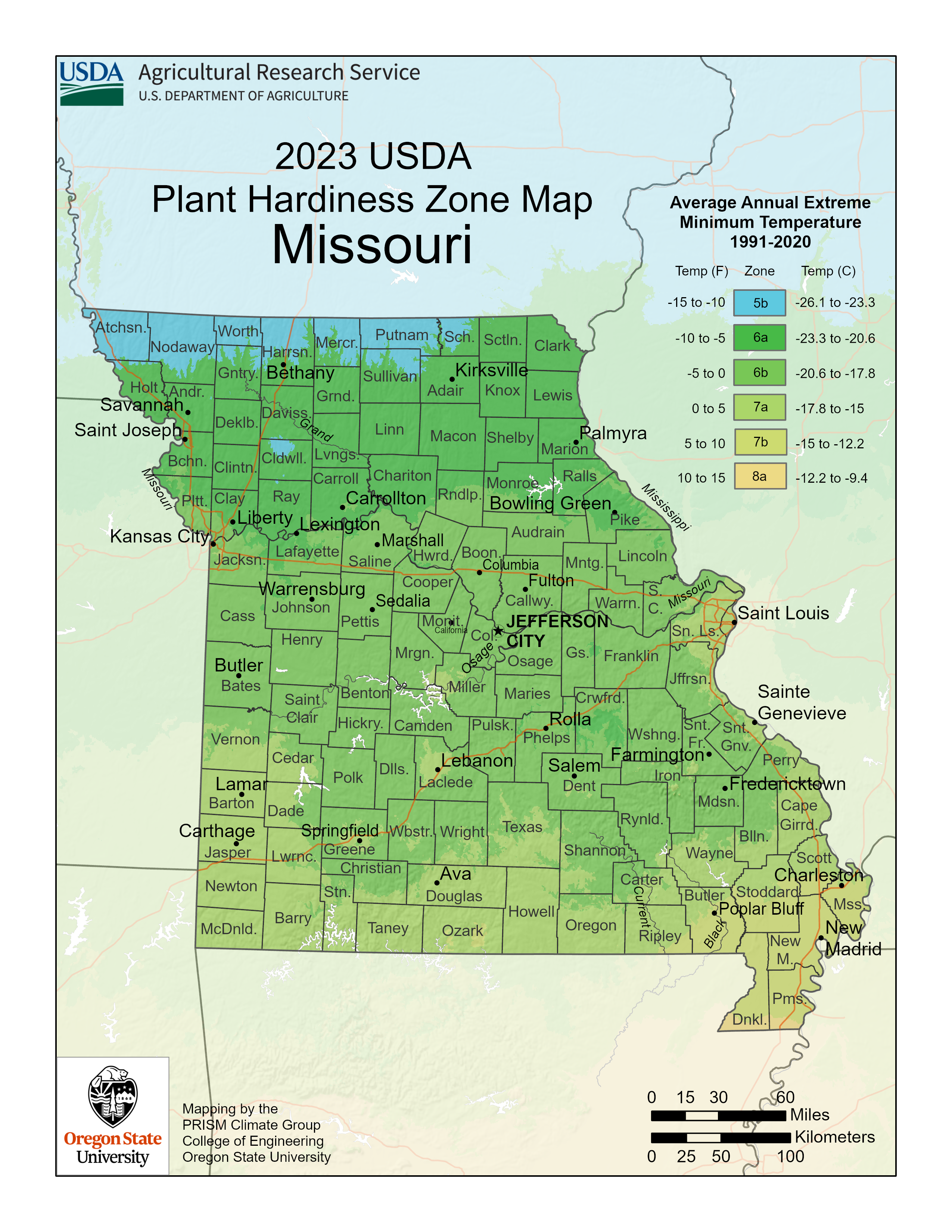
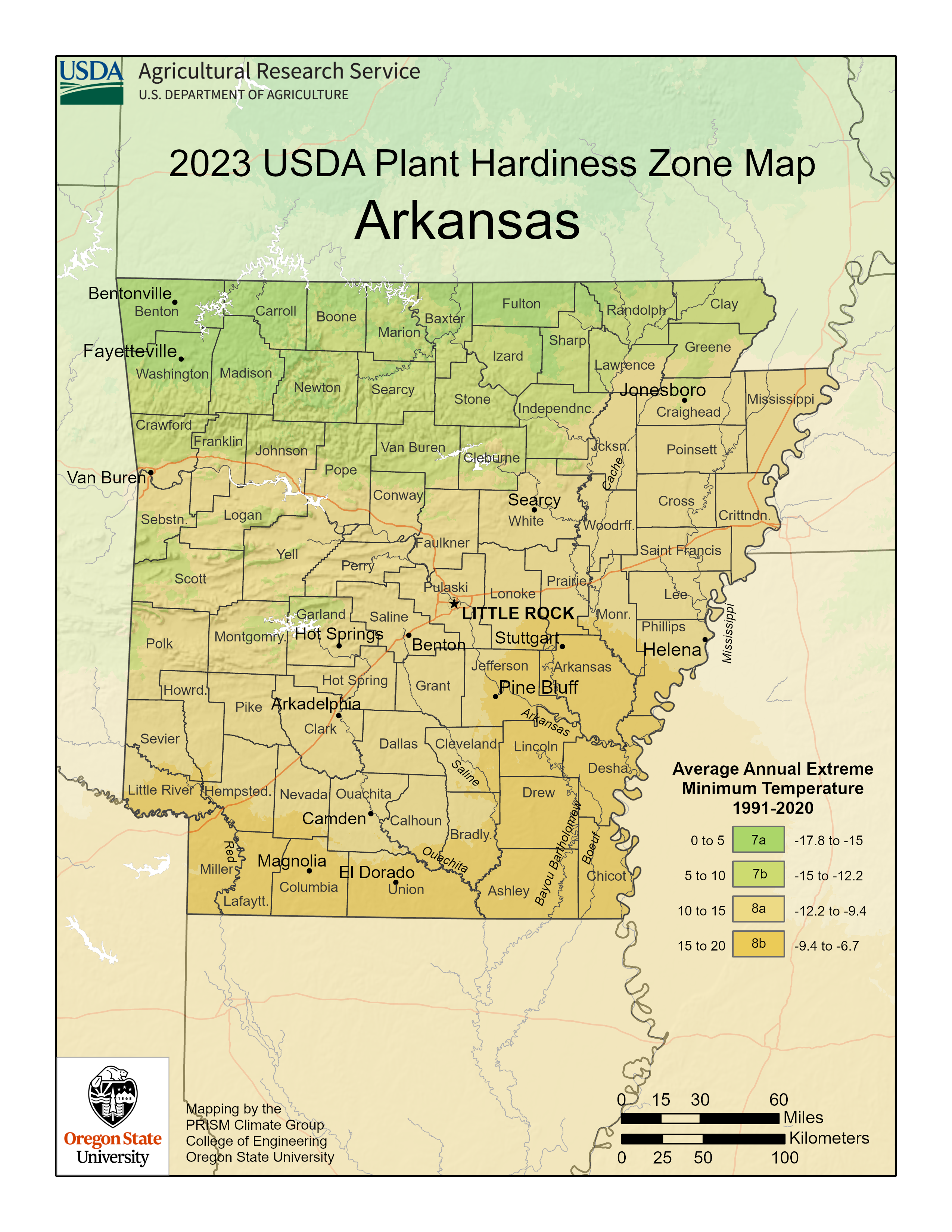
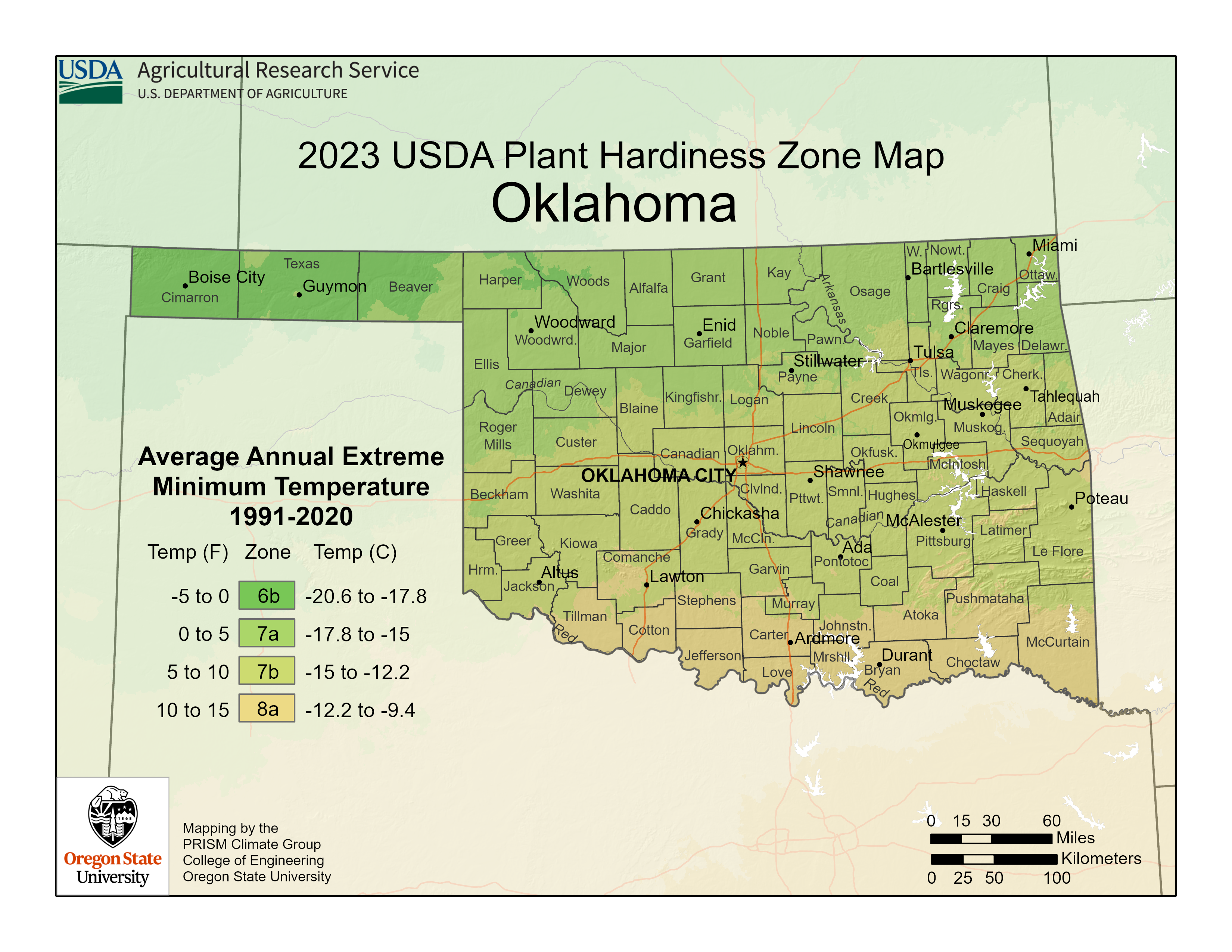
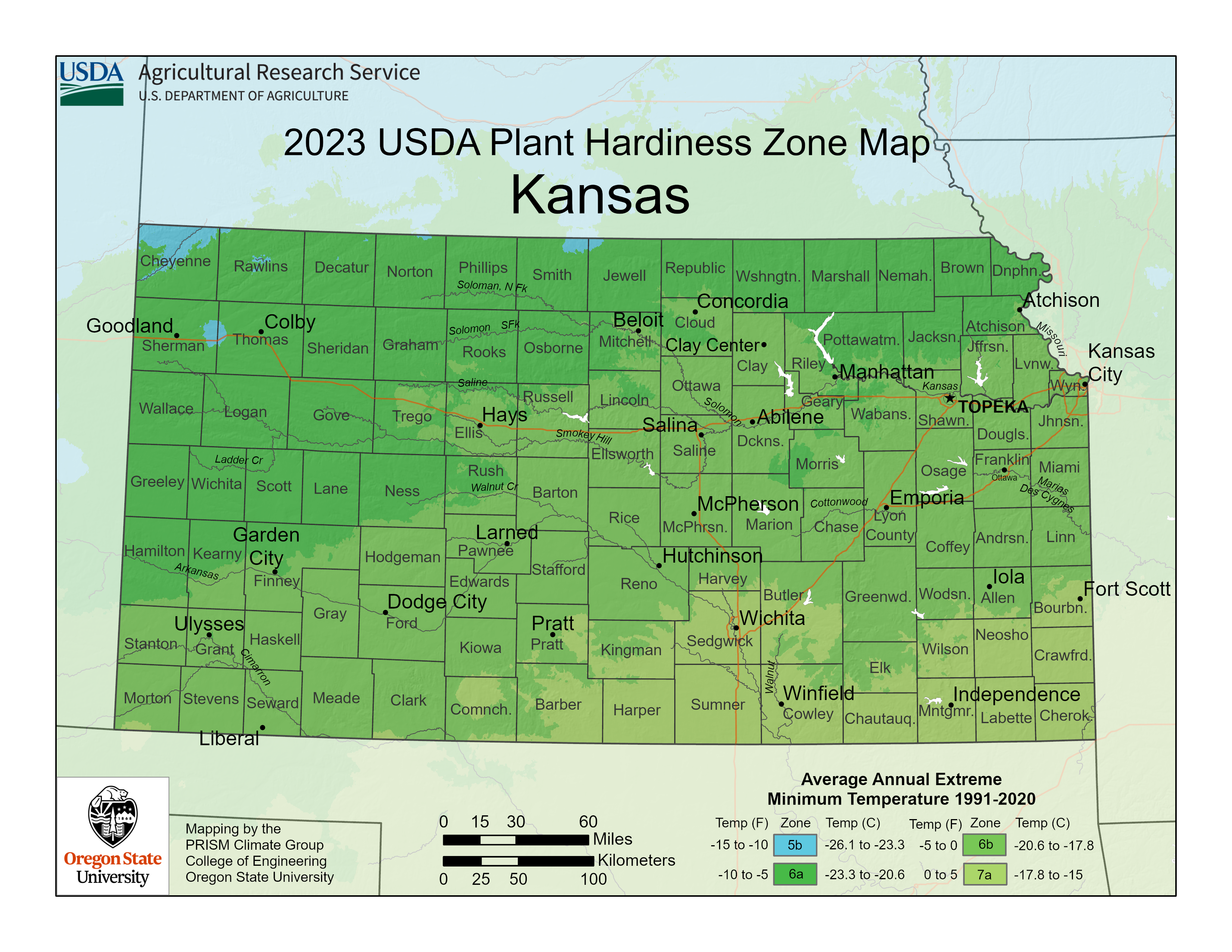
Official 2023 USDA Plant Hardiness Zone Maps. Tap a map to open it full size.
Maps: USDA Agricultural Research Service, with mapping by the PRISM Climate Group, Oregon State University.
Plant Patent
Not patented. This is the straight species, not a named variety, so there are no restrictions on growing it from seed or division.
About the White Baneberry
White baneberry is a native woodland plant that grows wild in Missouri, including in Greene, Christian, Dallas, and Barry counties. In spring it has dense clusters of small white flowers. By late summer these turn into white berries, each with a dark dot, on thick red stalks. That look gives it the name “doll’s eyes.” The berries stay on until frost.
It’s highly poisonous. All parts of the plant are toxic, and the berries and roots can kill people, pets, and livestock. Because the berries are eye-catching and extremely toxic, don’t plant it where young children spend time.
Choosing a Spot
- Shade. Part shade to full shade, like the deep, rich woods where it grows wild.
- Moist, rich, acidic soil with good drainage.
- Away from children and pets. Choose a spot where kids don’t play and pets don’t roam.
Planting
Set the plant so its crown, where the stems meet the roots, is even with the soil line. Container-grown plants can be planted at any time of year. Water them in well.
Watering
Most garden perennials need 1 to 2 inches of water a week in summer, from rain or watering. Keep the soil moist.
Mulch and Fertilizer
Mulch 2 to 4 inches deep. If the plant needs feeding, a light application of a balanced fertilizer when growth starts in spring is enough for most perennials.
Pruning
No pruning needed.
Common Problems
No significant insect or disease problems are reported. Deer and rabbits leave it alone. The main concern is its toxicity.
Good for Wildlife
Birds eat the berries and aren’t harmed by them, but most mammals avoid them. Short-tongued bees collect pollen from the flowers, which have no nectar.
Propagation
Divide plants in spring or fall, or plant seeds from the berries. Seedlings come up the following year and bloom the year after that.
Availability
Currently out of stock until Spring 2027.
Our nursery stock changes through the season. Contact us to check what we have on hand, current sizes, and pricing.
Sources
Growing information on this page was checked against these public references:
- Actaea pachypoda (North Carolina Extension Gardener Plant Toolbox) (opens in a new tab)
- White Baneberry (Doll's Eyes) Field Guide (Missouri Department of Conservation) (opens in a new tab)
- Herbaceous Ornamentals, MG9 (University of Missouri Extension) (opens in a new tab)
Disclaimer: The information on this page is based on publicly available knowledge and research. Individual results may vary.