Yellow Trillium
Trillium luteum
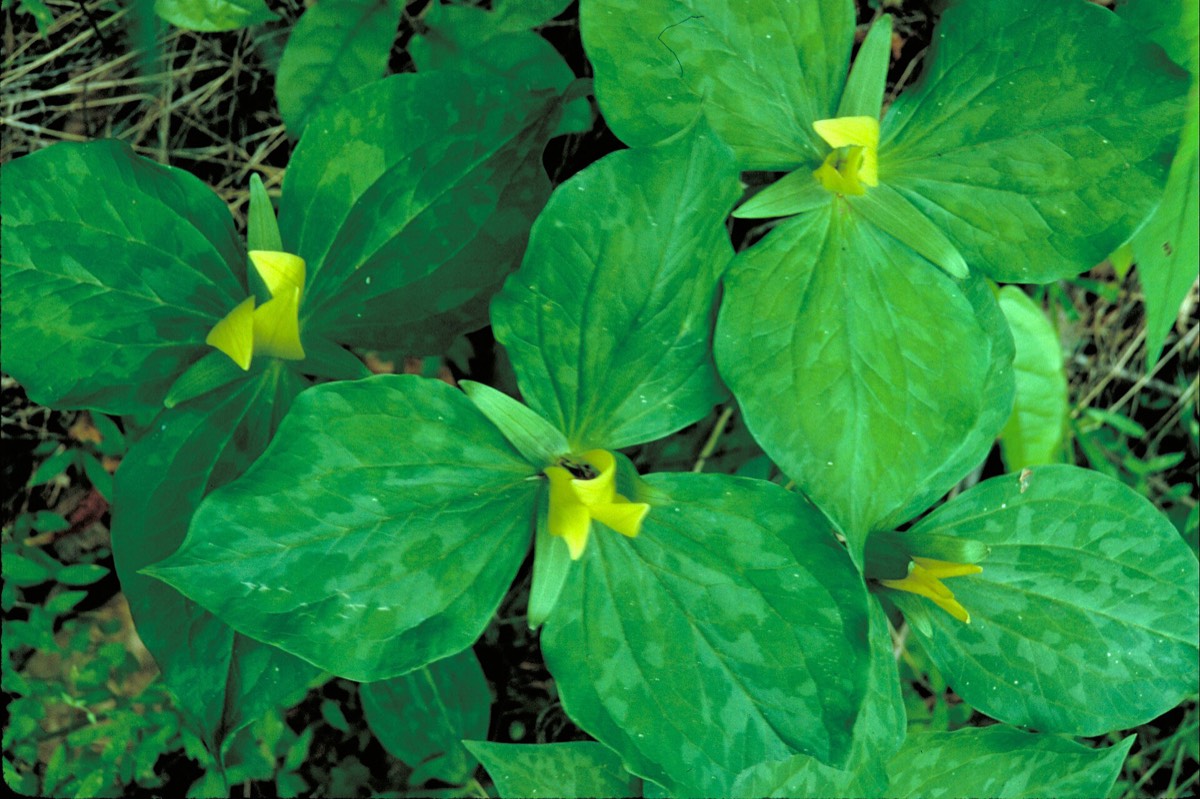
Yellow trillium is a woodland wildflower from the Smoky Mountains region with a single upright yellow flower above three leaves in spring. The flower has a lemony scent. It grows slowly in shade and moist, rich soil.
At a Glance
| Plant type | Woodland perennial wildflower |
|---|---|
| Family | Trillium family (Melanthiaceae) |
| Other names | Yellow toadshade, yellow wood trillium |
| Native range | The southeastern United States, centered on the Great Smoky Mountains of Tennessee and North Carolina and into Georgia. Not native to Missouri. |
| Mature height | 8 to 18 inches |
| Mature spread | 12 to 18 inches |
| Growth rate | Slow. Plants grown from seed take 5 to 7 years to reach flowering size. |
| Flowers | A single upright yellow to yellow-green flower with a lemony scent, 1 to 3 inches. Spring. |
| Foliage | The plant usually dies down by midsummer. |
| Toxicity | Listed as mildly poisonous; the fruits and roots are the parts of concern. The toxic compound isn't known, but caution is advised because it's related to known toxic plants. |
Growing Conditions
| USDA hardiness zones | 4 to 8 |
|---|---|
| Sun | Part shade to full shade |
| Soil | Moist, well-drained soil rich in humus |
| Soil pH | Slightly acidic to neutral |
| Water | Medium. Keep the soil moist. |
| Tolerates | Heavy shade |
| Does poorly with | Being transplanted once established. Deer browse it. |
Will It Grow Here?
Yes, anywhere in our area. Yellow Trillium is hardy in zones 4 to 8, which covers every zone in our area (6b through 8a).
| Zone | Grows here? | Towns in this zone |
|---|---|---|
| 6b (our farm) | Yes | Lebanon, MO; Bolivar, MO; Iola, KS; Garnett, KS |
| 7a | Yes | Springfield, MO; Joplin, MO; Fayetteville, AR; Bentonville, AR |
| 7b | Yes | Harrison, AR; Tulsa, OK; Broken Arrow, OK; Tahlequah, OK |
| 8a | Yes | Van Buren, AR; Alma, AR |
Not sure which zone you're in? Look up your ZIP code on the USDA Plant Hardiness Zone Map (opens in a new tab).
-
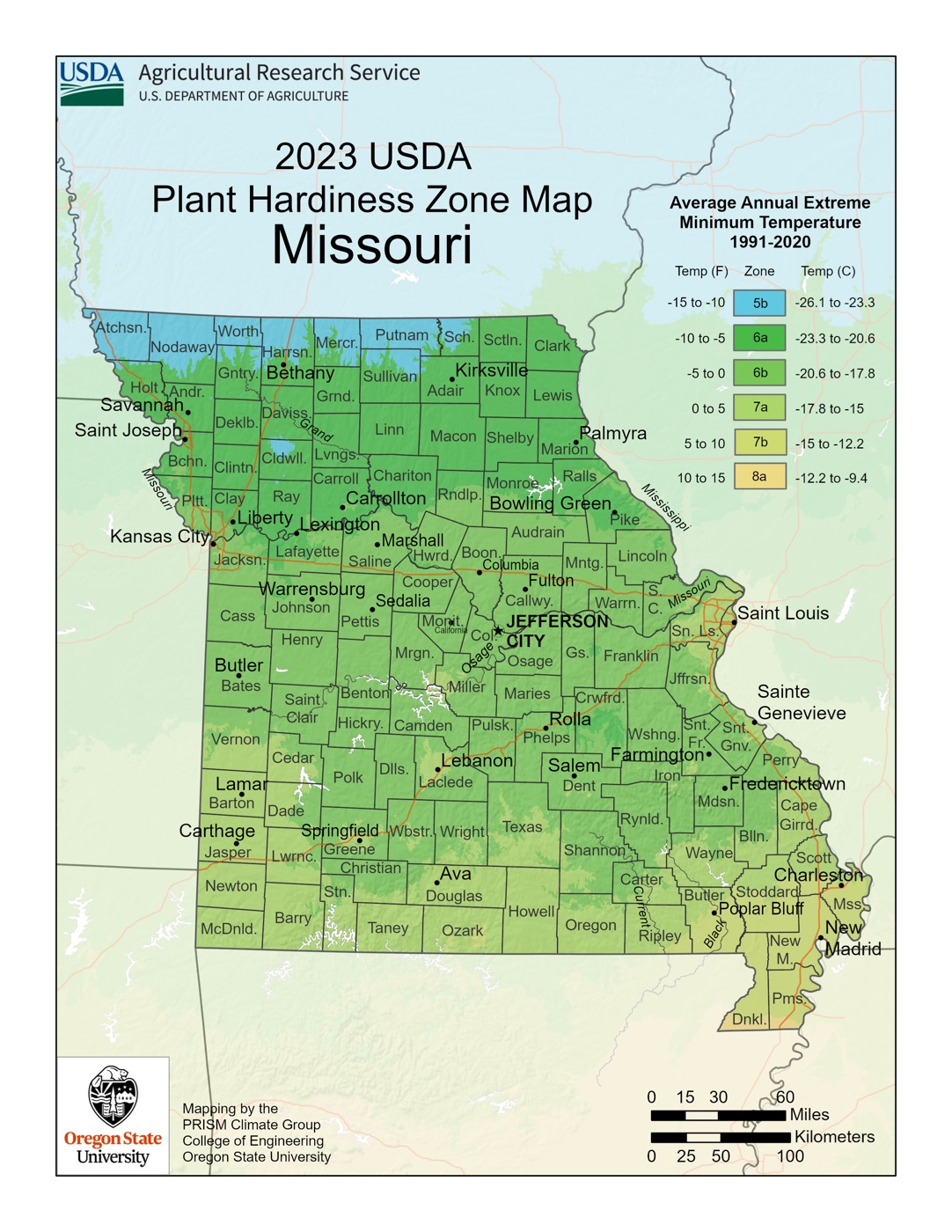 Missouri zone map (full size, opens in a new tab)
-
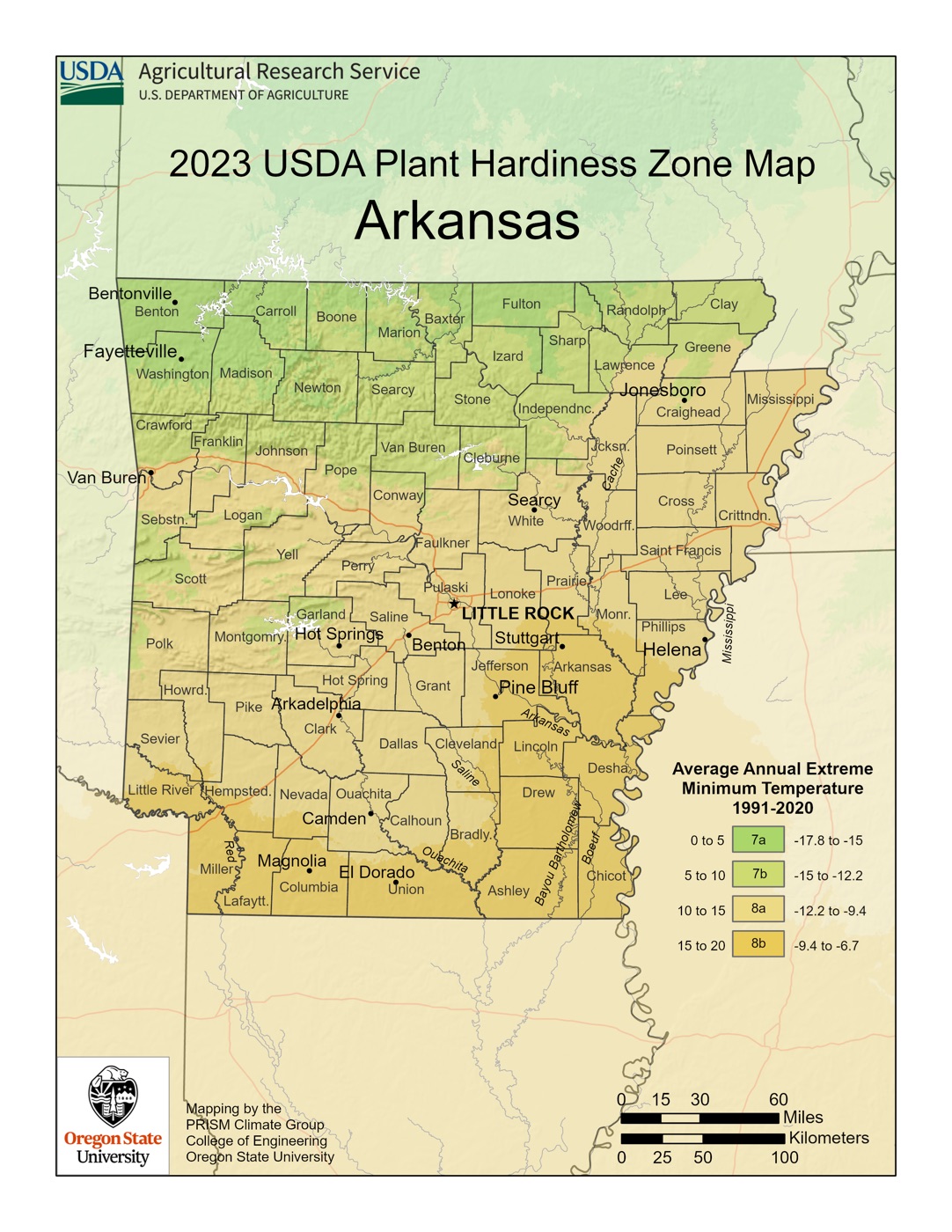 Arkansas zone map (full size, opens in a new tab)
-
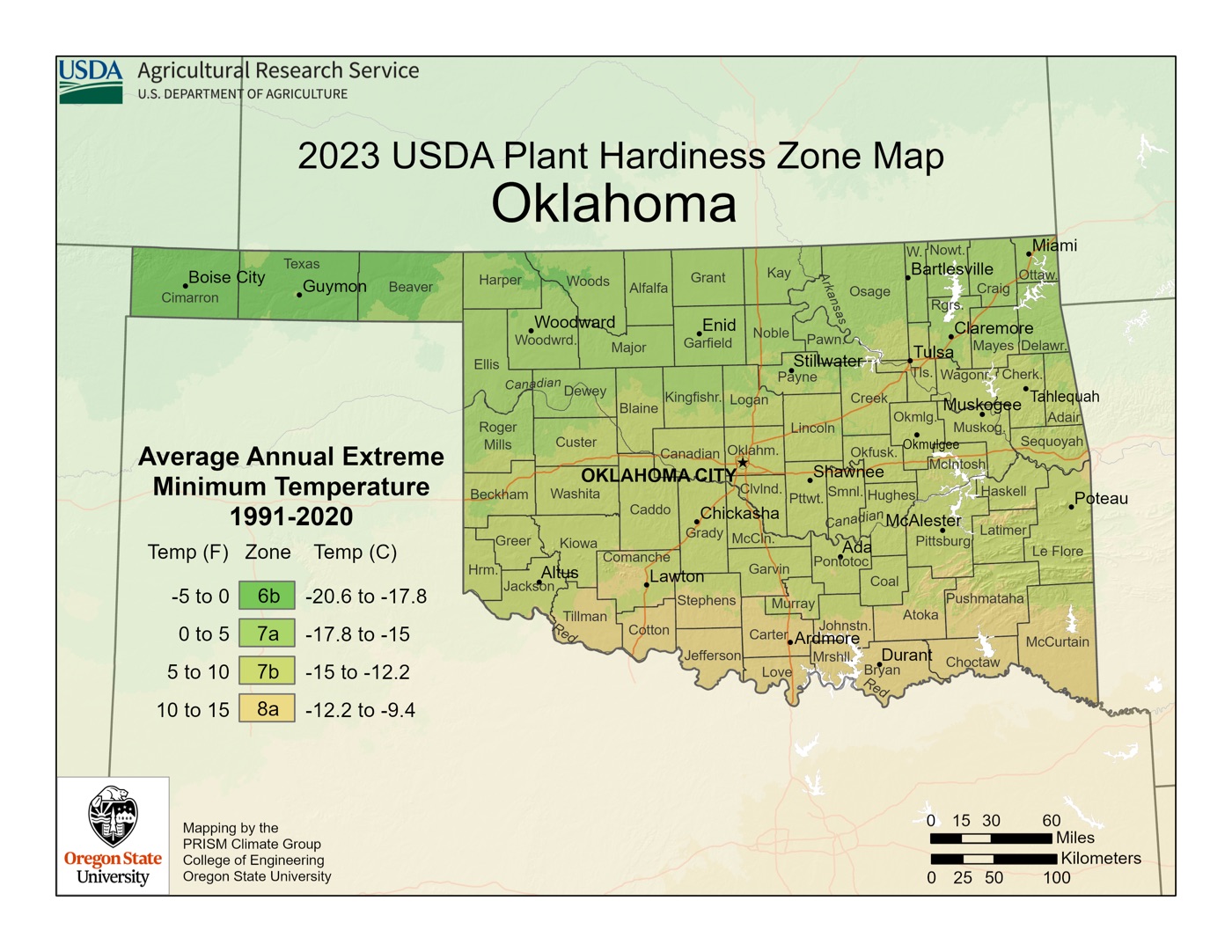 Oklahoma zone map (full size, opens in a new tab)
-
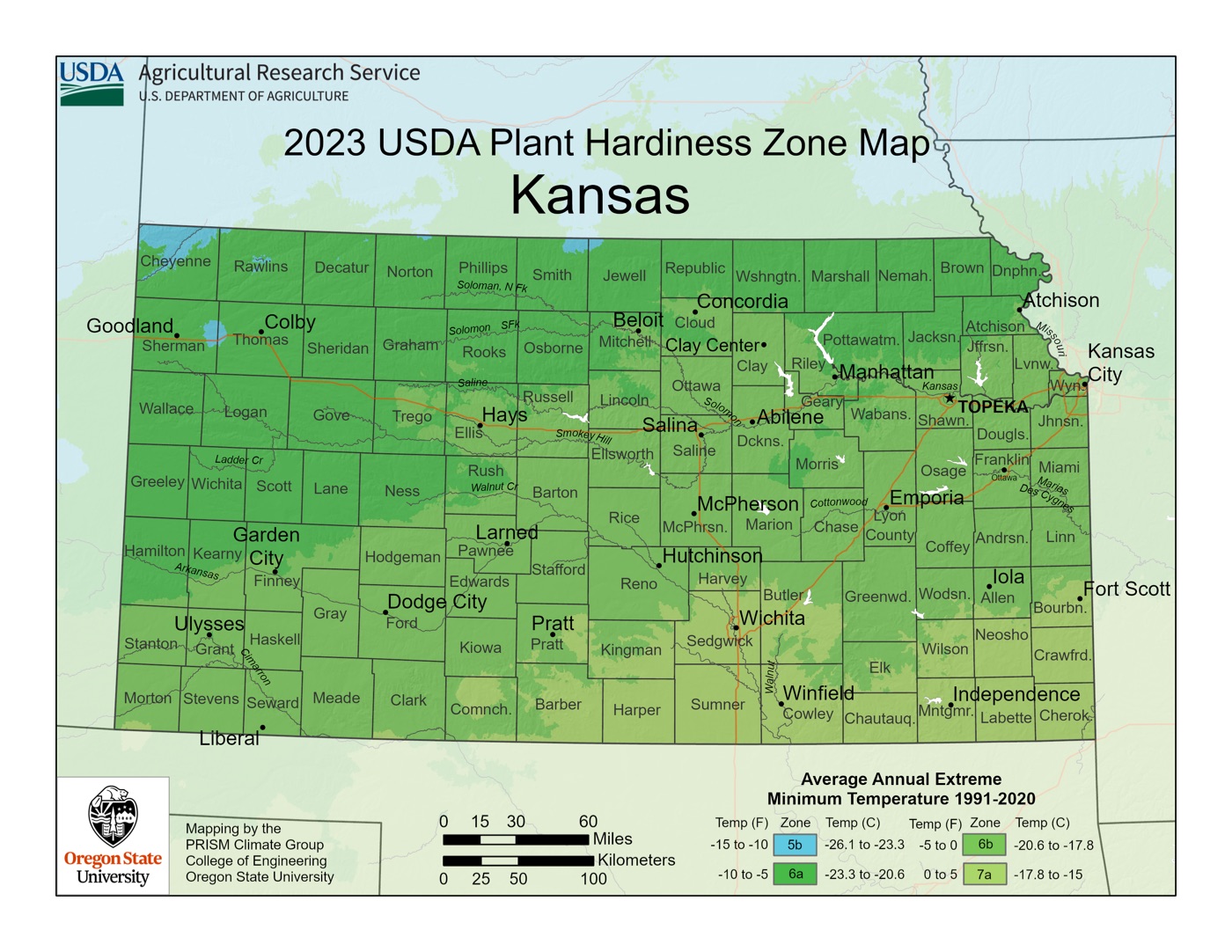 Kansas zone map (full size, opens in a new tab)
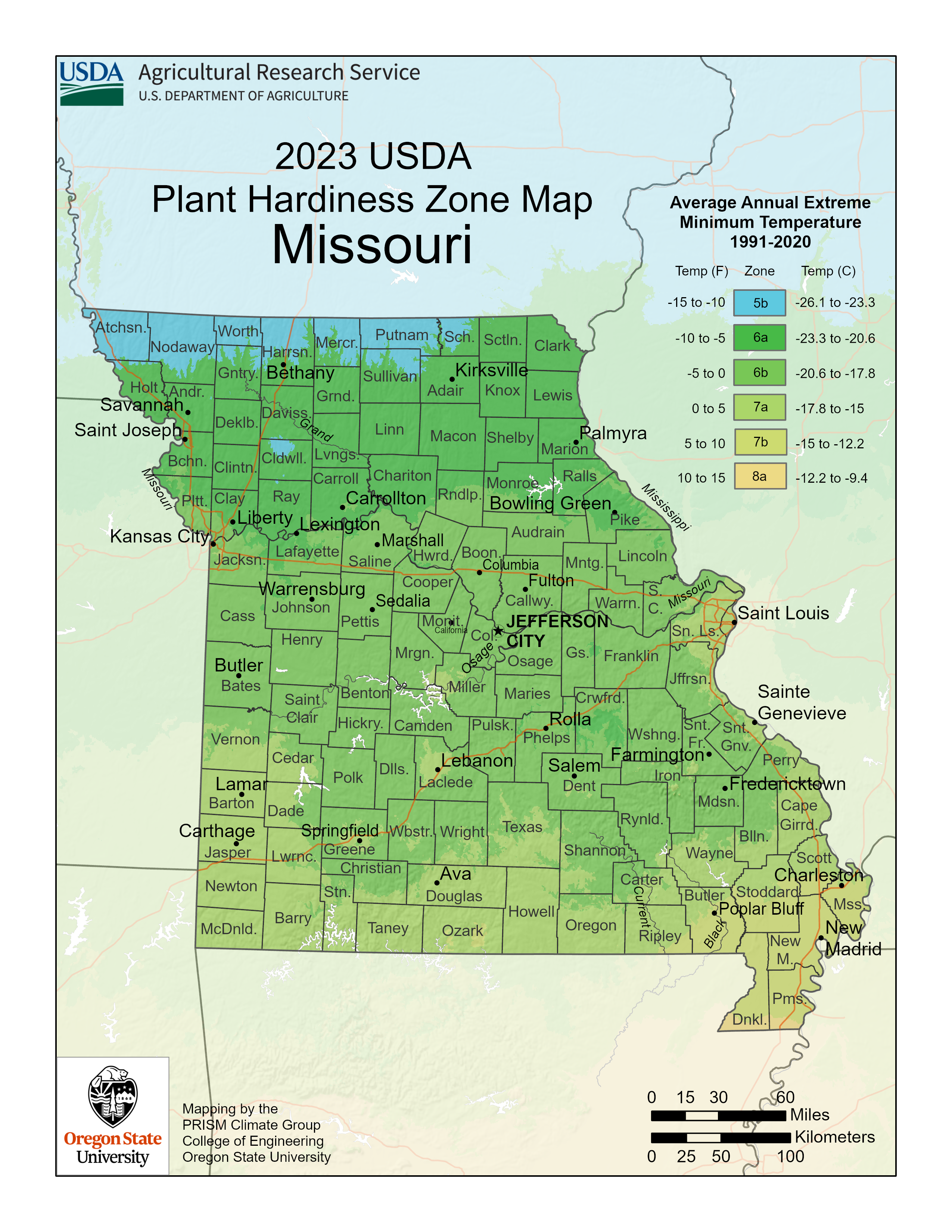
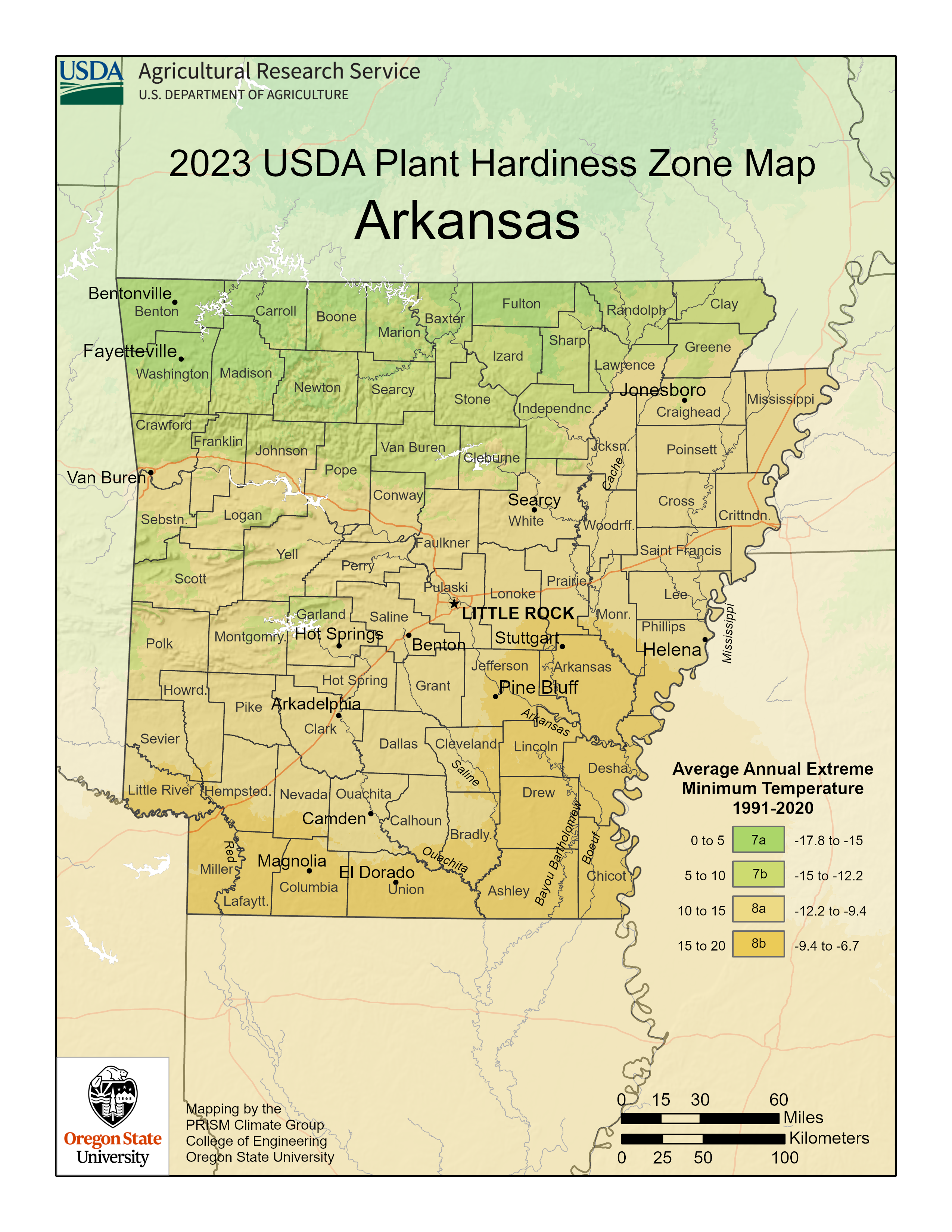
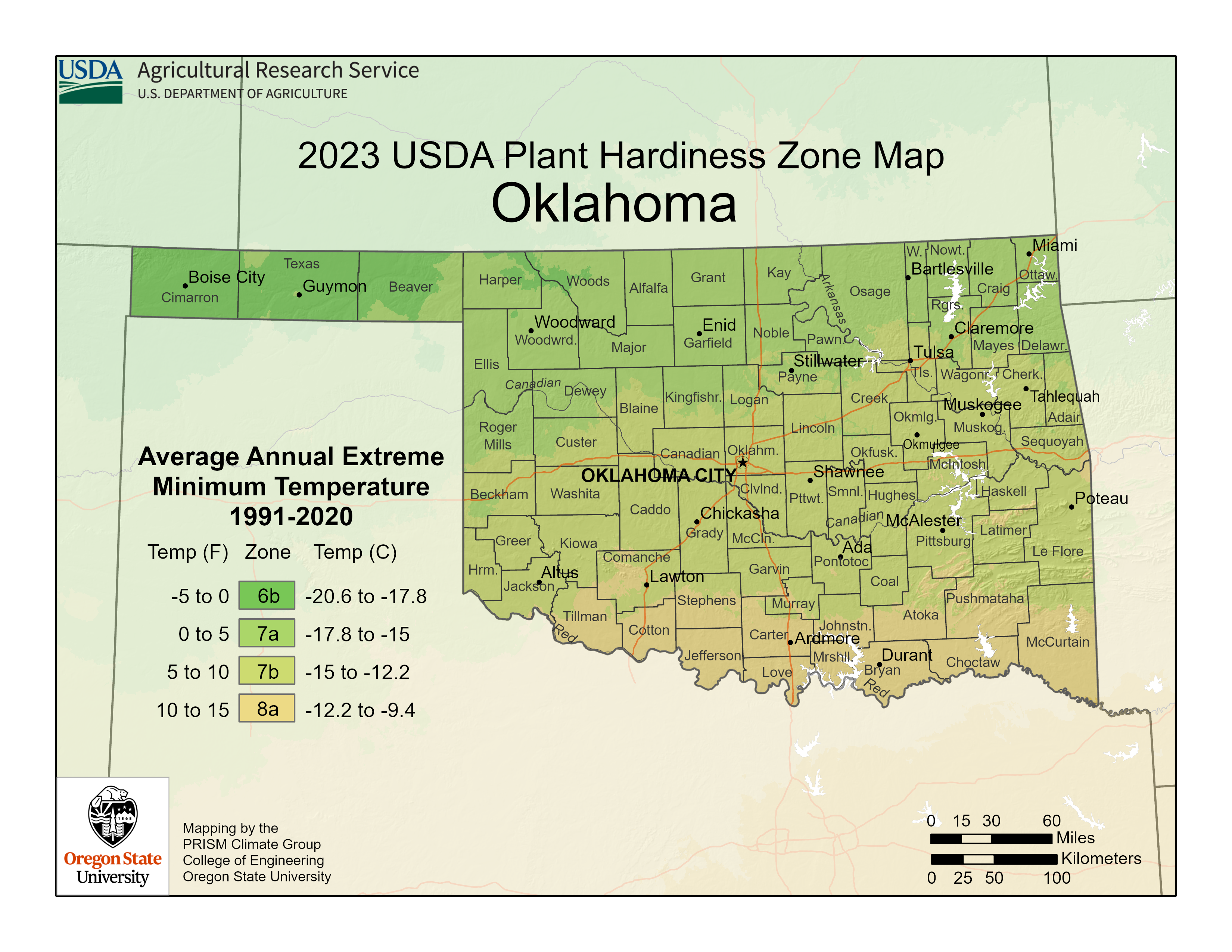
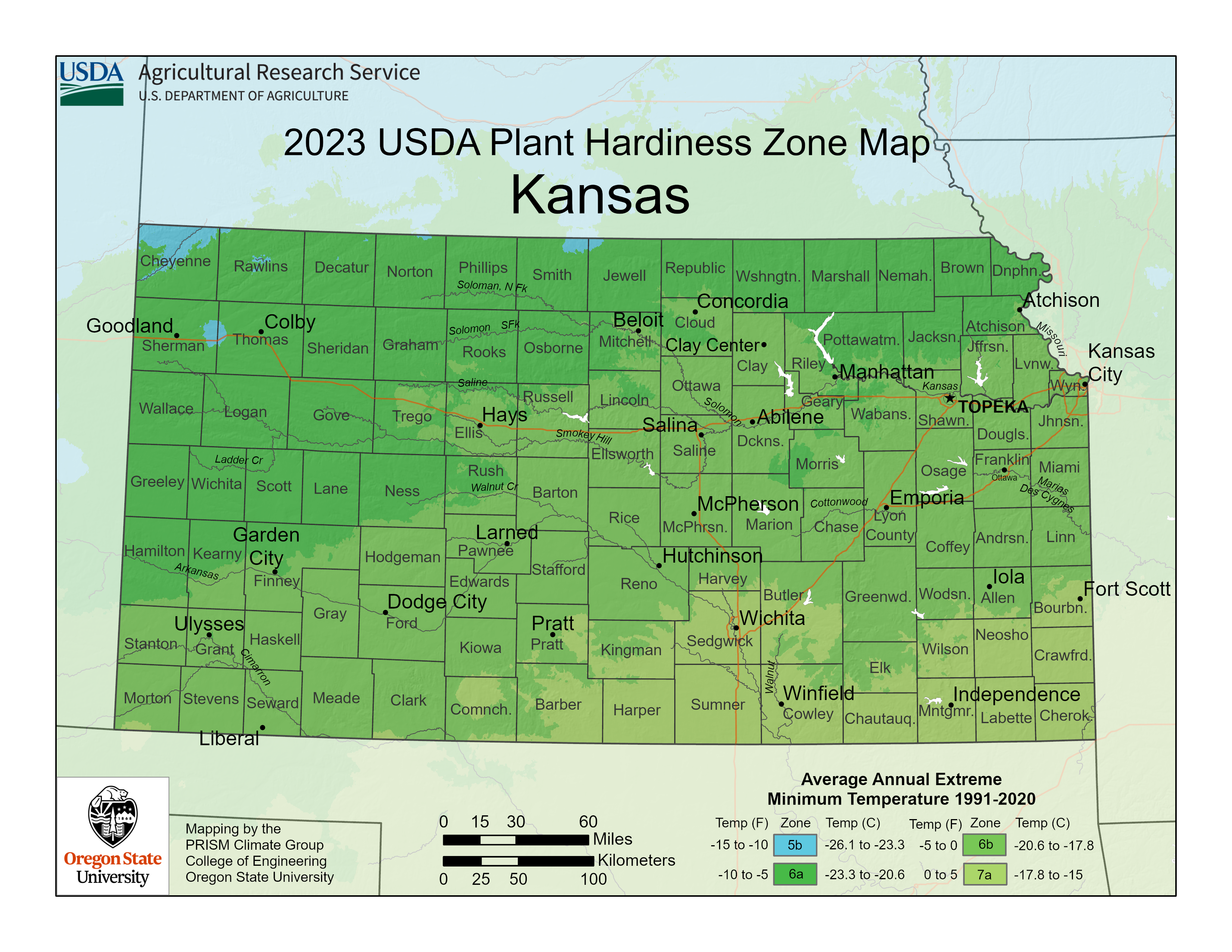
Official 2023 USDA Plant Hardiness Zone Maps. Tap a map to open it full size.
Maps: USDA Agricultural Research Service, with mapping by the PRISM Climate Group, Oregon State University.
Plant Patent
Not patented. This is the straight species, not a named variety, so there are no restrictions on growing it from seed or division.
About the Yellow Trillium
Yellow trillium is a woodland wildflower native to the Great Smoky Mountains region. Each plant has three leaves and a single upright yellow flower in spring with a lemony scent. It usually dies down by midsummer.
It grows slowly. Plants started from seed take 5 to 7 years to reach flowering size, and it doesn’t transplant well once established, so choose its spot carefully.
Choosing a Spot
- Shade. Part shade to full shade, ideally sheltered.
- Moist, well-drained, humus-rich soil, slightly acidic to neutral.
- A permanent spot. It doesn’t like to be moved.
- Mark the spot. It goes dormant by midsummer.
Planting
Set the plant so its crown, where the stems meet the roots, is even with the soil line. Container-grown plants can be planted at any time of year. Water them in well.
Watering
Most garden perennials need 1 to 2 inches of water a week in summer, from rain or watering. Keep the soil moist.
Mulch and Fertilizer
Mulch in autumn with leaf mold. If the plant needs feeding, a light application of a balanced fertilizer when growth starts in spring is enough for most perennials.
Pruning
No pruning needed. It dies back on its own by midsummer.
Common Problems
- Slugs and snails: Occasional pests.
- Diseases: Leaf spot, rust, and smut occasionally.
- Deer browse it.
There are no serious problems.
Good for Wildlife
Bees, yellow jackets, and other pollinators visit the flowers. It’s a larval host for two moths, the black-patched clepsis and the American angle shades. Ants carry off and spread the seeds, and small mammals eat the fruit.
Propagation
Divide the rhizomes after it flowers, or sow seed as soon as it’s ripe. Seedlings are slow, taking 5 to 7 years to flower.
Availability
Currently out of stock until Spring 2027.
Our nursery stock changes through the season. Contact us to check what we have on hand, current sizes, and pricing.
Sources
Growing information on this page was checked against these public references:
- Trillium luteum (North Carolina Extension Gardener Plant Toolbox) (opens in a new tab)
- Trillium luteum (Royal Horticultural Society) (opens in a new tab)
- Herbaceous Ornamentals, MG9 (University of Missouri Extension) (opens in a new tab)
Disclaimer: The information on this page is based on publicly available knowledge and research. Individual results may vary.